

Glasgow
Australia's rise to global dominance in long-distance running is a testament to strategic racing, unwavering training consistency, deeply rooted domestic coaching networks, and a fiercely supportive teammate culture.
At the 2026 Commonwealth Games in Glasgow, this multi-faceted blueprint culminated in historic milestones on the track.
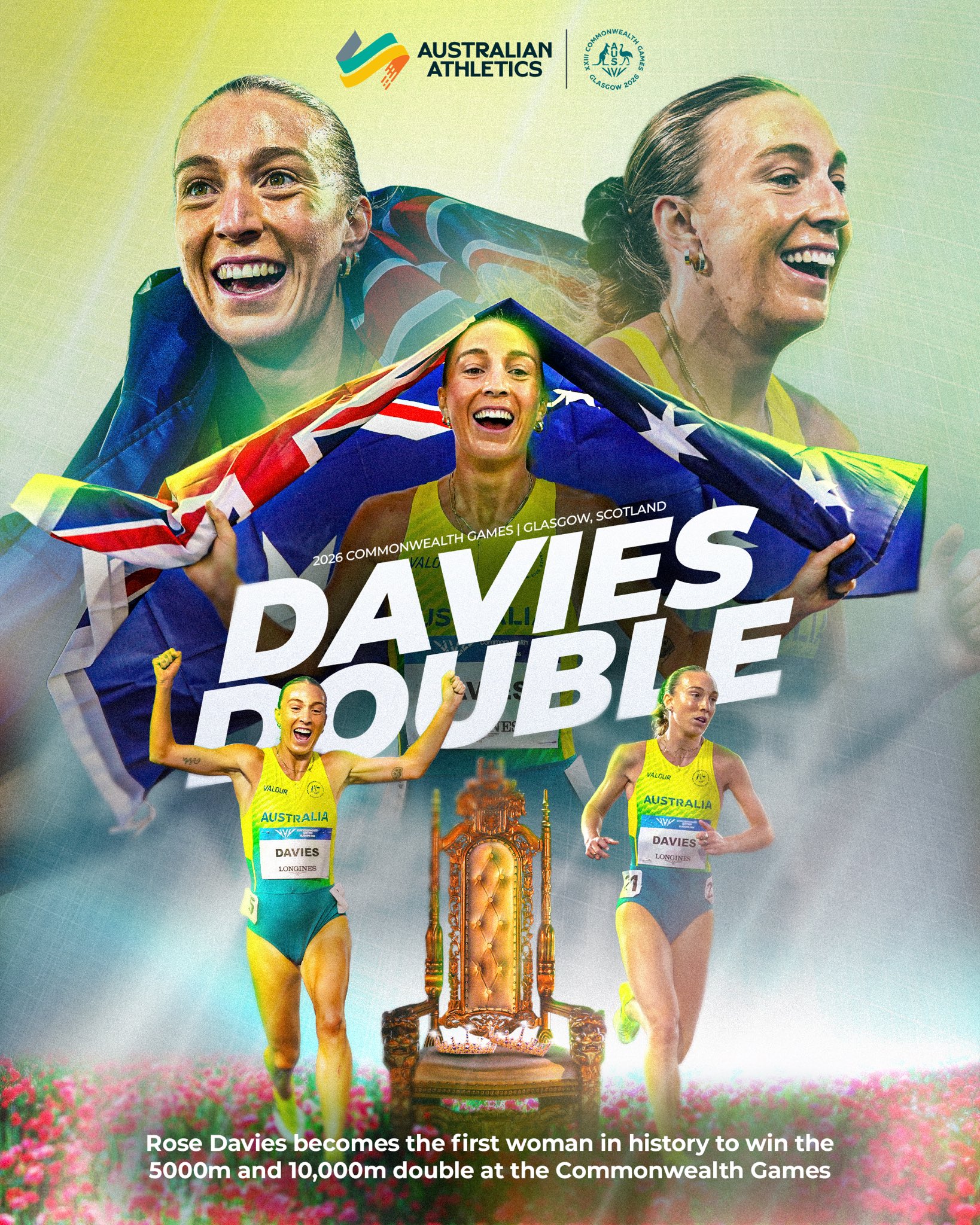
The defining face of this triumph was Newcastle's Rose Davies, who shattered decades of regional athletic records by capturing individual gold in both the 5,000 and 10,000-metre finals.
By pulling off this dual victory, she became the first female athlete from any nation in Commonwealth history to achieve the prestigious long-distance double, underscoring the lethal effectiveness of the modern Athletics Australia high-performance framework.
Tactical patience serves as the first major pillar of the nation's distance-running success.
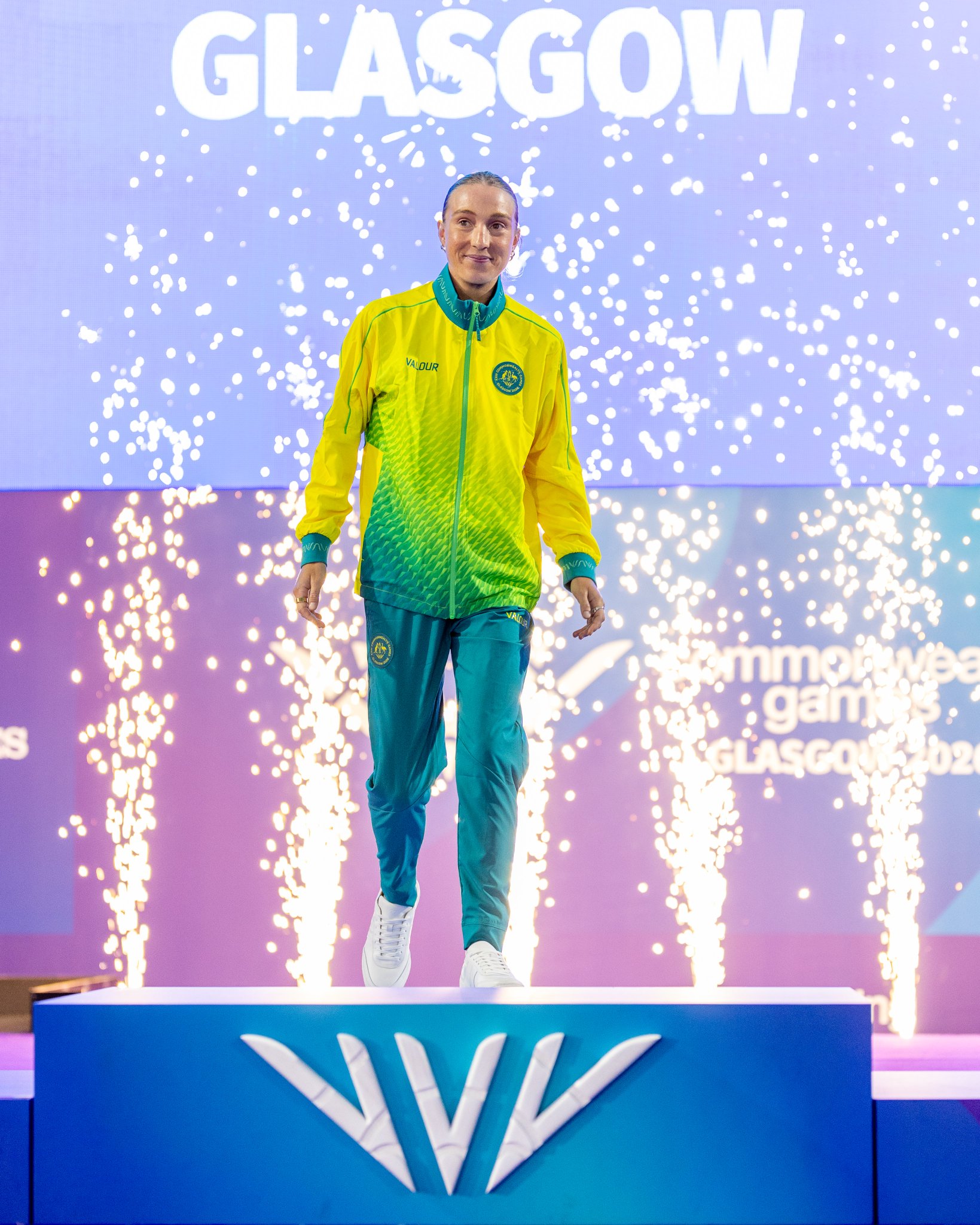
Rose Davies shattered decades of regional athletic records by capturing individual gold in both the 5,000 and 10,000-metre finals. (Photo / Athletics Australia)
Rather than engaging in early, exhausting front-running tactics that play into the hands of traditional East African powerhouses, Australian athletes utilize meticulous positional awareness and conservation of energy.
“Davies became the first Australian woman ever to win the Commonwealth Games 10,000m title... As the pace quickened in the latter stages, the Australian produced a decisive change of gear, breaking clear when it mattered most,” as observed by Athletics India.
Devastating Gear Change
During that 10,000-metre final at Scotstoun Stadium, Davies executed this philosophy to perfection. Content to remain tucked inside a pedestrian pack through the opening kilometres, she refused to panic when Kenya’s Diana Wanza launched a mid-race surge to open up a daunting 30-metre lead.
Davies steadily reeled her opponent back in, taking the lead for the very first time only as she entered the final kilometre. She then unleashed a devastating gear change over the final two laps to win by a massive 10-second margin.
This exact blueprint of calculated patience was mirrored by compatriot Ky Robinson, who executed an identical late-race surge to secure gold in the men’s 10,000-metre final.
Complementing this tactical sharpness is a system that prioritizes long-term training consistency over rapid, unsustainable peaks.
Many modern Australian distance stars build their aerobic capacities by stacking years of uninterrupted mileage, domestic cross-country racing, and progressive speed development. Davies, who endured major hip inflammation injuries during her teenage years, credits her adult breakthrough to this methodical accumulation of work.
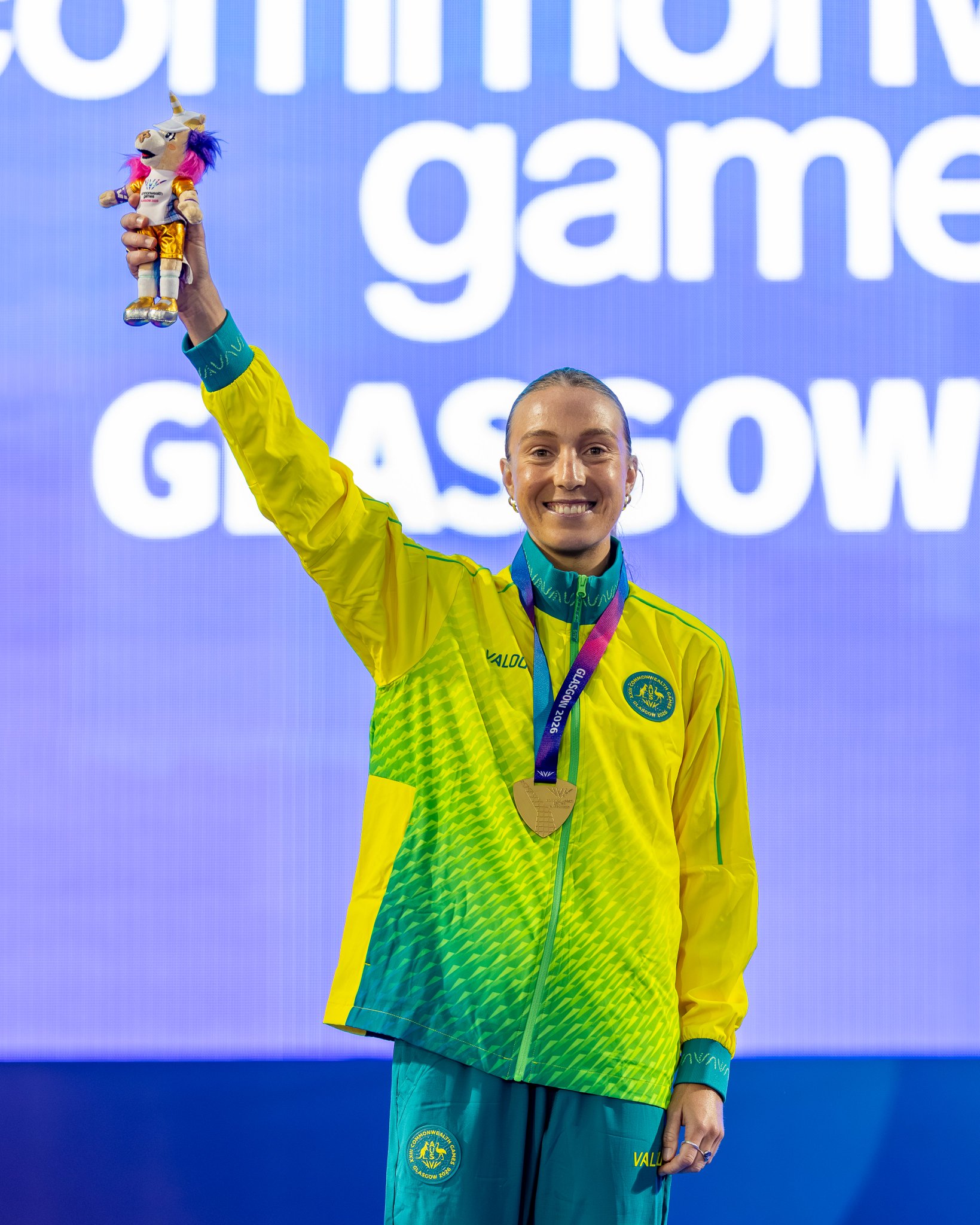
Rose Davies' historic progression is inextricably linked to New South Wales coach Scott Westcott, whose patient, multi-year guidance allowed her to overcome early career injuries. (Photo / Athletics Australia)
“I have just had so much consistency and every race I have grown. I have shown that I belong here and I have been running good times, I've just been chipping away,” Davies said, highlighting the power of resilient developmental trajectories via Commonwealth Games Australia.
Furthermore, Australia's long-distance athletes thrive within home-grown coaching systems. Instead of permanently relocating to high-altitude foreign training centres, top-tier competitors often maintain long-term relationships with domestic mentors who deeply understand their physiological profiles.
Cooperative Competitiveness
Davies’ historic progression is inextricably linked to New South Wales coach Scott Westcott, whose patient, multi-year guidance allowed her to overcome early career injuries and systematically convert raw, short-distance speed into elite championship endurance.
Finally, an "iron sharpens iron" culture of mutual pushing among teammates acts as a vital catalyst for the nation's historic track depth. When elite runners train and compete in tight-knit squads, the collective baseline rises.
The absolute peak of this cooperative competitiveness was realized in the Glasgow 5,000-metre final, where Davies and Olympic silver medalist Jessica Hull stalked Scotland's Megan Keith before breaking away with 150 metres to go.
Engaging in a ferocious, neck-and-neck domestic sprint down the home straight, Davies edged out Hull by a mere eight-hundredths of a second to lock down an iconic Australian one-two finish.
Kenya’s closest challenger Cariline Nyaga was sixth in 14:54.00 while the second Kenyan, Rebecca Mwangi, almost brought the rear in 18th place among the 19 finishers in 16:51.46.
This relentless Aussie pursuit of excellence ensures that every domestic race replicates the intensity of a global final, guaranteeing that when Australian distance runners step onto the international stage, they possess the tactical grit, physiological foundation, and psychological armor necessary to conquer the world.
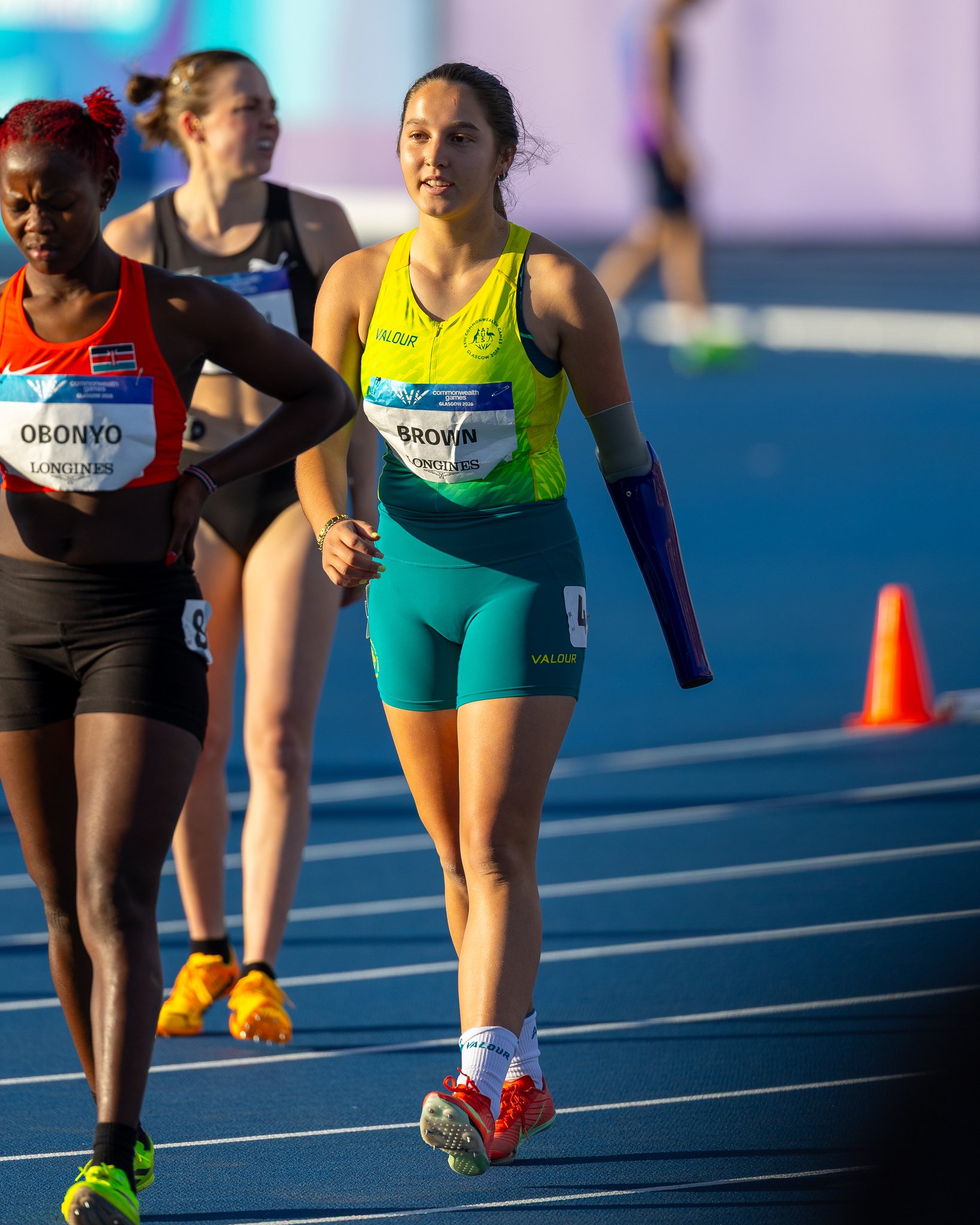
Neema Obonyo (left) finished sixth in the Women's Para Athletics' 100m T47 Final in a personal best 12.77 seconds. (Photo / Glasgow 2026)
Mixed Fortunes for Kenya
Meanwhile, Kenyan athletes experienced mixed results with Wycliffe Kinyamal and Kelvin Kimtai Loti qualifying for the men’s 800m final, while Julius Yego failed to advance in the javelin, calling it a day in Commonwealth competition after an illustrious career.
Additionally, Zablon Ekwam comfortably won his 200m heat, but Kenya missed the podium in the women’s 5,000m final, thanks to the rising Aussies.
In Para Athletics, Neema Obonyo finished sixth in the Women's 100m T47 Final in a personal best 12.77 seconds. Canada’s Sheriauna Haase (12.23) and Chloe Dunbar (12.33) took gold and silver with Anna Grimaldi of Australia taking bronze in 12.46 seconds.
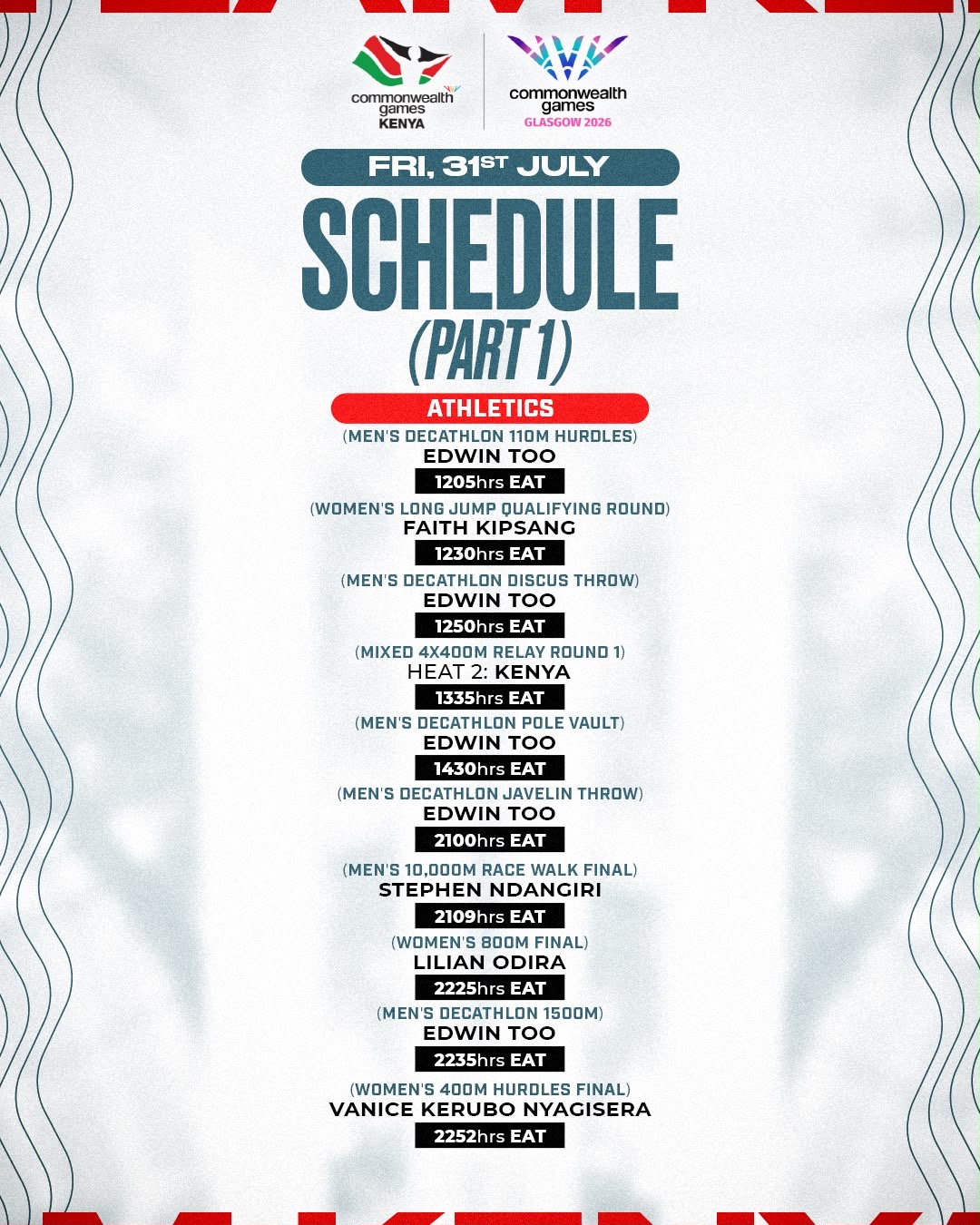
In Friday morning results, Faith Kipsang (6.23m) qualified for the Long Jump Final; the Mixed 4x400m Relay team (3:15.92) also made it to the final after finishing second to England (3:15.11) in their qualifier while Decathlete Edwin Too placed second in his 110m Hurdles heat (15.91), was 11th in the Discus (36.91m) and fifth (3.60m) in his Pole Vault qualifying group.
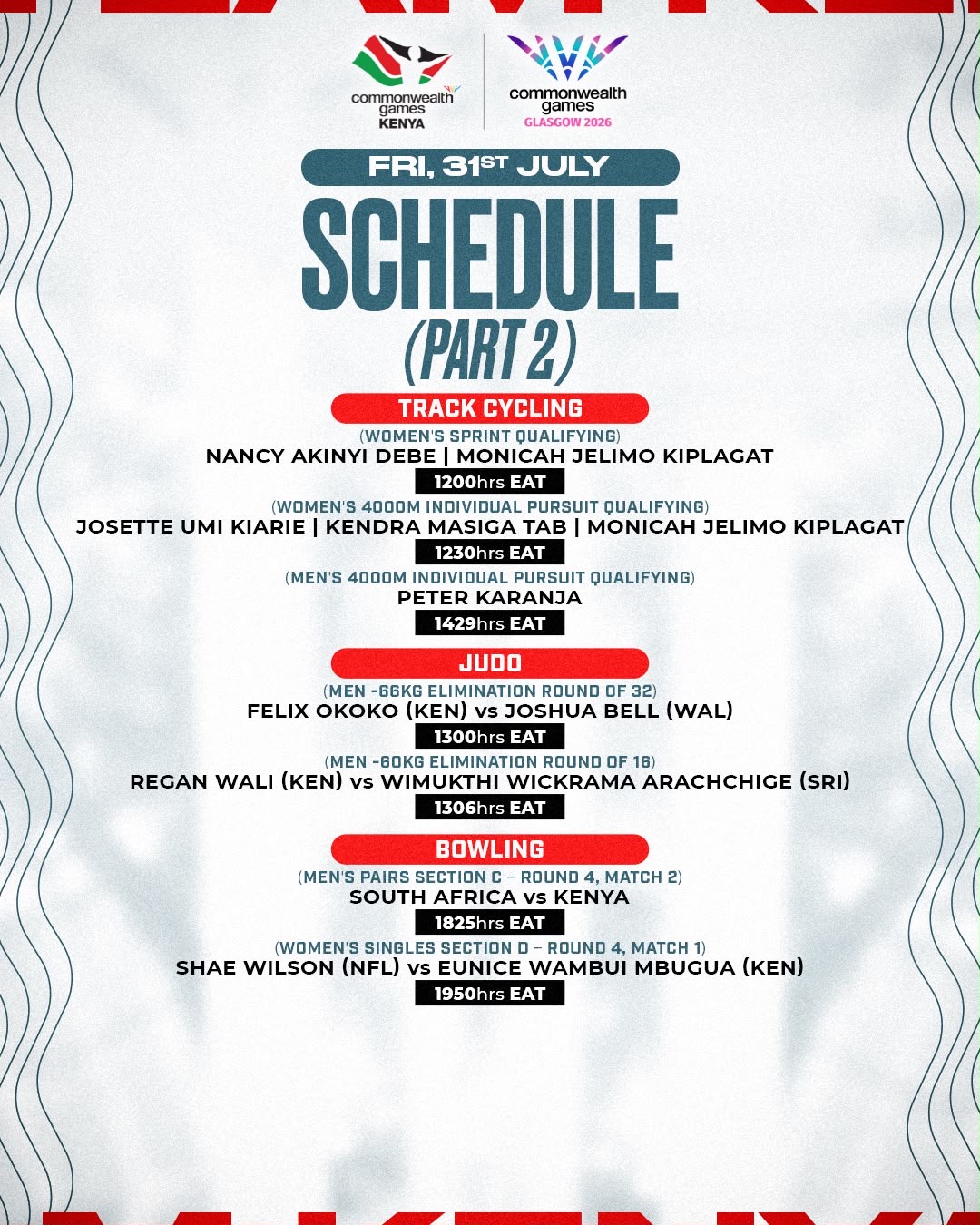
In Women's Sprint Cycling, Kenyans Monica Jelimo Kiplagat (15.623) and Nancy Akinyi Debe (16.150) finished 20th and 21st, failing to advance, while in Men's 66kg Round of 32 Judo, Felix Okoko lost to England's Joshua Bell by Ippo, 100-2.
Regan Wali, fighting in Judo's 60kg, fell just short of bronze when he lost by Ippon (0-112) to England's Charlie Ayre to finish fifth. Wali had edged out by Sri Lanka's Wimukthi Wickrama Arachchige before falling to Australia's Pedro Carlos Neto. Wali then defeated Alan Monthouel of Vanuatu
In Lawn Bowls, Men's Pairs, Kenya lost to South Africa. (Compiled from Australian Athletics resources and Glasgow26)
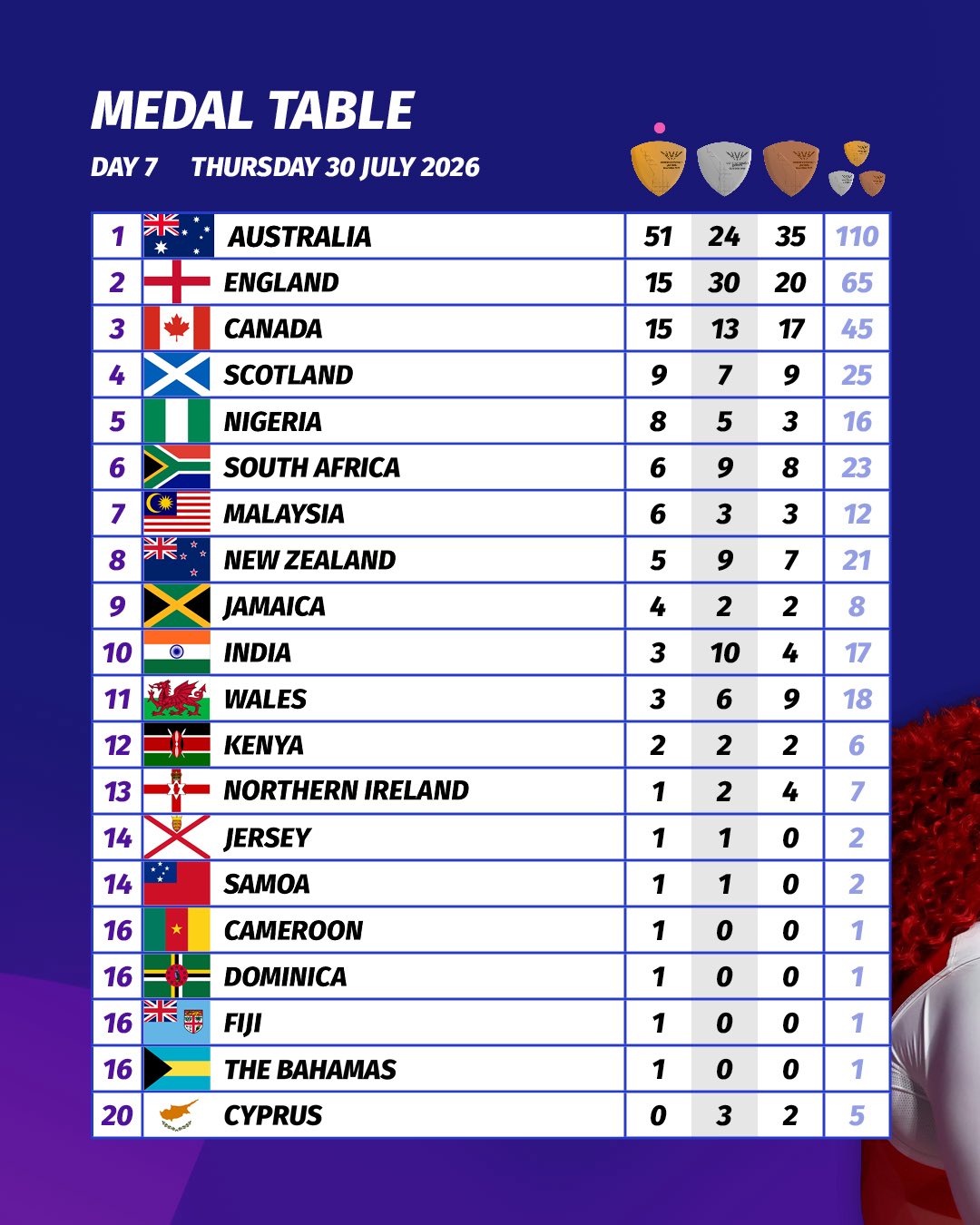
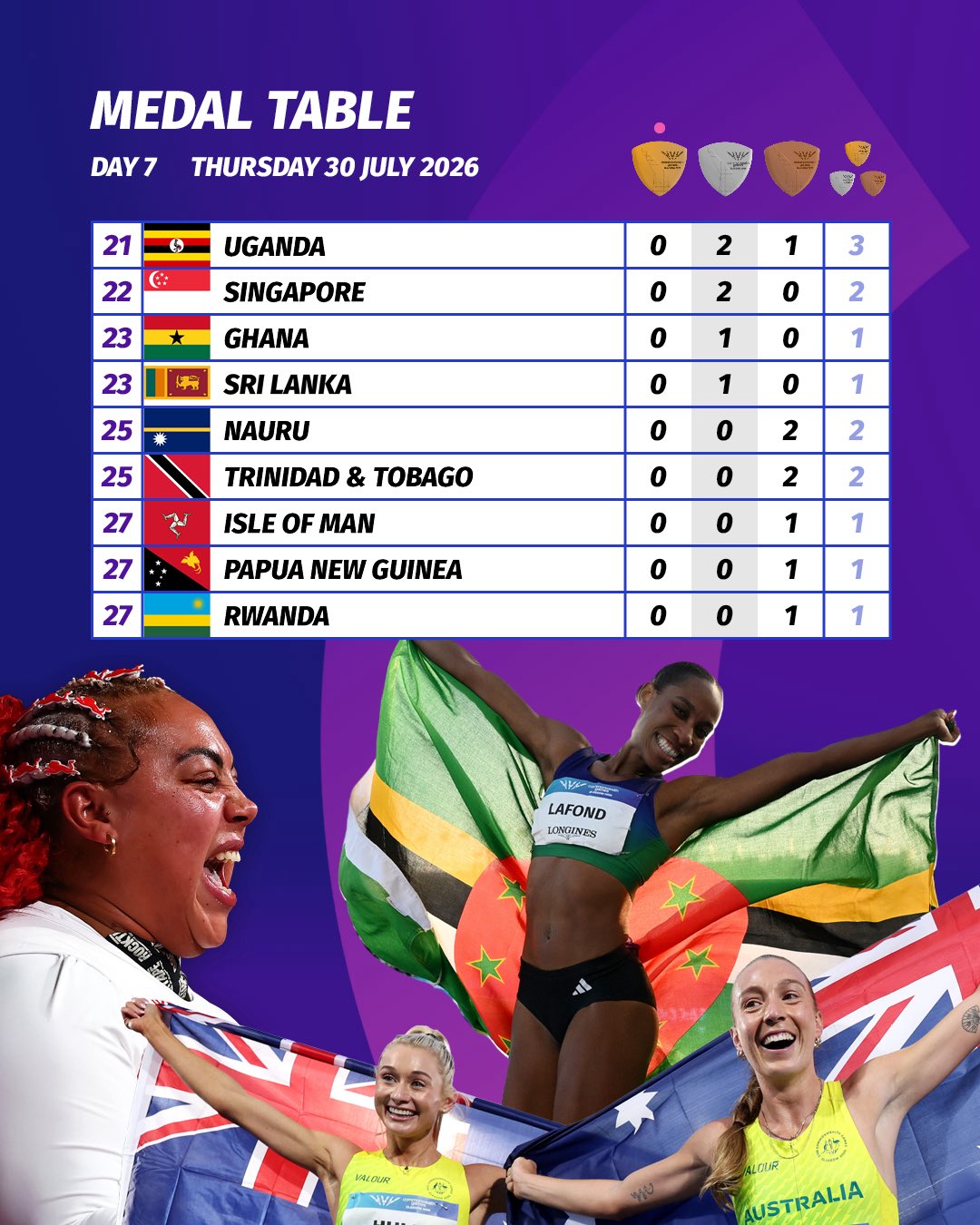
Medal Standings after Day Seven on Thursday (July 30):
Kenya’s programme on Friday (July 31):