


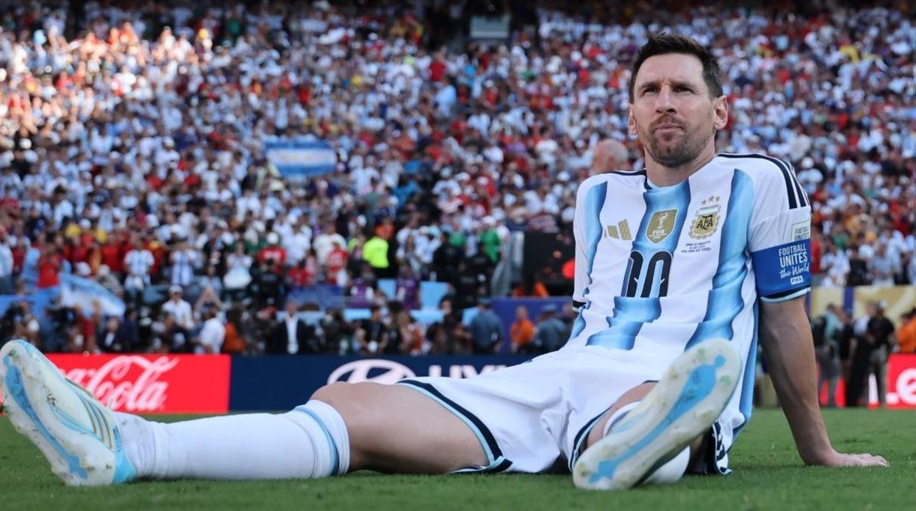
Buenos Aires:
The departure of Lionel Messi ends a historic 21-year international journey defined by unparalleled genius, profound resilience, and ultimate redemption. After steering the Albiceleste through years of heartbreaking near-misses to the absolute pinnacle of global football in Qatar, the 39-year-old maestro chose to step away following a painful World Cup final defeat to Spain and the deeply personal loss of his father, Jorge.
Leaving behind a historic record of 125 goals, Messi relinquishes his captain's armband to a new generation, ensuring his final footballing chapters will be written exclusively in the United States with Inter Miami.
In a decision that marks the definitive conclusion of the most glittering era in modern football history, Messi has decided to conclude an international career that spanned more than two decades, rewrote record books, and captured the hearts of billions around the globe.
The announcement, which Messi admitted was a decision that "hurt deeply," follows a summer of intense emotional toll both on and off the pitch.
Speaking to his millions of followers and a devastated nation, Messi confessed that while the choice was agonizing, "the time has come." After 207 appearances and an astonishing 125 goals for his country, Argentina's all-time leading scorer and most-capped player has decided that he has nothing left to give to the national team.
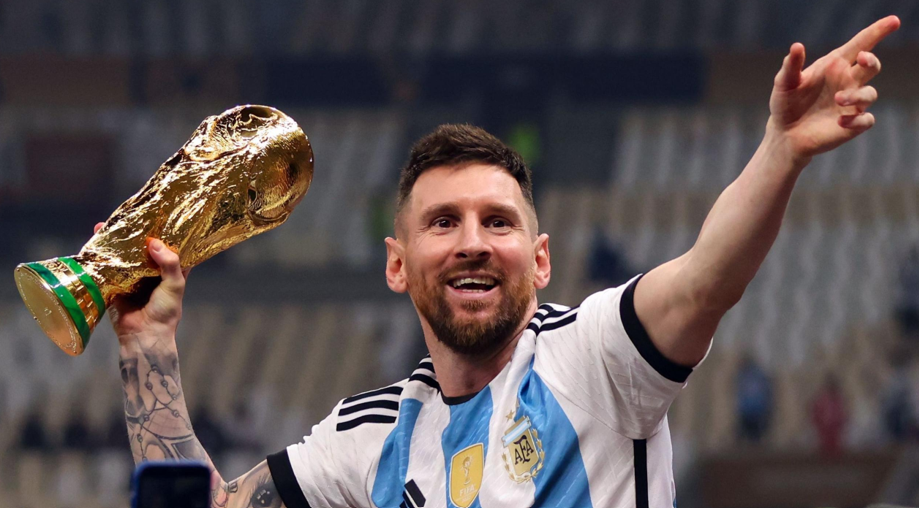
Lionel Messi captained Argentina to victory at the 2022 FIFA World Cup in Qatar, winning the Golden Ball as the tournament's best player. (Photo / Pool)
"Time is running short, chapters come to a close, and this is one that hurts me deeply," Messi shared in a poignant statement. "I love, have loved, and will always love being part of the national team. I've given it my all, I have nothing left to give, and besides, there are some really great young players coming through behind me who deserve their chance."
A Decision Forged in Grief and Finality
The seeds of Messi’s final international departure were sown during a heavy month of August. The eight-time Ballon d'Or winner revealed that he had been considering his future in the sport following the tragic passing of his father, Jorge, who died at the age of 68 after a long illness. Jorge Messi was not just a father but the architect of Lionel’s historic career, guiding him from the dusty streets of Rosario to the highest peaks of European and global football.
The emotional weight of that loss compounded the sporting heartbreak Messi experienced just days earlier.
The legendary playmaker revealed that he had drafted his retirement message on July 21, a mere two days after Argentina suffered a painful defeat against Spain in the World Cup final. While Argentina fought valiant battles throughout the tournament, the final highlighted a stark generational shift, with an emergent Spanish side dominating the pitch.
Reflecting on his state of mind, Messi noted on Instagram: "Today, after what happened with my dad, I'm even more convinced than before."
For a player who has spent his entire life under the relentless microscope of public expectation, the combination of personal grief and the realization that his body could no longer bridge the gap against a youthful Spanish side brought total clarity.
From Red Card to Redirection: A Legendary Journey
Messi’s international career began in the most bizarre and unpropitious manner imaginable. Making his senior debut for Argentina in August 2005 against Hungary, a teenage Messi entered the pitch as a 63rd-minute substitute.
Less than sixty seconds later, he was walking back to the dressing room in tears, having received a straight red card after swinging his arm to break free from the shirt-tugging of Hungarian full-back Vilmos Vanczak.
Few could have predicted that this traumatic introduction would give way to an international legacy unparalleled in South American history.
Over the next twenty-one years, Messi transformed the identity of the Albiceleste. He overcame intense criticism from his own compatriots—who often questioned his patriotism compared to Diego Maradona—and endured an agonizing series of near-misses.
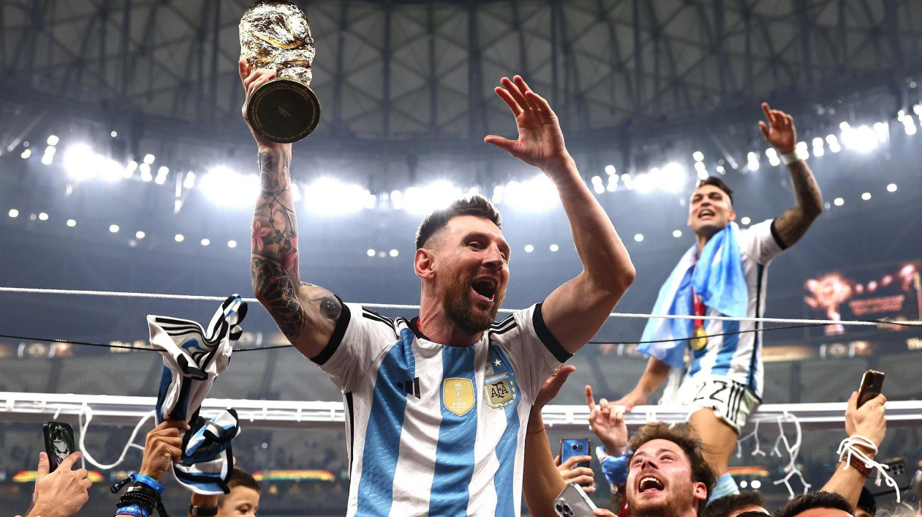
Lionel Messi led Argentina to a historic Copa América triumph in Brazil, breaking a 28-year trophy drought, before engineering the crowning achievement of his life: the 2022 FIFA World Cup in Qatar. (Photo / Pool)
The low point came in 2016 when, following a penalty shootout heartbreak against Chile in the Copa América Centenario final, a devastated Messi briefly retired from international duty. It was a dark period defined by four major final defeats in nine years. Yet, his love for the shirt drew him back, setting the stage for the most spectacular third act in sporting history.
Between 2021 and 2022, Messi finally shook off the ghost of international failure.
He led Argentina to a historic Copa América triumph in Brazil, breaking a 28-year trophy drought, before engineering the crowning achievement of his life: the 2022 FIFA World Cup in Qatar. In doing so, he solidified his place alongside Maradona in Argentine folklore.
The Race Against Time
Sports analysts across the world have noted that Messi’s departure is the inevitable conclusion to a race every athlete eventually loses. For over fifteen years, Messi defied the traditional physics of aging, adapting his game from a lightning-fast winger to a deep-lying, chess-playing playmaker.
At this summer’s World Cup, his genius was still very much on display as he scored eight goals and provided four assists, taking his total World Cup assist tally to a record-breaking 12—10 of which came in high-pressure knockout rounds. Yet, during the final against Spain, observers noted a look of profound exhaustion on the captain’s face.
As he surveyed the stadium following the final whistle, it became clear that the physical and mental demands of carrying a nation’s footballing hopes had finally caught up to him. His final goal for his country—a rescue act equalizer against Egypt earlier in the tournament—will remain his last scoring contribution in the famous shirt.
With his international chapter closed, Messi’s club career will carry on in the United States with Major League Soccer side Inter Miami, where his contract runs through the 2028 season.
While romantic rumors always pointed toward a brief return to his boyhood club, Newell's Old Boys in Rosario, security concerns and the rigorous demands of Argentine football make a fairy-tale return unlikely. Instead, the final chapters of his club career will be written in Florida, where American fans will witness the final drops of his generational genius.
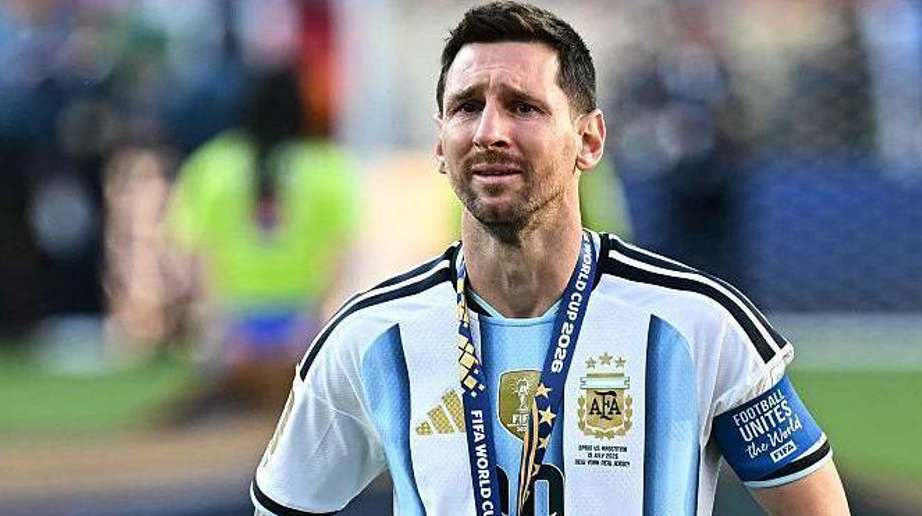
With his international chapter closed, Lionel Messi’s club career will carry on in the United States with Major League Soccer side Inter Miami. (Photo / Pool)
In his closing words to the fans who cheered him for two decades, Messi expressed total peace with his decision.
"Thank you for all the love over the past 20 years," he said. "I'm going to miss hearing you from the pitch so much. Now I'll be just one of you, always cheering and supporting from the sidelines. I'm leaving with the peace of mind and pride of having given you, together with my team-mates, moments we'd only dreamed of."
Lionel Messi: International Career Highlights:
All-Time Stats: Amassed a record 207 caps for Argentina, scoring 125 goals to become the nation's all-time leading scorer.
World Cup Title (2022): Captained Argentina to victory at the 2022 FIFA World Cup in Qatar, winning the Golden Ball as the tournament's best player.
Copa América Glory: Won consecutive Copa América titles (2021 and 2024), breaking Argentina’s 28-year senior trophy drought in the 2021 tournament.
World Cup Playmaking Record: Registered 12 total assists across his World Cup career, with an unprecedented 10 coming in knockout rounds.
World Cup Scoring Elite: Completed his international career as the second-highest goal-scorer in World Cup history with 21 goals, trailing only Kylian Mbappé (22).
Final International Goal: Scored his 125th and final international goal against Egypt during his final summer tournament loop. (Agencies)