


By Elias Makori, Managing Editor
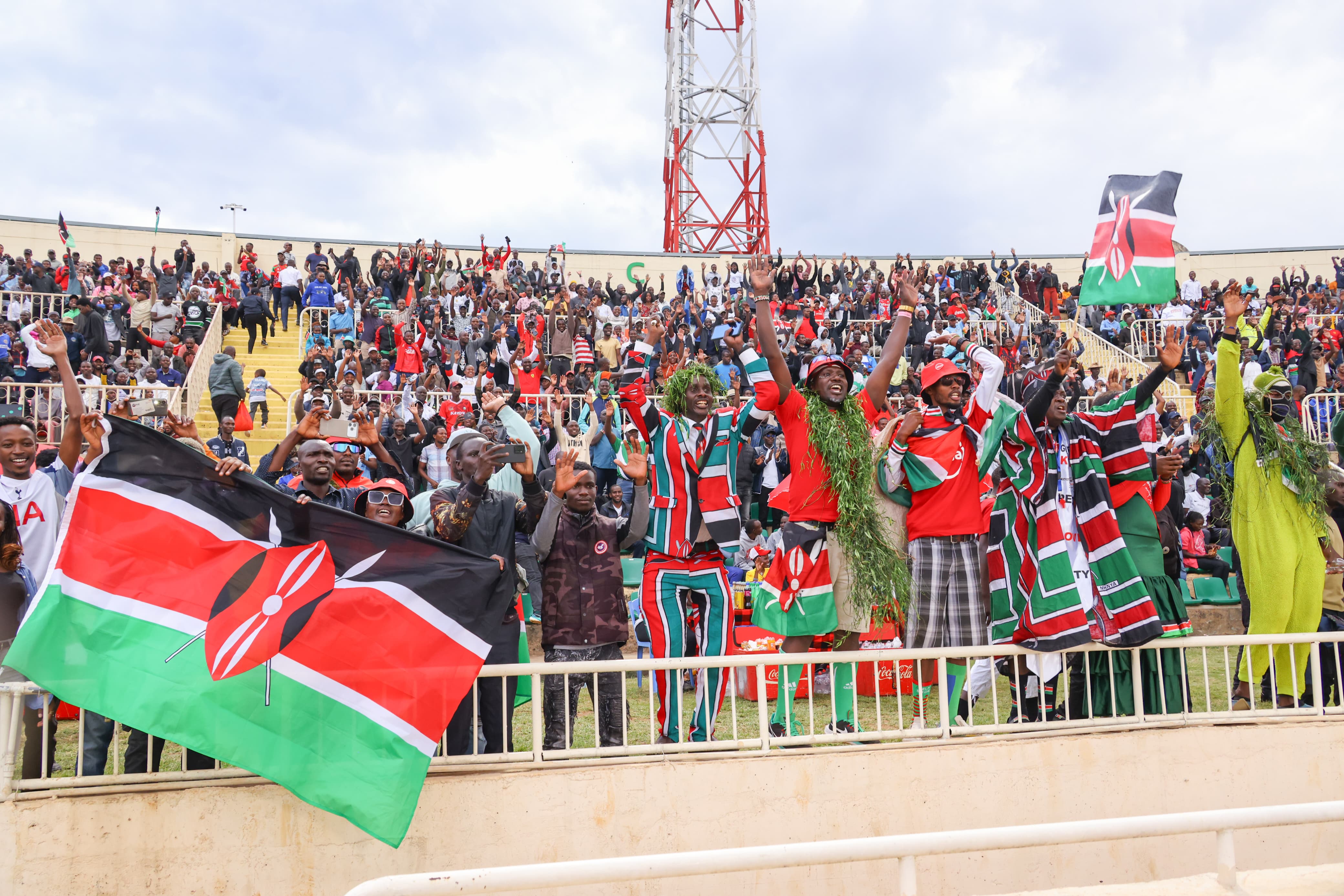
Nairobi has officially submitted its bid to host the 2029 World Athletics Championships, aiming to make history as the first African city to stage the sport’s flagship global event. This historic campaign is driving an urgent requirement to build a vibrant, independent African athletics circuit to establish critical operational momentum, fan engagement, and corporate backing across the continent ahead of the landmark championship.
As the Nairobi 2029 Bid Committee presented its compelling case before World Athletics President Lord Sebastian Coe and the World Athletics Council, the Kenyan capital emerged as a frontrunner to bridge global development gaps.
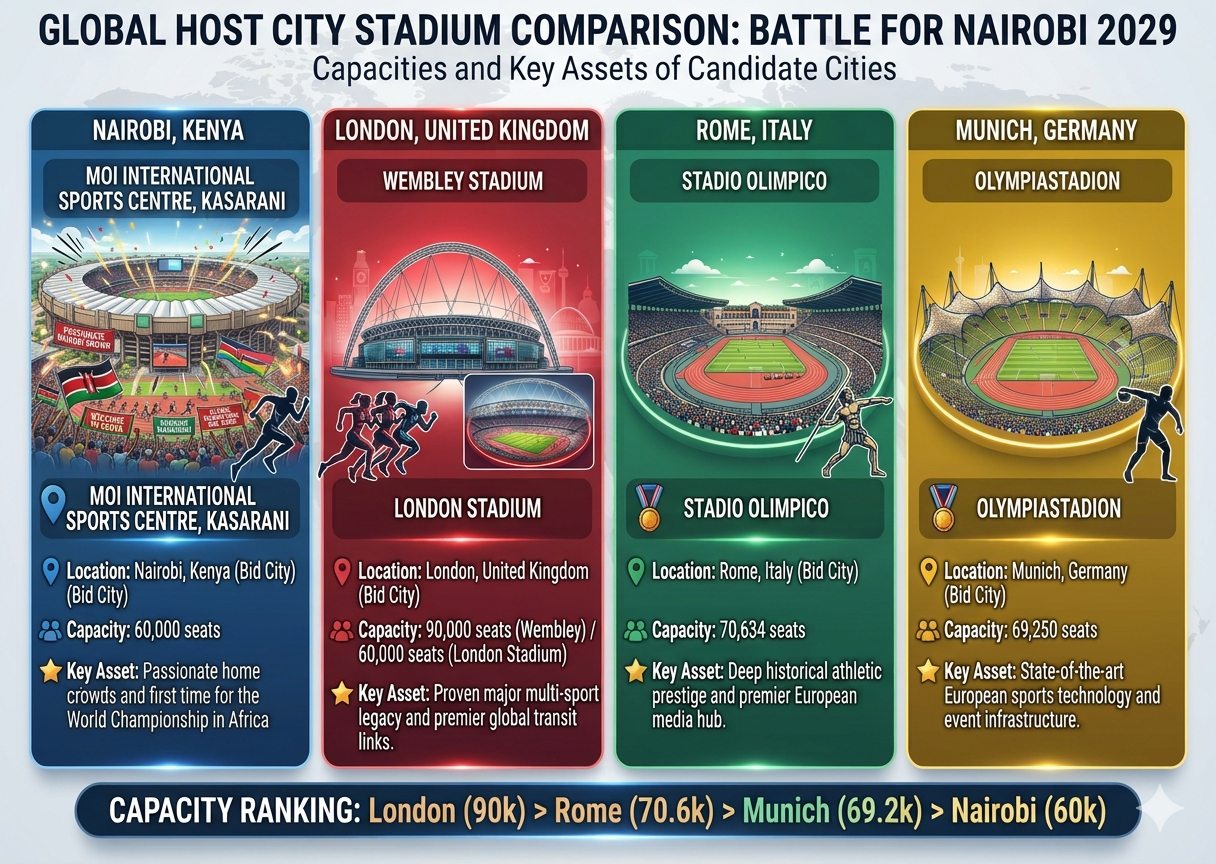
Supported by an ironclad personal guarantee from President William Ruto, Nairobi’s bid faces stiff competition from three premier European hubs: London (Great Britain), Rome (Italy) and Munich (Germany).
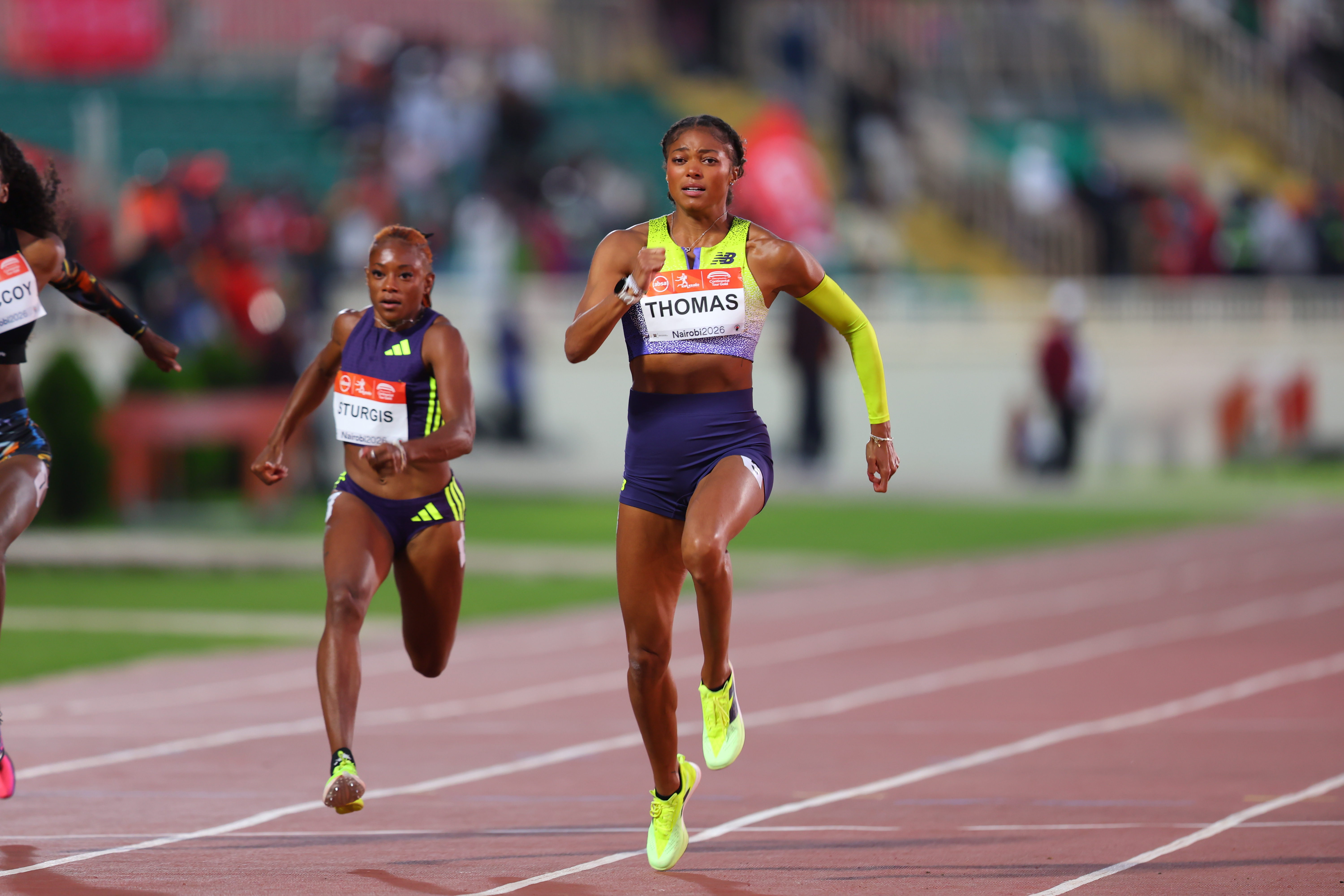
USA's Gabby Thomas (right) and Cambrea Sturgis compete in the 100-metre race of the 2026 Kip Keino Classic at the Nyayo National Stadium. Nairobi is tried and tested in organising high-profile track and field meetings. (Photo / Kip Keino Classic)
This competitive pursuit directly aligns with Lord Sebastian Coe’s overarching vision for the globalization of athletics. The international governing body is focused on expanding track and field into completely new markets, driving broader athlete participation, capturing new fan demographics, and attracting fresh commercial partners worldwide.
Bridging the Global Sporting Paradox
For decades, Africa has served as the undisputed engine room of global middle and long-distance running, yet its brightest stars have routinely been forced to board flights to Europe, Asia, and the Americas to chase elite competition, ranking points, and financial security.
As World Athletics aggressively pushes to expand the sport into uncharted markets, the conversation surrounding a dedicated, premium African athletics circuit has reached a critical tipping point.
The infrastructure is expanding, the global audience is locked in, and the historical blueprint for an African alternative to the Diamond League is finally ready to become reality.
The ambition to host a lucrative, world-class circuit on African soil is not a novel concept. More than two decades ago, in 2005, the late President of the African Athletic Confederation (AAC), Cameroon's Ahmed Malboum Kalkaba, stood in Nairobi and proclaimed a bold vision.
He announced that African cities would soon host a network of high-stakes meetings on a par with Europe’s prestigious TDK Golden League. The targeted hubs for this revolution were clear: Dakar, Nairobi, Johannesburg, Abuja, and Rabat.
At the time, Kalkaba lamented a profound sporting paradox: Africa possessed the finest athletes in the world, yet it made little sense that they rarely ran on their own continent.
The AAC’s strategy aimed to leverage multinational partnerships and international television contracts to offer the professional organization and heavy prize purses required to retain Olympic and World champions.
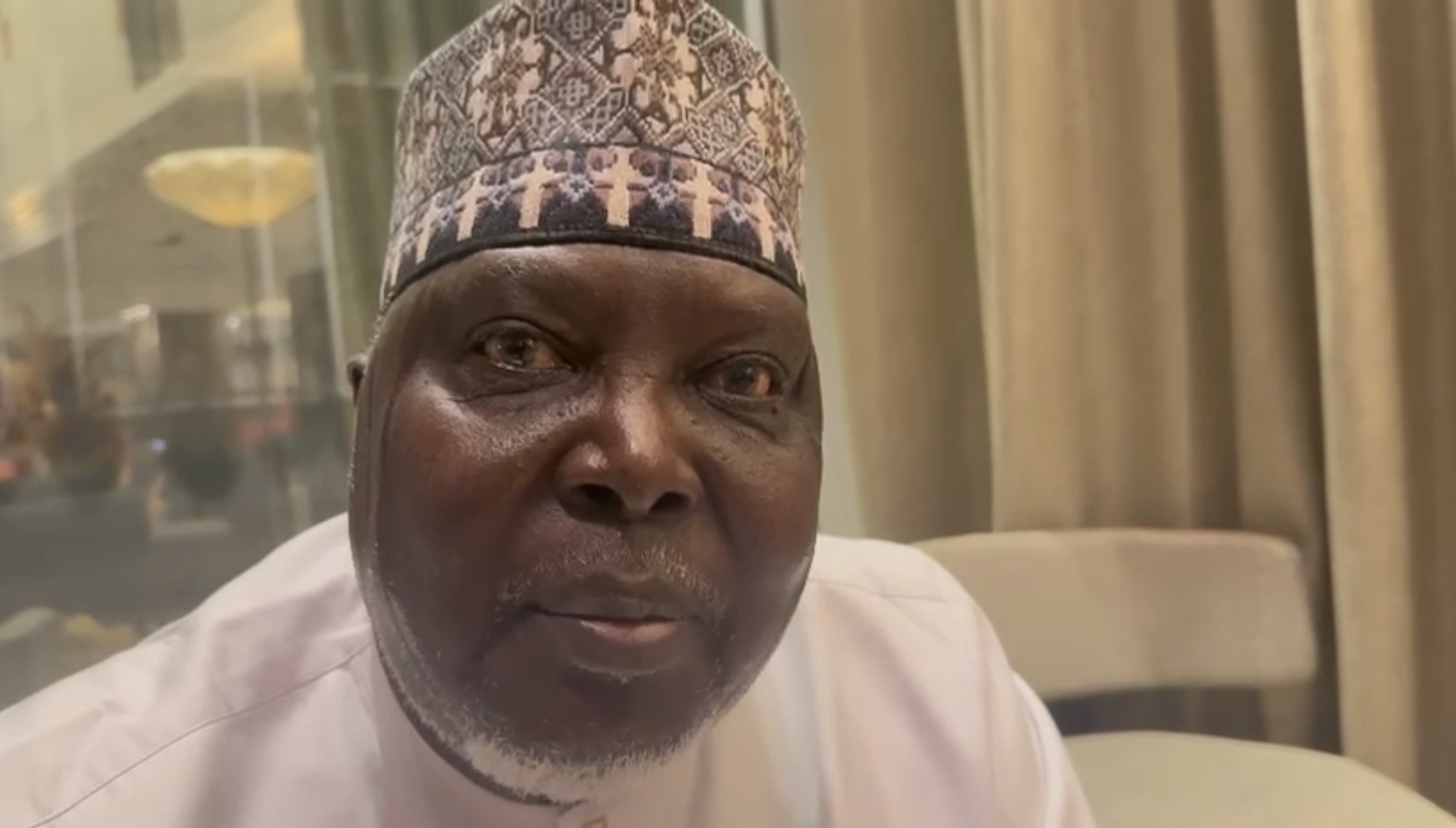
The late Confederation of African Athletics President Ahmed Malboum Kalkaba during an interview with 'Pura Vida Sports Africa' in Rabat last year. It was Kalkaba's desire to see more Diamond League meetings on the African continent. (Photo / Elias Makori)
“Africa has the best athletes and it makes little sense that they don't run in the continent. This is why we have organised five major meetings to attract Olympic and World champions,” Kalkaba said. "We have signed a contract with a French television channel and a major multinational to promote athletics in Africa because we realise we must organise the sport professionally to attract big stars and offer big money.
“Africa has the resources to organise big competitions. Africa has champions to make such competitions exciting but because the sport is not run professionally here to attract big sponsors and big prizes, our runners prefer competing in the west.”
While the initial 2005 push faced systemic and financial hurdles, the fundamental truth of the late Kalkaba’s message remains unchanged today: Africa has the champions and the resources to make home-grown competitions exhilarating, but it requires an institutionalized, professional framework to prevent its runners from preferring the West.
The Rise of the Continental Tour
That framework has finally arrived through the rapid evolution of the World Athletics Continental Tour. Launched in 2020 to replace and expand the old IAAF World Challenge series, the Continental Tour was explicitly designed to bridge the gap between the elite Diamond League and smaller regional competitions.
By providing a structured, tiered circuit — spanning Gold, Silver, Bronze, and Challenger levels based on the prize money on offer — the tour offers a clear pathway for athletes worldwide to earn crucial ranking points, secure prize money, and hit qualification standards for World Championships and Olympic Games.
Just last year, in an exclusive interview with Pura Vida Sports Africa, Kalkaba prayed for more Diamond League meetings on the continent: "Rabat is now an established Diamond League meeting and it is our desire to have more meetings like these in Kenya, South Africa, Nigeria, Algeria... Many countries are able to organise this kind of event (Diamond League). This is my view."
And the continental track stars themselves are shouting for this change, having separately made media remarks supporting a home-grown circuit.
“The growth of home-grown elite events like the Kip Keino Classic is a massive motivation for local athletes,” notes African 100m record-holder Ferdinand Omanyala.
“It brings the world to our doorstep and allows local runners to interact with icons they have previously only watched on television, showing them that they can achieve the exact same success right here at home.”
Following major milestones on continental soil, South African sprint sensation Akani Simbine emphasized that the packed stadiums prove Africa is more than capable of hosting world-class sport.
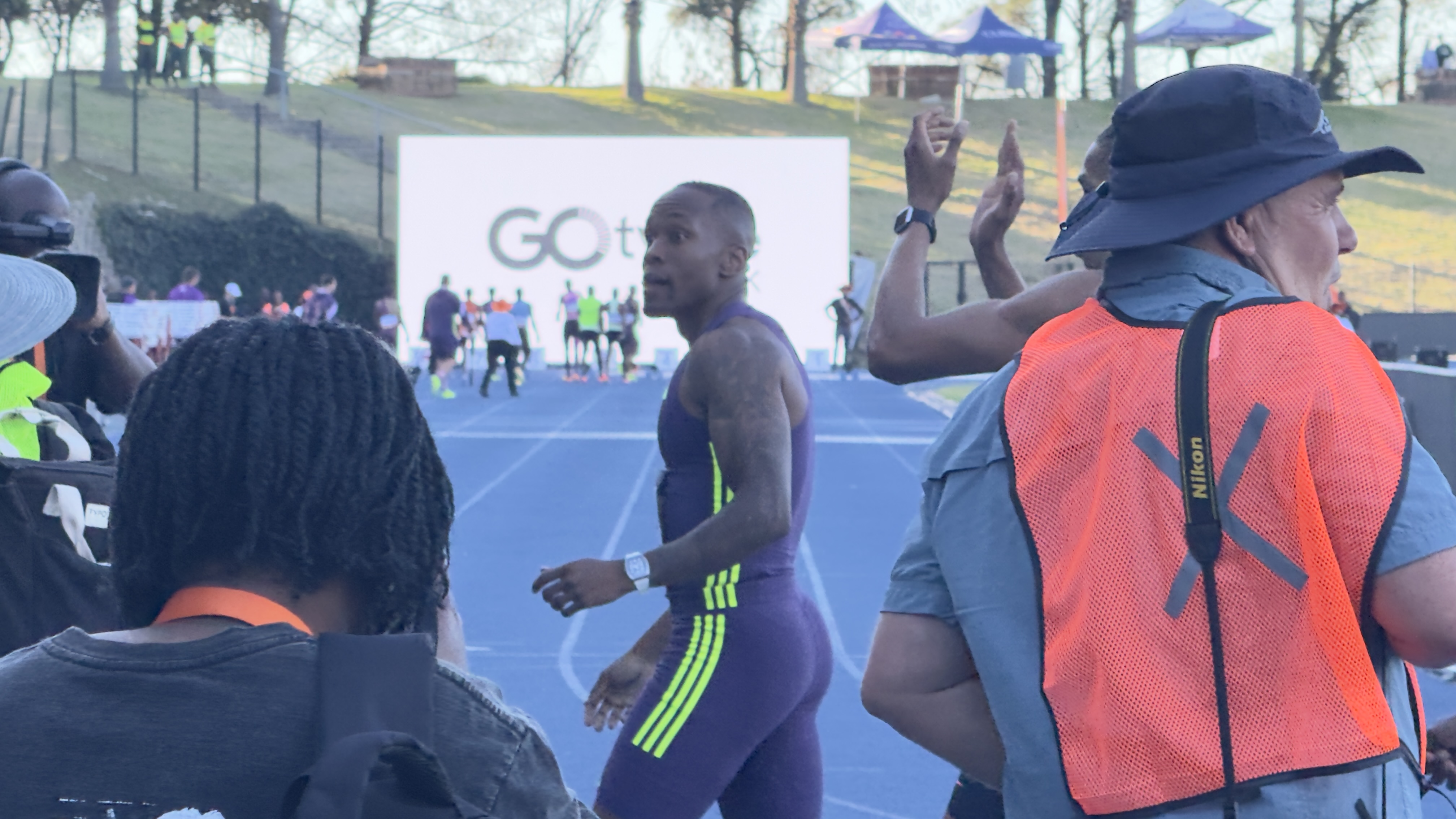
South African sprint sensation Akani Simbine (centre) during this year's Simbine Classic in Pretoria. Simbine maintains that packed stadiums prove Africa is more than capable of hosting world-class sport. (Photo / Elias Makori)
“We packed the stadium, Africa stopped the world,” Simbine – who has launched his own one-day meeting, the Simbine Classic, in Pretoria - remarked proudly. “The atmosphere demonstrates the true beauty, power, and capability of our continent.”
Adding substantial weight to the conversation, sprint sensation Letsile Tebogo of Botswana notes the profound cultural and psychological edge of running at home.
“When we race in Europe, we perform for an audience, but when we race on African soil, we run for our people,” Tebogo shares. “Africa deserves a stable, top-tier circuit because the energy here is raw, the talent is infinite, and our fans shouldn't have to watch their heroes exclusively through a television screen.”
Echoing his sentiments, Nigerian hurdles icon Tobi Amusan highlights the critical logistical relief a localized tour would provide.
“The visa struggles and relentless long-haul travel to Europe take a massive physical toll on African athletes,” Amusan emphasizes. “Having a world-class, lucrative circuit spanning West, East, and Southern Africa would completely level the playing field. It allows us to pick up critical global ranking points and secure our livelihoods without leaving our home continent exhausted.”
Fully Equipped Venues Ready for the Stage
The physical arenas are fully equipped to anchor this independent tour. Nairobi boasts the historic Moi International Sports Centre Kasarani, which serves as the primary centerpiece of the 2029 World Championship bid alongside intensive government renovations, and Nyayo National Stadium, a high-altitude fortress fitted with class-one athletics tracks.
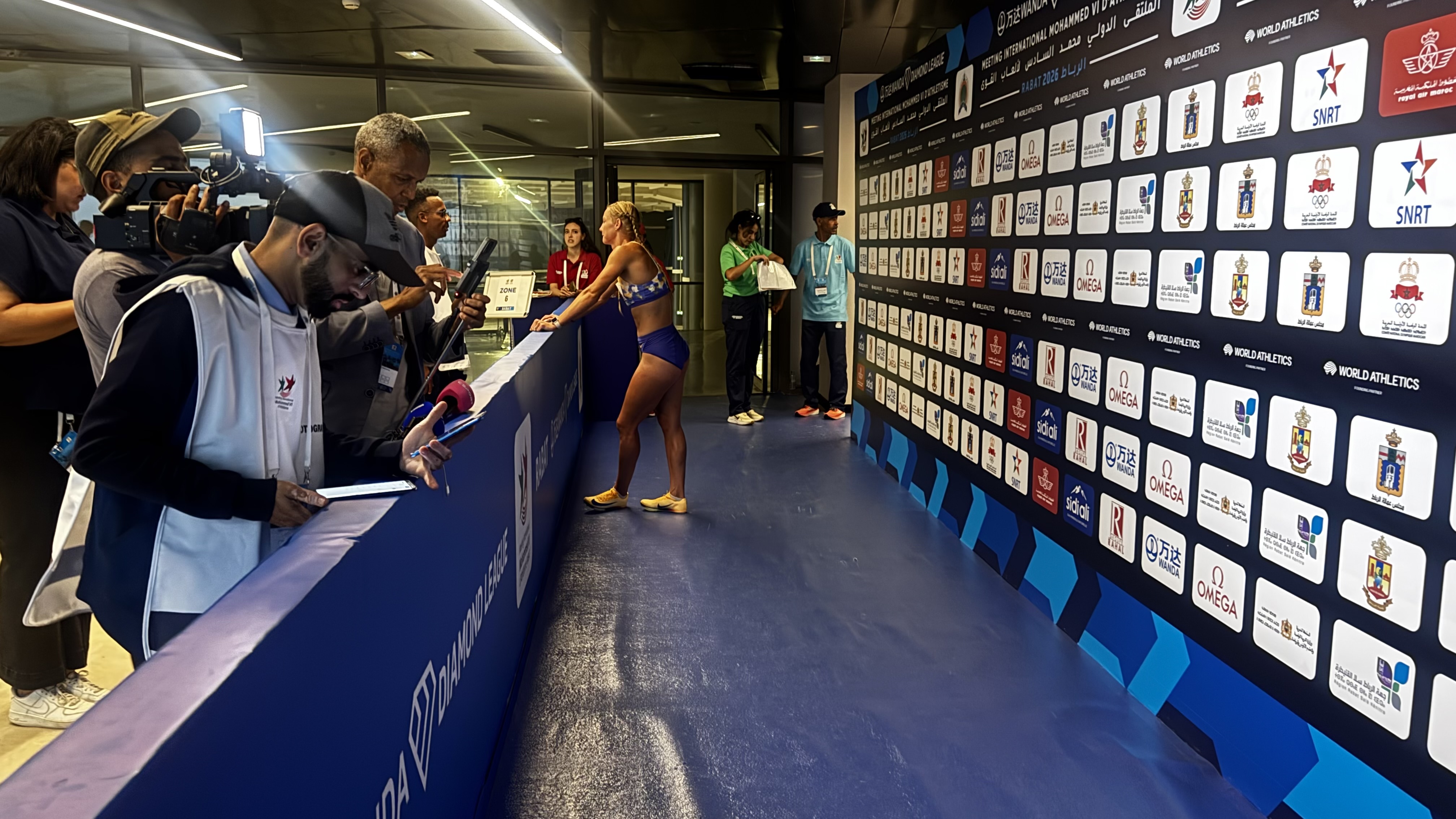
Journalists at the Mixed Zone of this year's Rabat Diamond League meeting. Rabat's Prince Moulay Abdellah Stadium offers top-tier, international-standard corporate boxes and modern media centres that already successfully cater to Diamond League standards. (Photo / Elias Makori)
In Rabat, the premier Prince Moulay Abdellah Stadium offers top-tier, international-standard corporate boxes and modern media centres that already successfully cater to Diamond League standards.
Meanwhile, Johannesburg's iconic FNB Stadium and nearby specialized track hubs present world-class turf, expansive spectator seating, and state-of-the-art timing technology built to handle immense global television demands.
The exponential growth of the Continental Tour proves that the global appetite for track and field is surging. In 2021, the circuit featured just 69 meetings globally. By 2025, that number expanded to 263 meetings, engaging 20,372 athletes from 186 different countries across all four levels.
Moving through 2026, the calendar has expanded to an astonishing 292 meets worldwide, demonstrating a massive leap in geographic diversity across Africa, Europe, Asia, the Americas, and Oceania.
This geometric progression aligns perfectly with the overarching vision of World Athletics to grow the sport in new markets, drive grassroots participation, attract fresh corporate partners, and build a massive, interconnected fanbase.
For African cities, integrating deeper into this ecosystem — specifically at the Gold and Silver tiers — presents an unmatched opportunity. Hosting a Continental Tour Gold meeting instantly places an African city on a prestigious global stage, with live broadcasts currently reaching 145 countries worldwide.
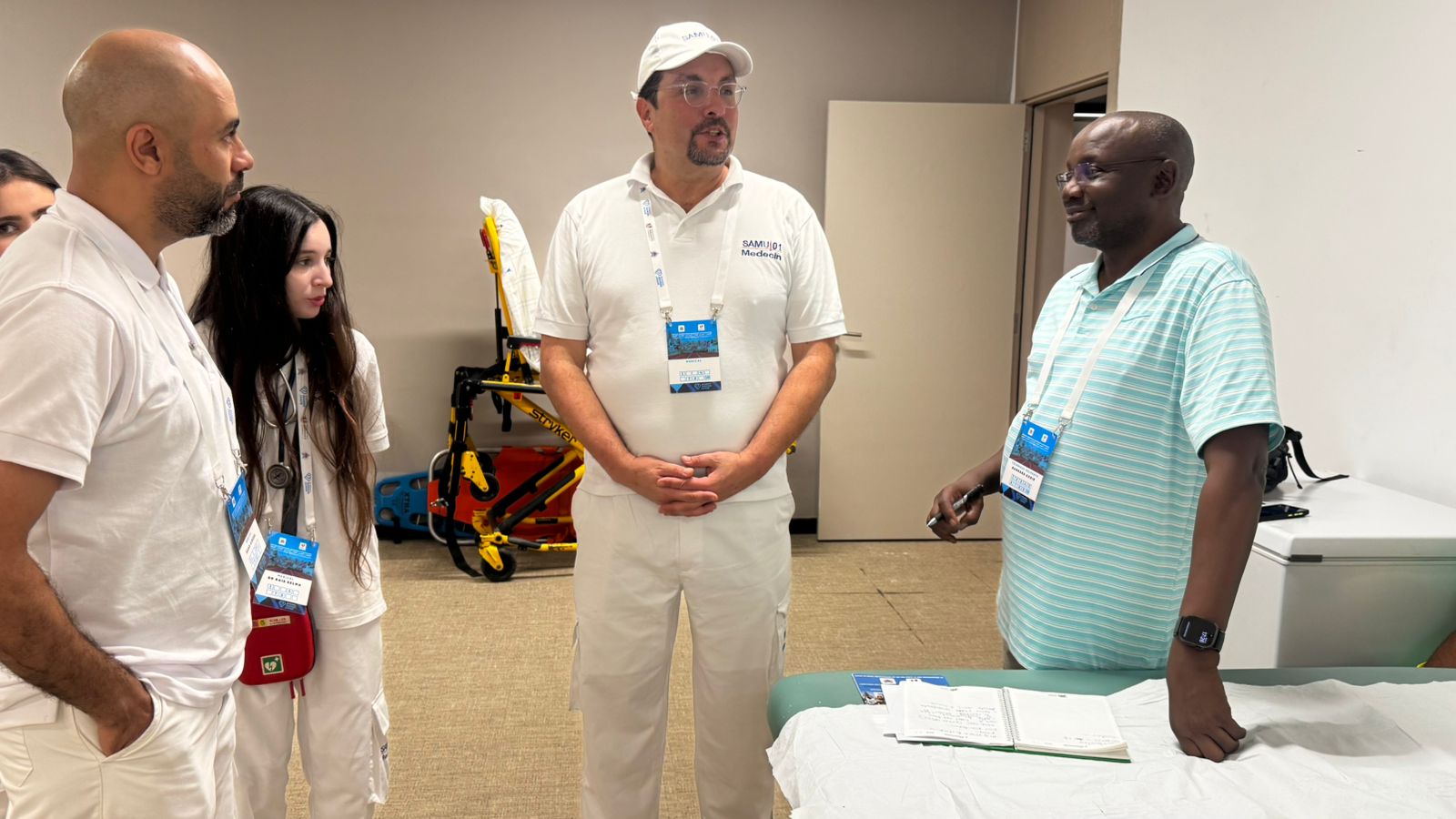
Barnaba Korir (right) gets a brief from the medical and anti-doping team at this year's Rabat Diamond League meeting. Korir was appointed Technical Delegate at May’s World Athletics Relays in Gaborone and the Rabat Diamond League meeting the same month. (Photo / Elias Makori)
This level of international exposure allows host nations to showcase their organizational capabilities, attract foreign investment, and stimulate sports tourism.
Crucially, it brings world-class competition directly to local fans while allowing domestic athletes to qualify for major global championships without the prohibitive costs and visa anxieties associated with international travel.
World Athletics provides robust financial and technical support to ensure these meetings operate at the highest professional standard.
From appointing elite Gold-level Technical Directors to offering comprehensive guidelines on marketing, broadcasting, and officiating, the governing body ensures that local organizers can deliver a product that appeals to global corporate sponsors.
Pierce O’Callaghan, World Athletics’ Head of Competition Management in the Competitions and Events Department, is a strong supporter of the development of an African circuit and has continued to expose African officials to opportunities in the World Athletics Series, like Kenya’s Barnaba Korir who was Technical Delegate at May’s World Athletics Relays in Gaborone and the Rabat Diamond League meeting.
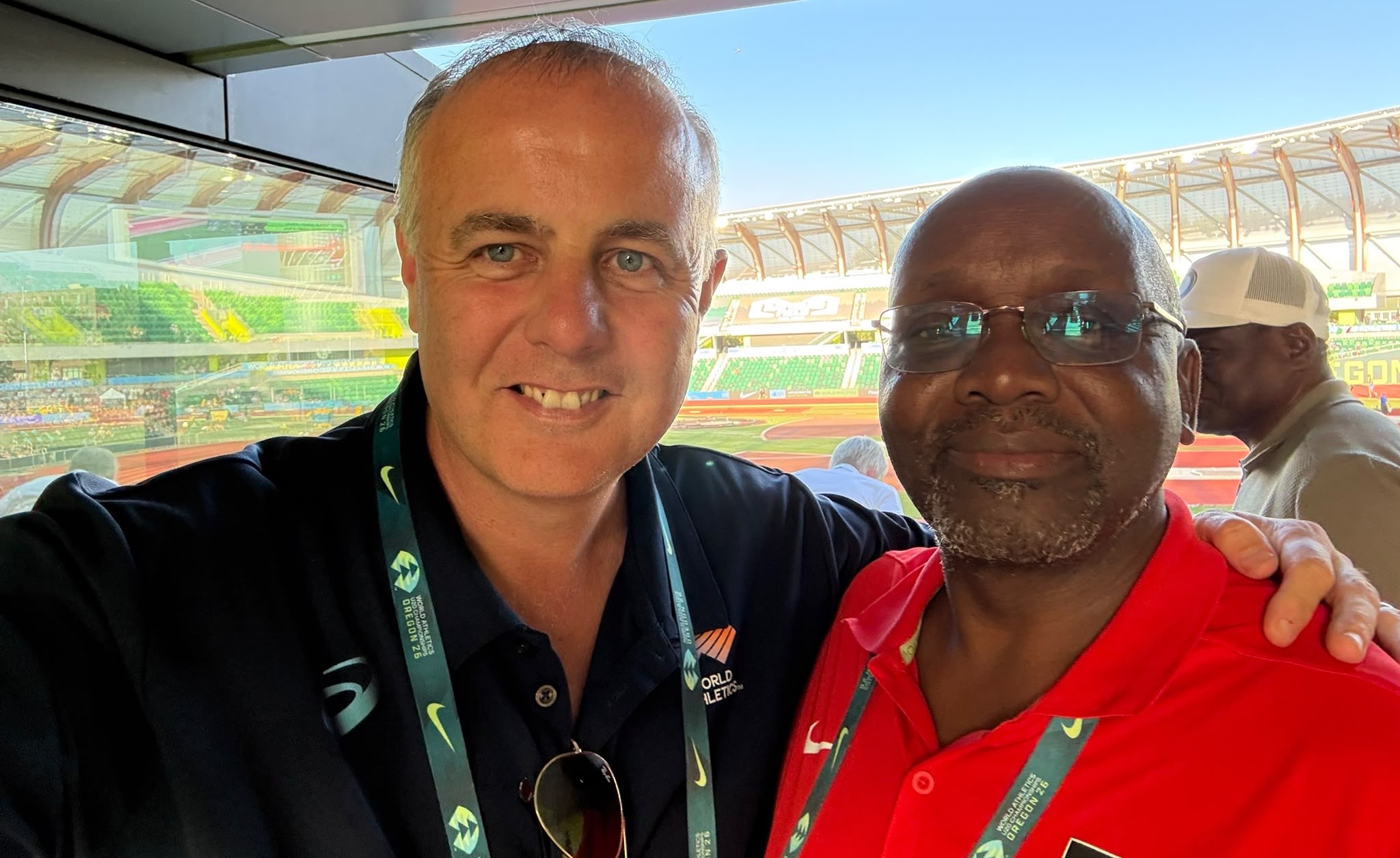
Pierce O’Callaghan (left), World Athletics’ Head of Competition Management, with Athletics Kenya's Barnaba Korir. O'Callaghan, is a strong supporter of the development of an African circuit as demonstrated by his support of Korir as Technical Delegate in World Athletics Series events. (Photo / Courtesy)
“We really want to awaken the sleeping giant that is African Athletics,” says O’Callaghan who is impressed by the organizational strides Africa has made.
By embedding school and youth events into the pre-show programme, these meetings also serve as a vital tool to inspire the next generation of African talent.
The pieces of the puzzle are now aligned in a way they were not in 2005. The Continental Tour has democratized high-level athletics, proving that elite circuits can thrive outside of Western Europe.
Rabat’s Diamond League meeting, the Kip Keino Classic, Botswana Golden Grand Prix and the new Addis Ababa Grand Prix meetings, alongside the Simbine Classic in Pretoria, already form a strong foundation for an African tour that should also touch Western Africa athletics hubs like Accra or Abuja.
With a proven global blueprint, surging broadcast demands, an unmatched reservoir of domestic talent, and Nairobi’s historic 2029 bid paving the way, the time is ripe for Africa to establish its own definitive, lucrative tour. The continent must no longer just produce champions; it must host them.
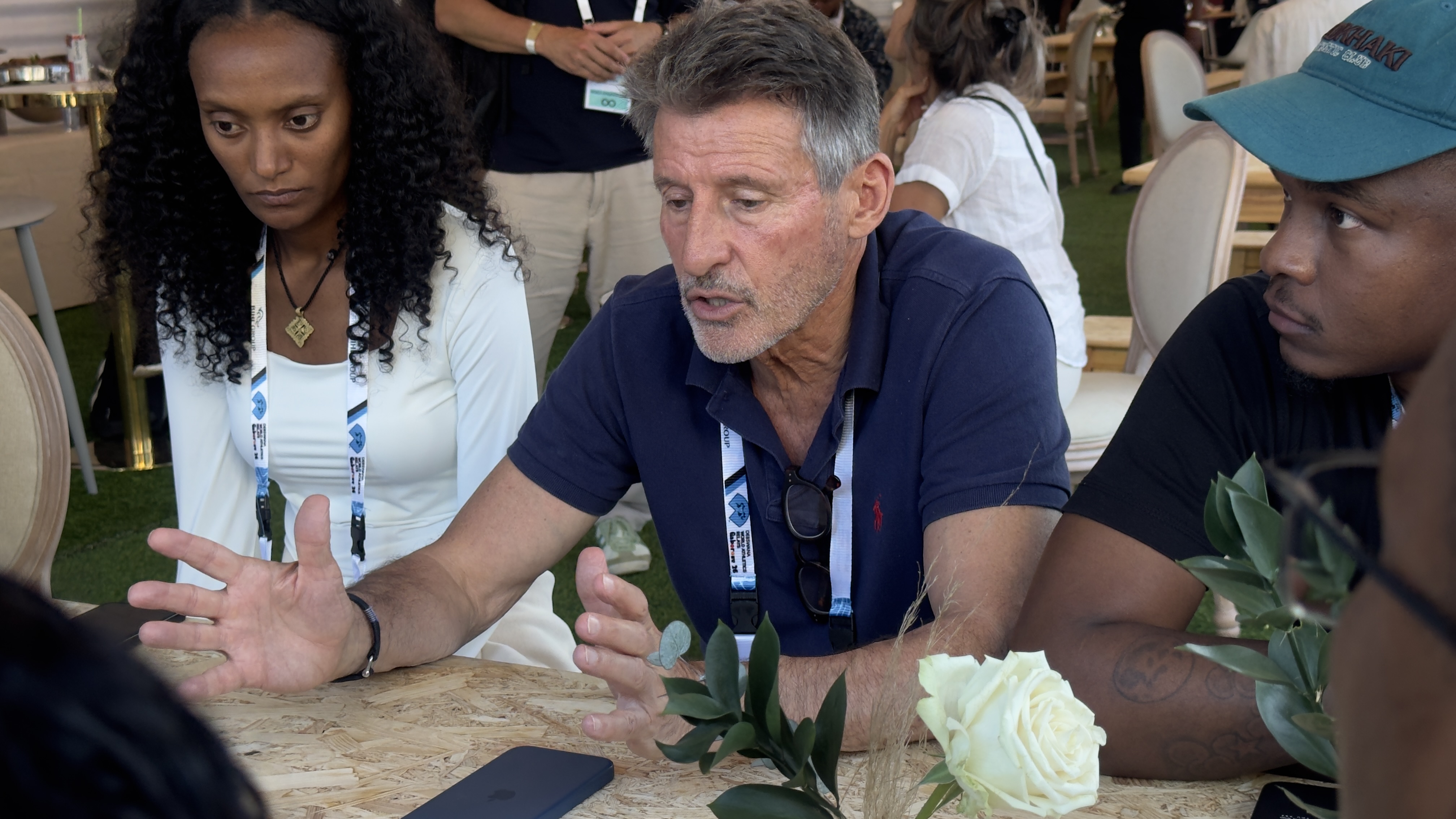
World Athletics President Seb Coe during a round table with young African athletics journalists on the sidelines of the World Athletics Relays Championships in Gaborone in May. Coe is for the globalisation of athletics and expansion of the sport into new frontiers. (Photo / Elias Makori)
Editor’s Note and Background Data:
World Athletics enforces minimum prize money structures and organizational frameworks to maintain the integrity of the Continental Tour tiers:
- Gold Tier Meetings represent the pinnacle of the Continental Tour. Organizers must offer a minimum total prize purse of $200,000 USD per meeting. Within this structure, each core discipline must offer a minimum of $20,000 USD, with the race winner taking home at least $6,000 USD. Gold tier events are subject to strict international television broadcast mandates and require the presence of a World Athletics appointed Technical Director.
- Silver Tier Meetings serve as the vital competitive layer directly beneath Gold. Organizers are required to provide a minimum total prize purse of $75,000 USD per meeting. Individual core disciplines must offer at least $6,000 USD in total prize payouts, ensuring that emerging and continental athletes can still secure substantial financial compensation as they chase global ranking points.

US sprints star Gabby Thomas celebrates after winning her race at the inaugural Addis Ababa Grand Prix on April 18 this year. Africa is warming up to a Diamond League-like series of its own. (Photo / Tikvah Sport Image)