



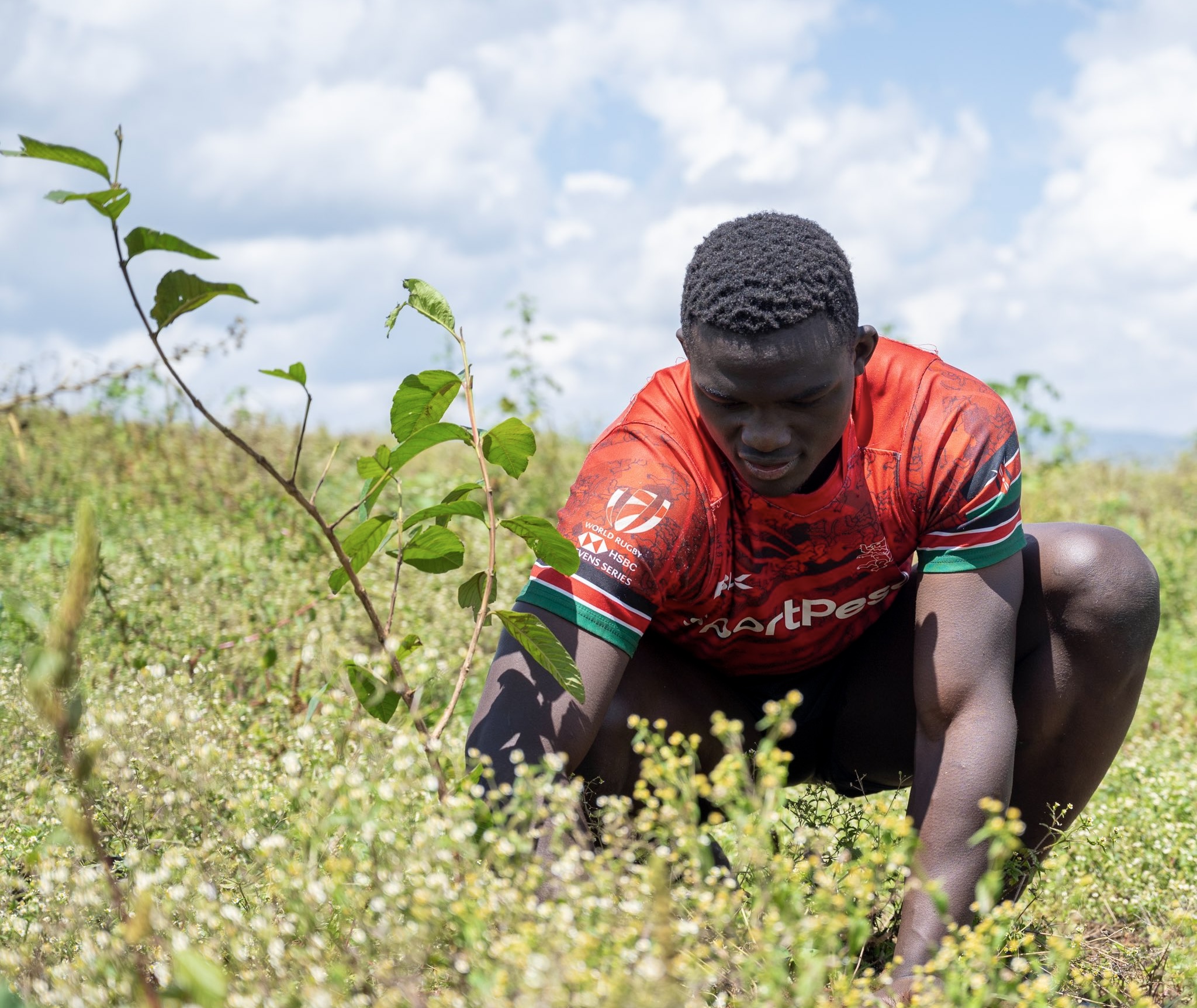
 On a scorching afternoon in 2023, Kevin Wekesa and his Kenya Sevens teammates bolted on a 111-kilometre road trip to Kirinyaga, high on the rugged slopes of Mt Kenya. Their mission? Spark a rugby revolution. They arrived geared up to unleash the speed and flair of the sevens game, ready to teach local kids how to dance and flirt with the oval ball.
Instead, they collided with a harsh reality check.
The heat was suffocating. The air was choked with dust. The pitch was baked bone-dry and completely unplayable. The brutal weather forced a sudden, heartbreaking halt to the action, twisting their high-energy training clinic into an unexpected classroom session.
“You’d expect beautiful weather and a crisp, playable field,” Wekesa recalled. “But it was too blistering hot, the ground was mercilessly dry, and we simply couldn't play the game we love with those kids.”
That jarring moment of disappointment flipped a switch - and sparked the birth of Play Green in March, 2023.
“When I joined the Kenya Sevens team, I wanted to give something back to the community, and there’s a time I visited several schools in Kirinyaga and there was this one school in particular, Kabare Boys Primary that struck me. We were having talks with the kids and then planned to have lunch and the give them some balls and go for a session on the field,” Wekesa flashed back in an exclusive interview with Pura Vida Sports Africa.
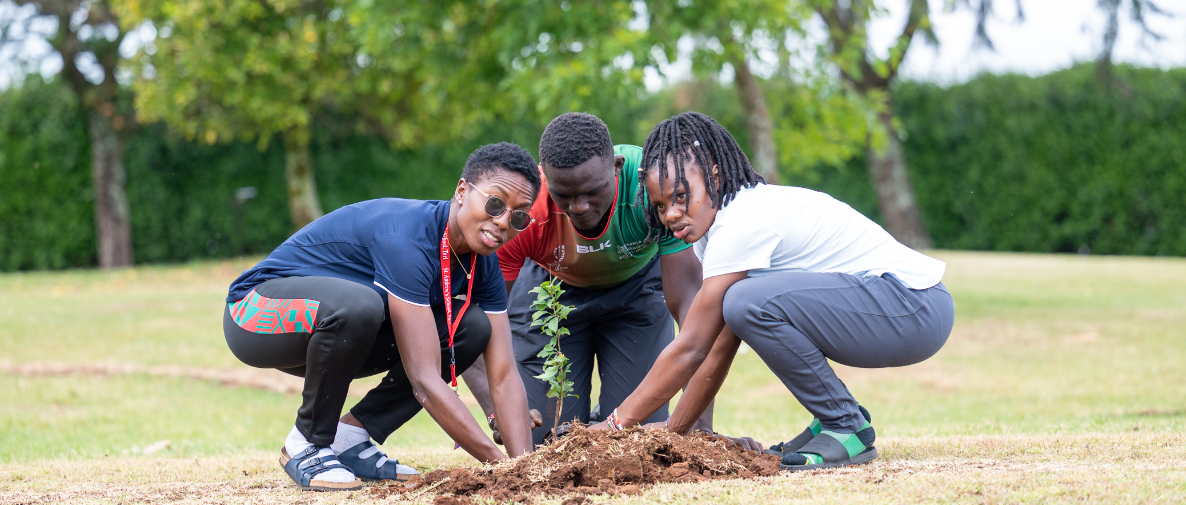
Kenya Sevens Rugby star Kevin Wekesa joins national women's rugby team players in planting trees during the International Women's Day. Photo - Play Green
“In Central Kenya, because of Mt Kenya, you would expect lush fields and green all over, but when we went to assess the field, it was quite dry with a lot of stones… we assessed the injury risks and concluded that we could not play on that ground. I asked them why the ground was in that condition and they told me it had been so hot and dry. One of them said it was ‘climate change’ because usually at that time of the year and being on the windward side of Mt Kenya, you would expect it to be wet.
“I took it like we had cancelled a game because of climate change, and that’s when I started becoming passionate and more involved with issues around environmental conservation. I thought that since I have a platform in sports, I might as well use that platform to push for sustainability that would also benefit sportspeople.
“Slowly, I started doing courses on climate and sustainability. At the time, Kenya had been relegated from the World Sevens Series and we were making our way back to the Series… We got an invitation to camp at St Andrew’s Turi. I thought that if the Kenya Sevens team can plant trees at Turi and then students adopt them, it would be a good idea. But one of the directors said they could even give us a section that can be named “Shujaa Forest”.
“We started with around 50 fruit trees in 2023 and agreed to keep adding trees whenever we camped there. We have done like four camps at Turi so in Turi alone, I’ve planted over 1,000 trees and the school community has planted like 30,000 trees in their own ecosystem,” the 26-year-old Wekesa, who transitioned to rugby in 2015 at St. Joseph's Boys High School Kitale, having previously played as a football goalkeeper, recounts.
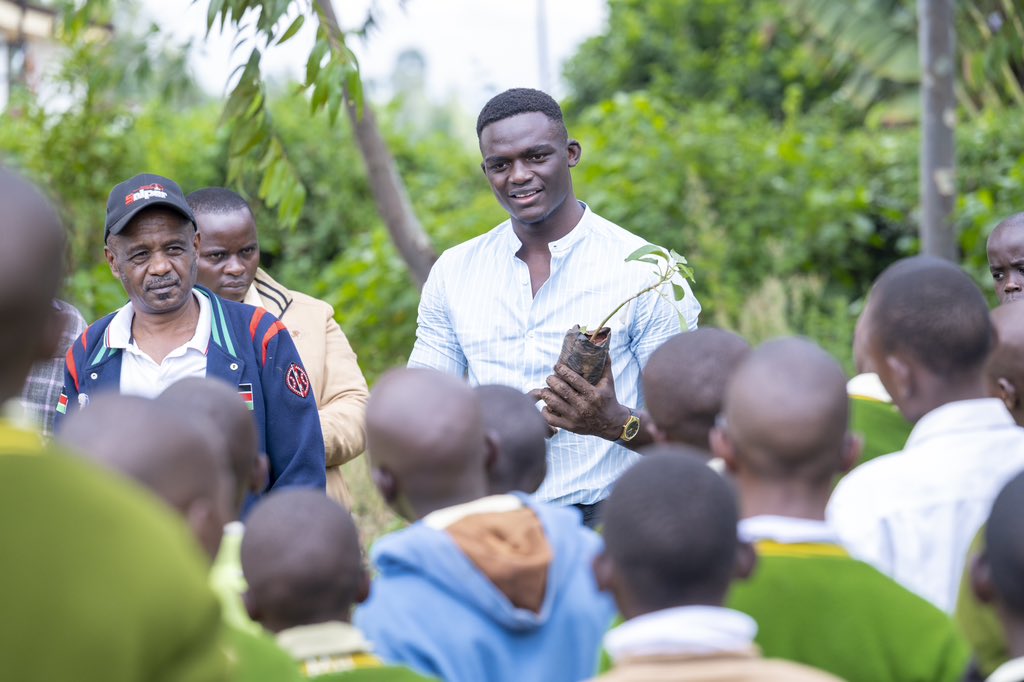
Kevin Wekesa takes time to educate school children on the importance of environmental conservation. He has been to over 40 schools so far. Photo - Kevin Wekesa
What Sparked Play Green
The Kenya Sevens team “Shujaa” and Kabras RFC forward says he realized sustainability was more than just planting trees. “There’s also the issue of plastics and recycling, and these are the elements that I integrated into my project.”
That’s what sparked Play Green, a sustainability initiative that uses rugby and sport in general to promote climate awareness and action.
“When I started Play Green, I decided to base it on four main pillars: Education on Climate Change and Environment; Tree Planting; Recycling and Circular Economy, and Ending Single Use Plastics.”
He explains each of the pillars: “In Education on Climate Change and Environment, I realized not everyone knows why we are planting trees, or the reasoning behind it. One of the things I did is hold 30-minute workshops outside the classroom whenever I went for tree planting in schools. I have so far done this in over 40 schools in Kenya. Before I was not keeping track of the trees. I want to plant 10,000 trees this year and so far I’ve done over 6,000.
“Recycling and Circular Economy is not just about plastics… even the gear that we use, like boots – I’d use a pair of boots for like two months and instead of throwing these boots away, I’d pass them down to someone else. And instead of lasting for two months, If I gave a high school player, they would last longer.
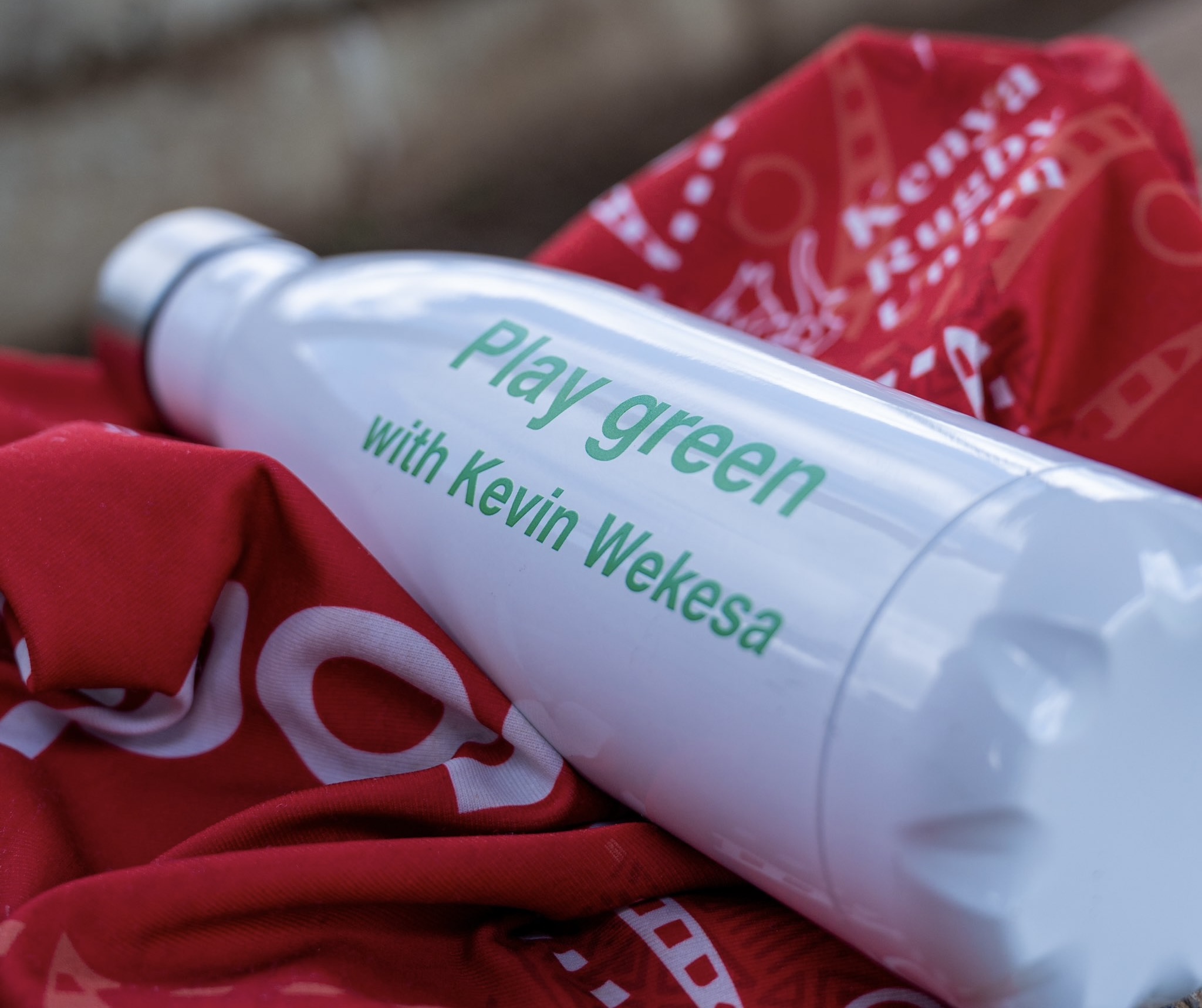
Kevin Wekesa: 'I thought why can’t we kill this single use plastics and everyone gets a reusable bottle. I decided to get everyone in the team reusable bottles and we use these bottles at refilling stations – it was cheaper than buying dozens on water bottles.' Photo - Kevin Wekesa
“Ending Single Use Plastics started with the Kenya Sevens team. At Kenya Sevens, we use the small, 500ml bottles for hydration in training and in games… During a single training session, we are about 25 people and in a single training session – from 6am to 1pm – four times a week, I realized that if one person is taking five litres of water a day, that’s like 10 plastic bottles which are eventually left on the pitch, and the next day, before we start training, the field would be covered in plastic bottles, and we would have to pick them and throw them in the bin.
“I thought why can’t we kill this single use plastics and everyone gets a reusable bottle. I decided to get everyone in the team reusable bottles and we use these bottles at refilling stations – it was cheaper than buying dozens on water bottles.”
‘Trees for Tries’ Initiative
Having started alone, Wekesa is now building a team at the Play Green initiative.
“Some people are coming in as volunteers, helping plant trees and educate the children. They will also continue with the work whenever I travel on rugby tours. I’ve just registered the initiative, and we are looking at how to partner with various organisations, including the Kenya Power Foundation.”
One of the innovative ideas that Wekesa has developed is the “Trees for Tries” initiative with 100 tries being planted for every try scored at the HSBC II tournament and the Safari Sevens.
“A total of 297 tries were scored (at the HSBC II tournament) and so the Kenya Power Foundation pledged 29,700 trees to help green Kenya – these are some of the projects that I’m doing. It’s now about getting the structures done better for this initiative.”
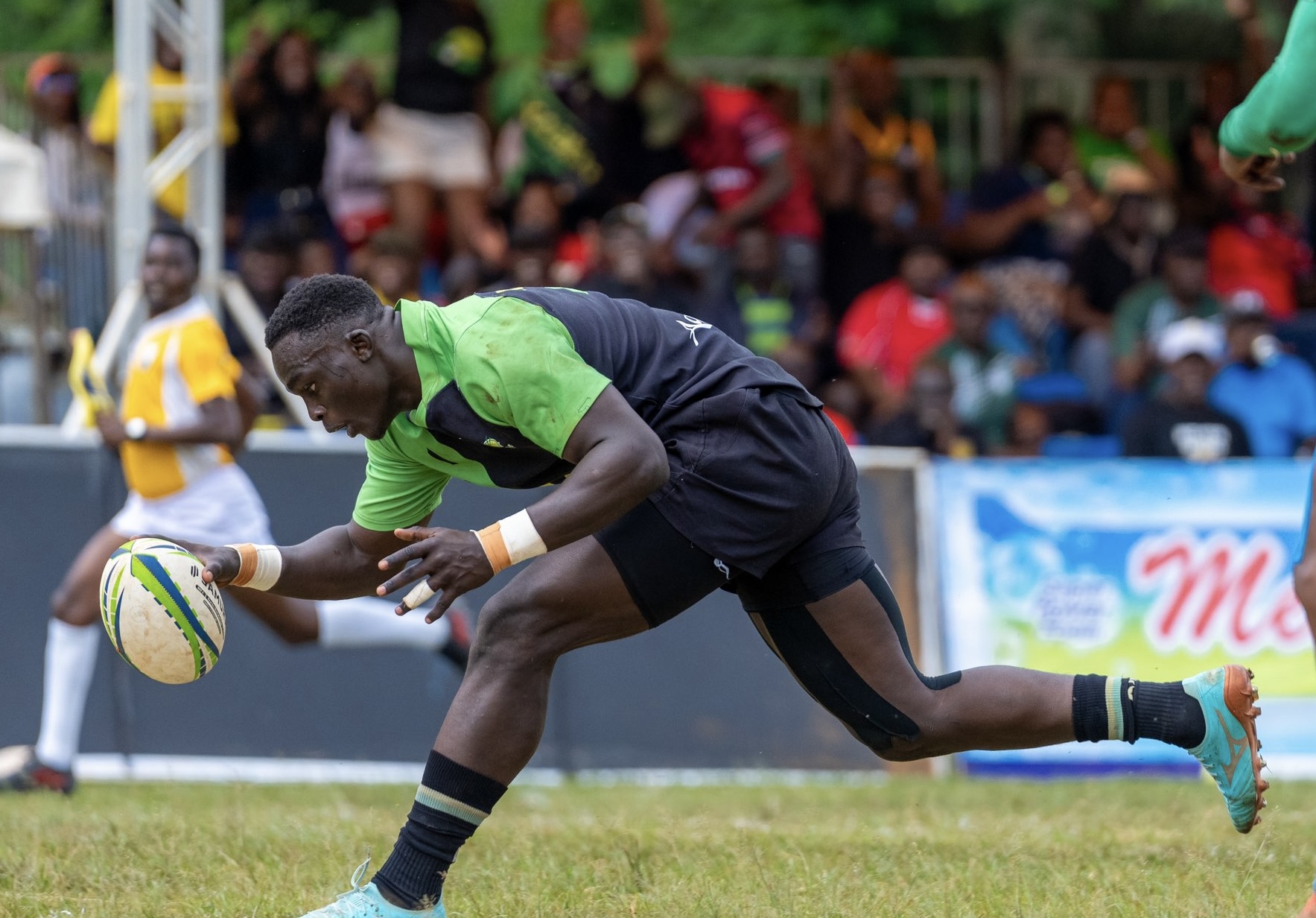
Kevin Wekesa touches down for Kabras Sugar RFC in the Kenya Cup. A total of 297 tries were scored at the HSBC II tournament in Nairobi this year and so the Kenya Power Foundation pledged 29,700 trees to help green Kenya. Photo - Arigi Obiero / KRU
At this month’s Safari Sevens tournament at the Nyayo National Stadium, Play Green – with the help of 67 volunteers - collected 850kg of plastic translating to 34,000 bottles.
UN in Kenya Person of the Year Award
This week, Wekesa, also an integral part of Kenya’s sevens rugby team to the 2024 Paris Olympic Games, was named runner-up for his Play Green initiative, in the 2026 UN in Kenya Person of the Year Award presented at the United Nations Environmental Programme (UNEP) Nairobi Headquarters.
Bornface Otieno Owino a young farmer who has turned his land in Homa Bay into a place where others learn climate-smart agriculture, was named overall winner of the award which recognises contributions to the Sustainable Development Goals (SDGs) and the ideals of the United Nations.
The citation mentioned that Wekesa’s Play Green initiative had helped national rugby teams replace close to 1,000 single-use plastic bottles a week with reusable aluminium bottles, also promoting match-day recycling with clubs and the Kenya Rugby Union. Play Green has also planted more than 1,500 trees and taken climate education to over 40 schools.

Kevin Wekesa in action for Kenya against Samoa at the 2024 Paris Olympics. Photo - Zuma Press
The awards were handed on the UN Day commemoration at the United Nations Office at Nairobi, marking 81 years since the UNEP’s founding, with Zainab Hawa Bangura, United Nations Under-Secretary-General and Director-General of the United Nations Office at Nairobi, unveiling the winners.
“This award belongs to everyone who believes in the power of sport to drive climate change action and transform communities,” Wekesa reacted to the award. “Through Play Green, we are proving sport can be a force for lasting change. From over 8,000 fruit trees planted in schools to recycling almost a tonne of PET (plastic) at Safari Sevens, we have only just begun.”
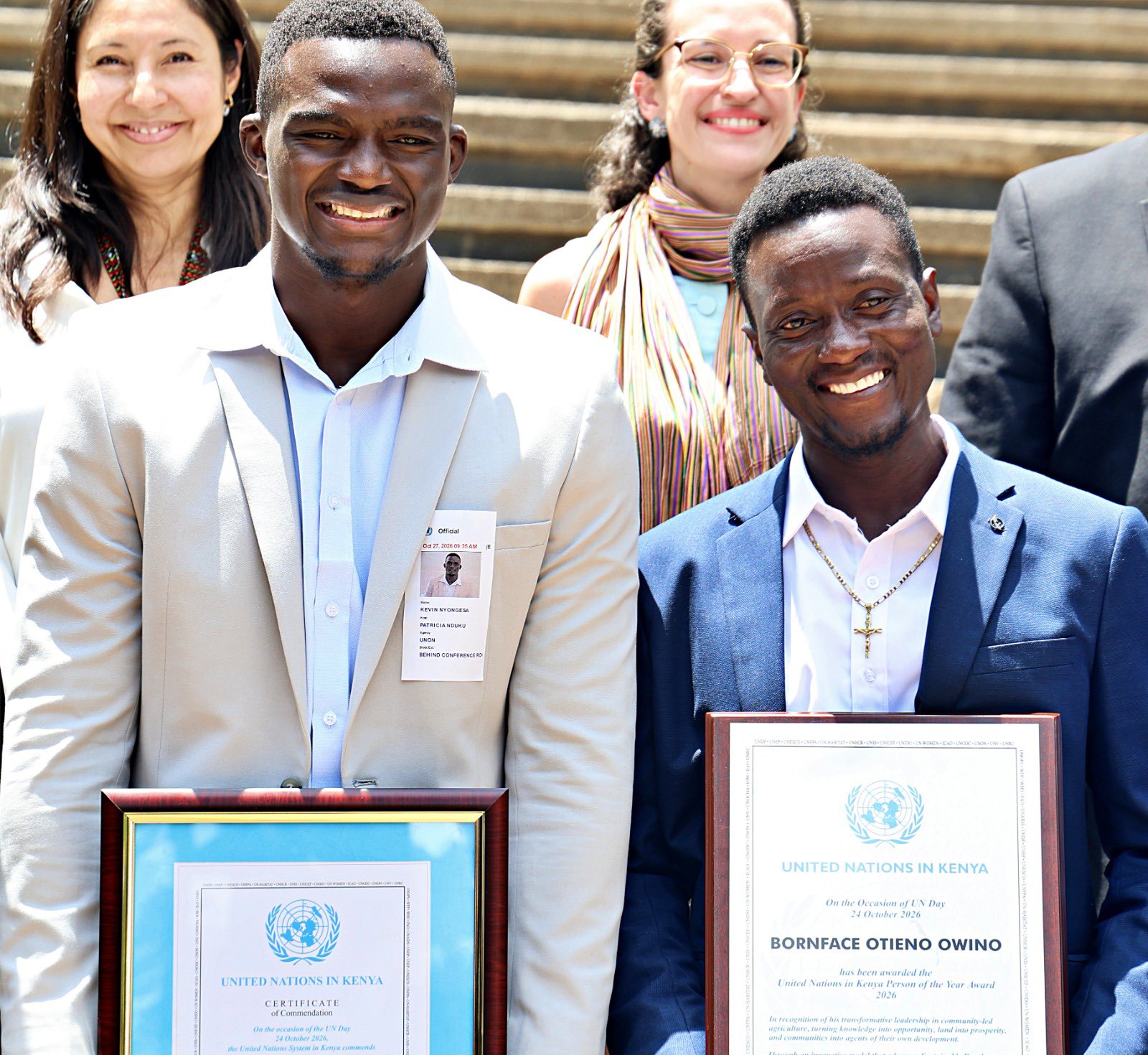
Winner of the 2026 UN in Kenya Person of the Year Award Bornface Otieno Owino (right) and runner up Kevin Wekesa after they were presented with their awards at the United Nations Environmental Programme (UNEP) Nairobi Headquarters. Photo - UNEP
IOC Climate Action Award
And on February 4, this year, Wekesa was among the recipients of the International Olympic Committee (IOC) Climate Action Awards 2025 alongside Olympic hockey player Hugo Inglis from New Zealand, the National Olympic Committee of the Netherlands and the International Biathlon Union have, in recognition of their efforts to address climate change and make sport more sustainable.
The announcement was made during the IOC Session held in Milan, ahead of the Milano Cortina 2026 Olympic Winter Games.
“As athletes, we learn early on to focus on what we can control and to keep pushing and adapt, even when conditions are not perfect,” IOC President Kirsty Coventry said at the awards ceremony. “That spirit is exactly what drives the IOC Climate Action Awards. Our winners are showing that protecting our planet and pursuing excellence can go hand in hand. Their work shows the impact of the Olympic community when it leans in together with purpose. What an inspiration.”
The IOC was impressed by the fact that Wekesa has embedded sustainability into education and community engagement: “Through partnerships with 40 schools, Play Green combines tree-planting with workshops on water conservation, waste management and climate justice. To date, the initiative has supported the planting of 2,300 trees and engaged thousands of children in climate education. Kevin has extended this work to clubs and federations, launching match-day recycling initiatives and installing clearly marked recycling bins and collection points to divert waste from landfill.”
Julie Duffus, Head of Sustainability at the IOC, told Pura Vida Sports Africa how proud she was of Wekesa’s achievements and seeing him receive the IOC award: “We are so proud of him… it was an emotional moment because he’s just fantastic! You should be very proud of him. He very much deserves the award from us. He’s such an inspiration not only for Kenya, but for younger athletes and everybody across the world because everything he has done has come from his heart, really amazing work.”
New Zealand hockey player Inglis is the co-founder of High Impact Athletes (HIA), a global movement that channels athlete visibility and resources towards evidence-based climate solutions. HIA brings together more than 240 athletes from 50 disciplines and 35 countries and has directed more than $2 million to charities that deliver impact in the areas of climate, global health and animal welfare.
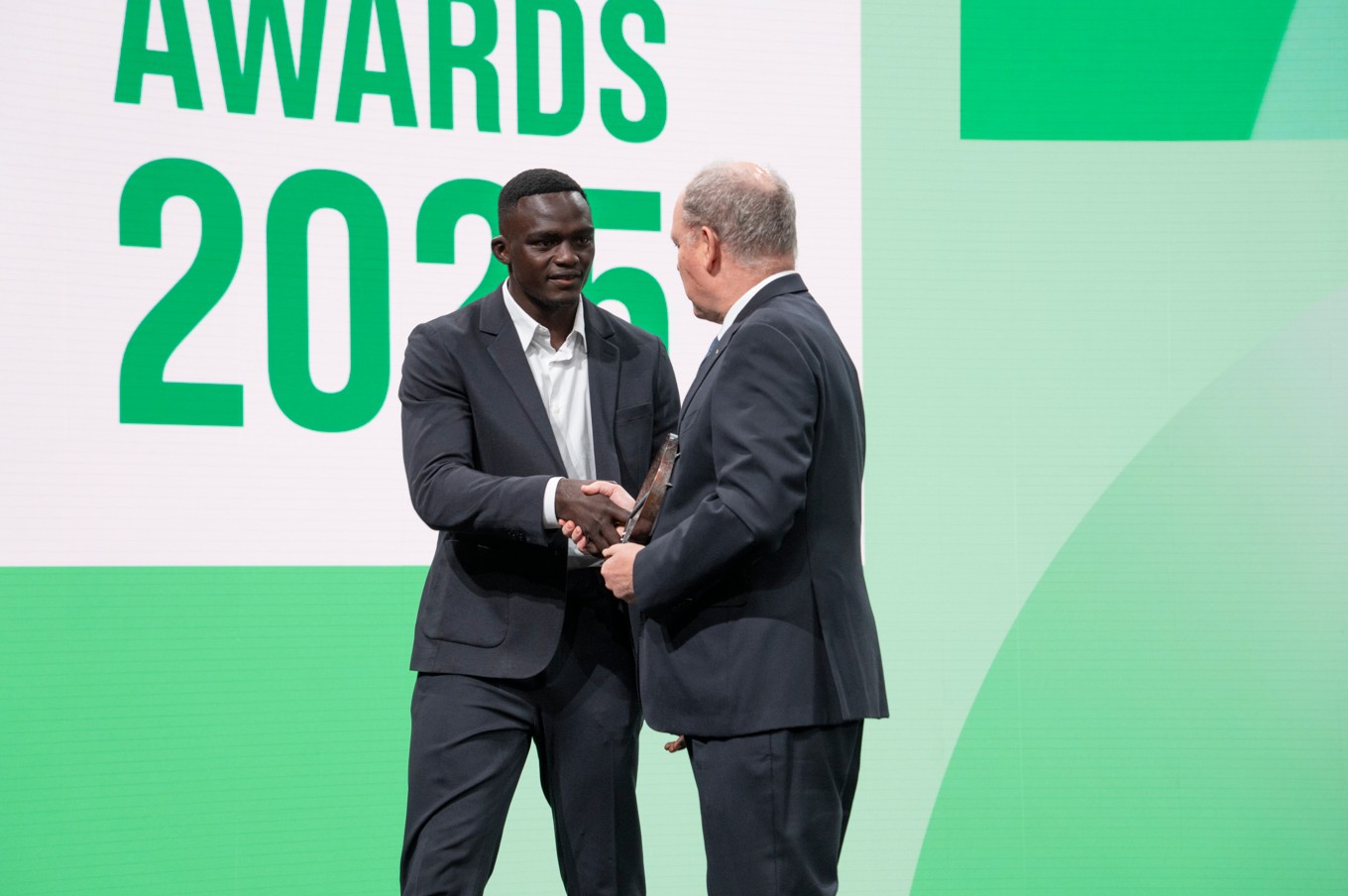
Kevin Wekesa receives the 2025 IOC Climate Award from Prince Albert of Monaco in Italy on February 4, 2026. Photo - IOC / Meyer Quinton
Sustainability Mentoring Programme
The IOC awards attract tailored support to winners, including Innovation Labs for National Olympic Committees and International Federations and a six-month sustainability mentoring programme for athlete awardees.
“When I found out I’d won the (IOC) award, I felt deeply humbled and grateful. It was a powerful moment of validation not just for me, but for the idea that athletes, especially back in Kenya, can use sport as a force for positive change beyond the field. Being recognised by the IOC means a lot because it shows that pushing for climate action in sport truly matters, even at the highest level. It reinforces that the work we’re doing locally in Kenya can have global relevance and impact.”
Wekesa put in his entry for the IOC award contest – open to past and present Olympians and Paralympians – in March last year and was shortlisted for an interview with an IOC Panel in August, eventually making the final shortlist in November, with the announcement made at the Winter Olympics this year where he was named as one of the winners.
“The IOC award lends credibility to the work that I have been doing for the last two and a half years. It also gives me an opportunity to scale up my programme because one of the things you get from the award is a six-month mentorship programme with Deloitte.”
Wekesa’s message to other athletes is to start small: “You don’t need to have all the answers or start big. Start where you are, use your voice authentically and lead by example. Small actions, when multiplied through sport, can create meaningful change.”
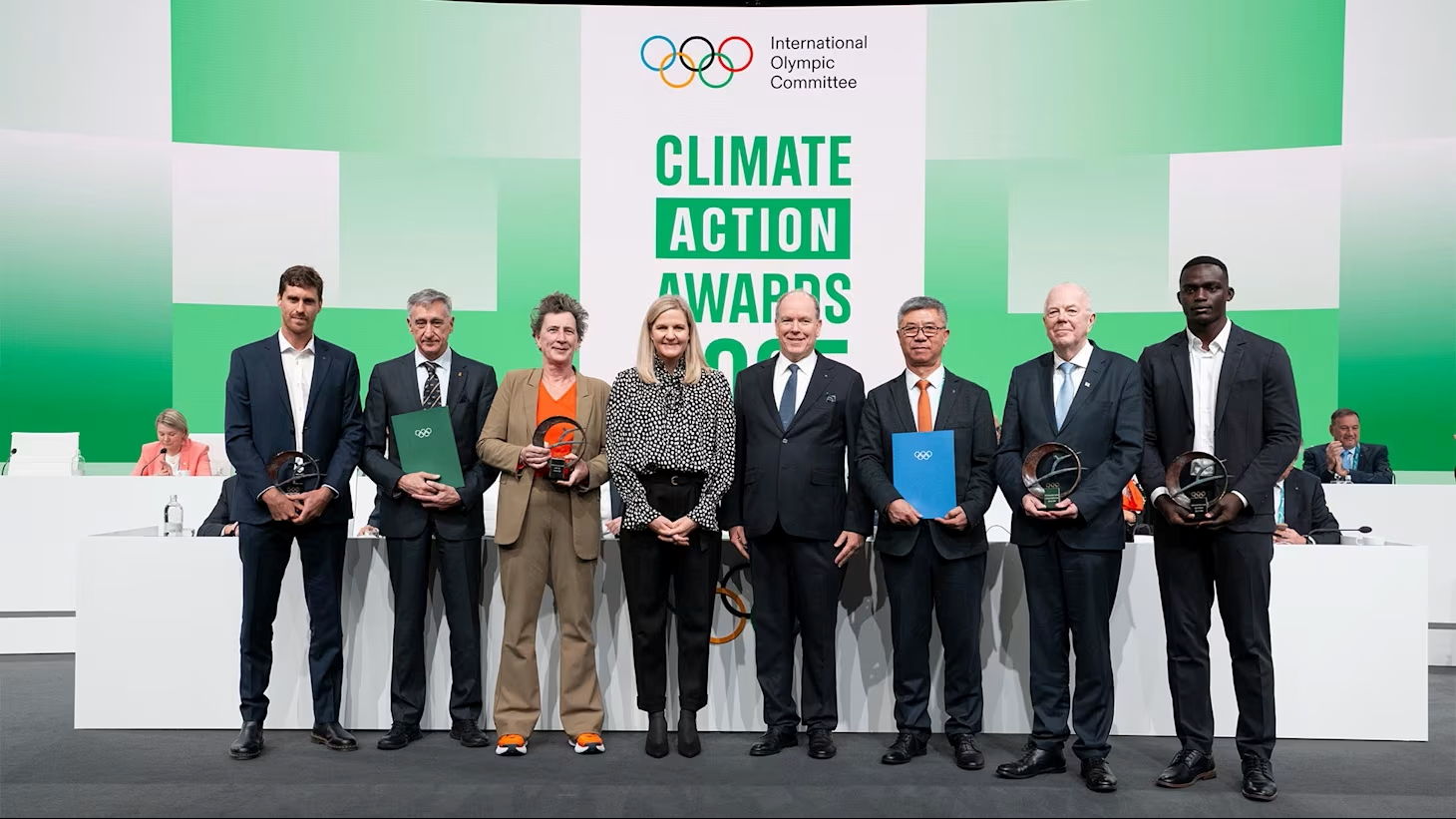
Kevin Wekesa (extreme right) at the 2025 IOC Climate Awards Ceremony in Italy attended by, among others, Prince Albert of Monaco (fourth from right) and IOC President Kirsty Coventry (fourth left) on February 4, 2026. Photo - IOC / Meyer Quinton
Role Models in Sport
The rugby star looks up to Portuguese football superstar Cristiano Ronaldo for inspiration in sport: “I wouldn’t say Cristiano is as talented as Messi, but seeing the hard work he puts in and what he has been able to achieve wherever he goes to makes me look up to him.
“Locally in rugby I’ve always looked up to Willy (Ambaka) and Humphrey (Kayange). I took over Humphrey’s number when I joined the national sevens rugby team and these are the guys I’ve always looked up to. Globally in Sevens Rugby, I’ve admired (New Zealand legend) D.J. Forbes. Fortunately, I was able to play for him in India – he believed in hard work, no matter how talented or skilled you are, as long as you keep the numbers and you are always there for the next person.”
In the 15s version of the game, South Africa’s Springboks skipper Siya Kolisi inspires Wekesa. “Looking at how he has inspired South Africa as a nation and his own personality – he’s not one of the best backrows but how he has been able to carry South African rugby at the World Cup is amazing, notes Wekesa who started off his education at Mumias Central Primary School in Kakamega as his parents worked at Mumias Sugar Company.
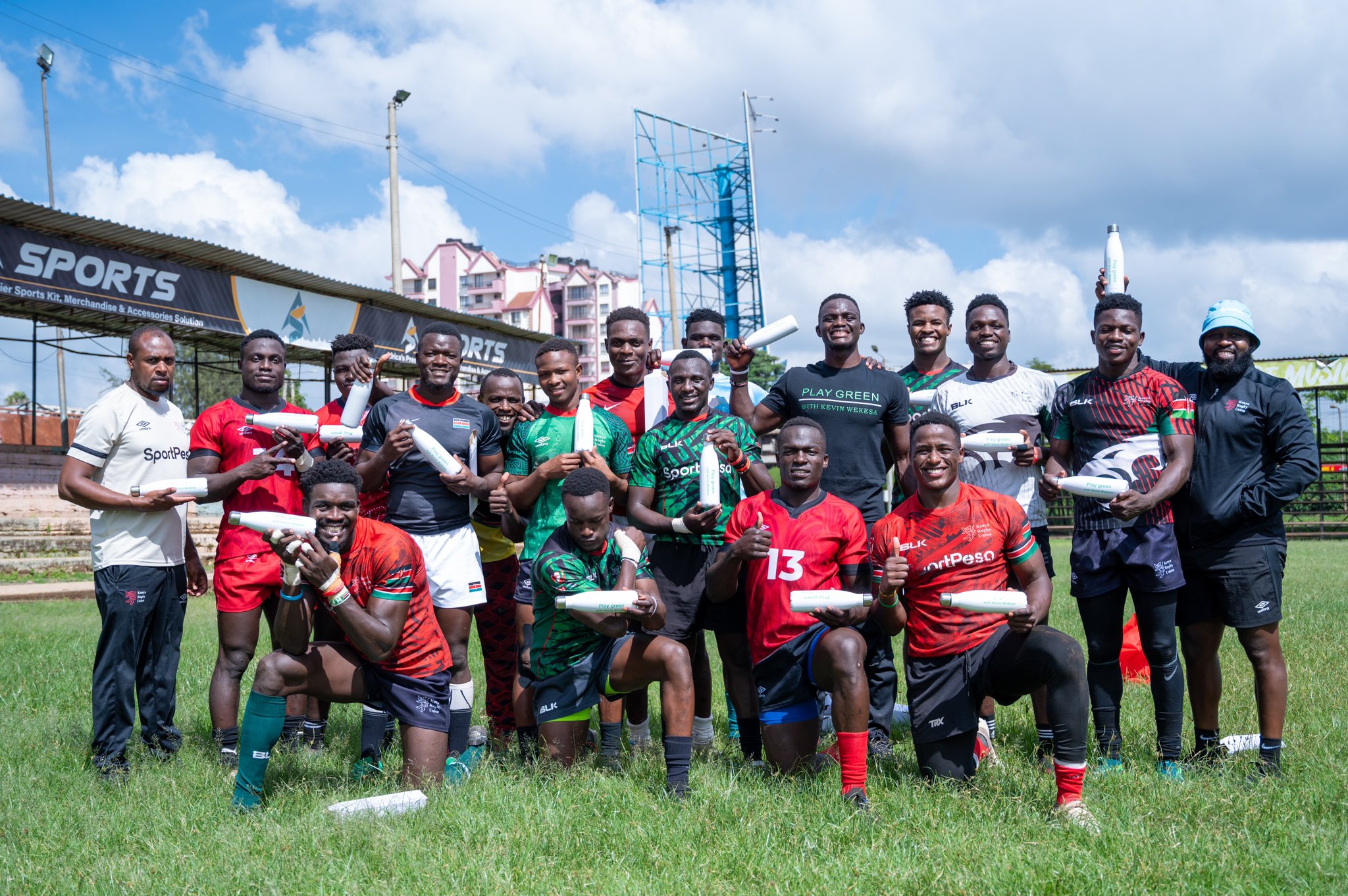
Kevin Wekesa and his "Shujaa" teammates with the reusable water bottles during training at the RFUEA Ground in Nairobi. Photo - Play Green
Wekesa’s Education Background
Wekesa completed his high school at St Joseph’s Kitale, where he played as football goalkeeper in Form One and Two before taking up rugby in 2016 in Form Three, joining Bungoma RFC before the call came from Edwin Achayo, talent co-ordinator at Kabras Sugar RFC.
“He (Achayo) told me that if I wanted, I could go for trials at Kabras… I told my parents (Gabriel Welemba and Rose Simiyu) and we went for the trials with my dad, and my dad gave Kabras the greenlight to sign me after they assured him they would take care of me.”
Wekesa had also just been called up to university at the Technical University of Kenya, and Kabras offered to pay his university education. “This is an offer that no parent would disagree with – that’s how I ended up at Kabras.”
Juggling between his studies in Nairobi and games in Kakamega, and with Covid-19 having disrupted the programme just after he was called to the Kenya Under-20s, Wekesa’s talent caught the eye of senior selectors in the 2021 Kenya Cup final between Kabras and KCB.
“The national coach then, Innocent “Namcos” Simiyu, asked me if I could play in the sevens team… I have never played the sevens before and it was a good opportunity for me to travel to Nairobi and join the Kenya Sevens team.
Focus on Sustainable Engineering
“At the end of 2021, I travelled to the Dubai Sevens as the 14th player, just to watch and see as only 13 players were registered to play. I finally got my debut at the Malaga Sevens in 2022, and through three coaches, I cemented my place in the Kenya Sevens team.”
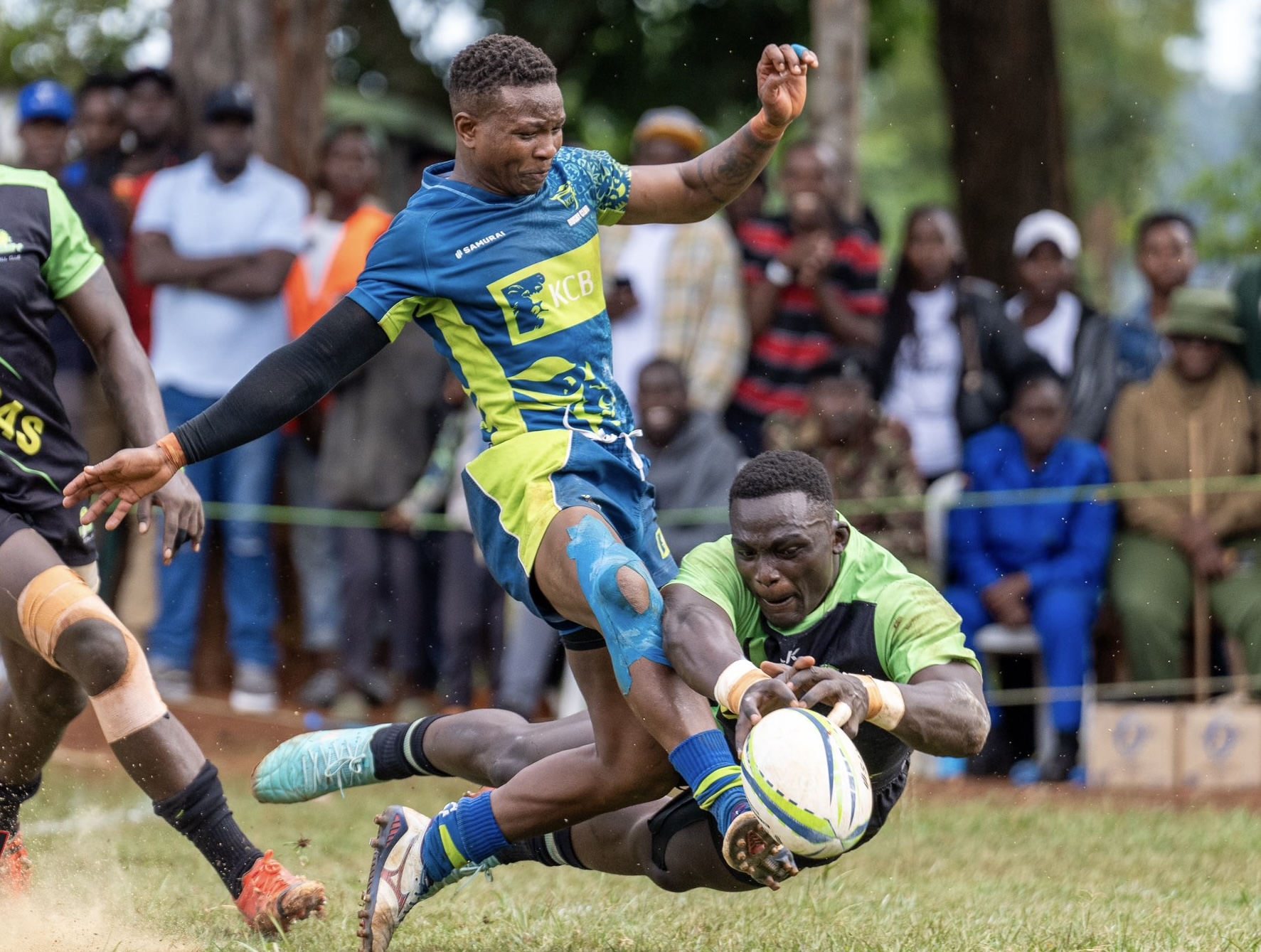
Kevin Wekesa, turning out for Kabras Sugar RFC, stops KCB's Samuel Asati, his teammate at the national sevens team, during Kenya Cup action. Photo - Arigi Obieri / KRU
Wekesa graduated in Mechanical Engineering from the Technical University in 2024 and is currently a Graduate Trainee in Mechanical Engineering and Factory Operations at West Kenya Sugar Company (Kabras Sugar).
“At least I have something I can fall back on once I’m done with my rugby career,” reflects Wekesa whose brother Joel Wanyonyi also had a rugby stint at Strathmore and Kenya Harlequin RFC before taking a sabbatical.
“In mechanical engineering, I specialize in manufacturing. What I envisioned was getting into the industry and doing maintenance, but as I progressed, I’m looking at sustainable engineering in the mechanical engineering side of things.
“I’ve also been able to learn how the world is changing and I don’t just want to do the normal engineering, but I wish to explore outside of engineering, especially with things like the introduction of sustainable transport in Kenya.”
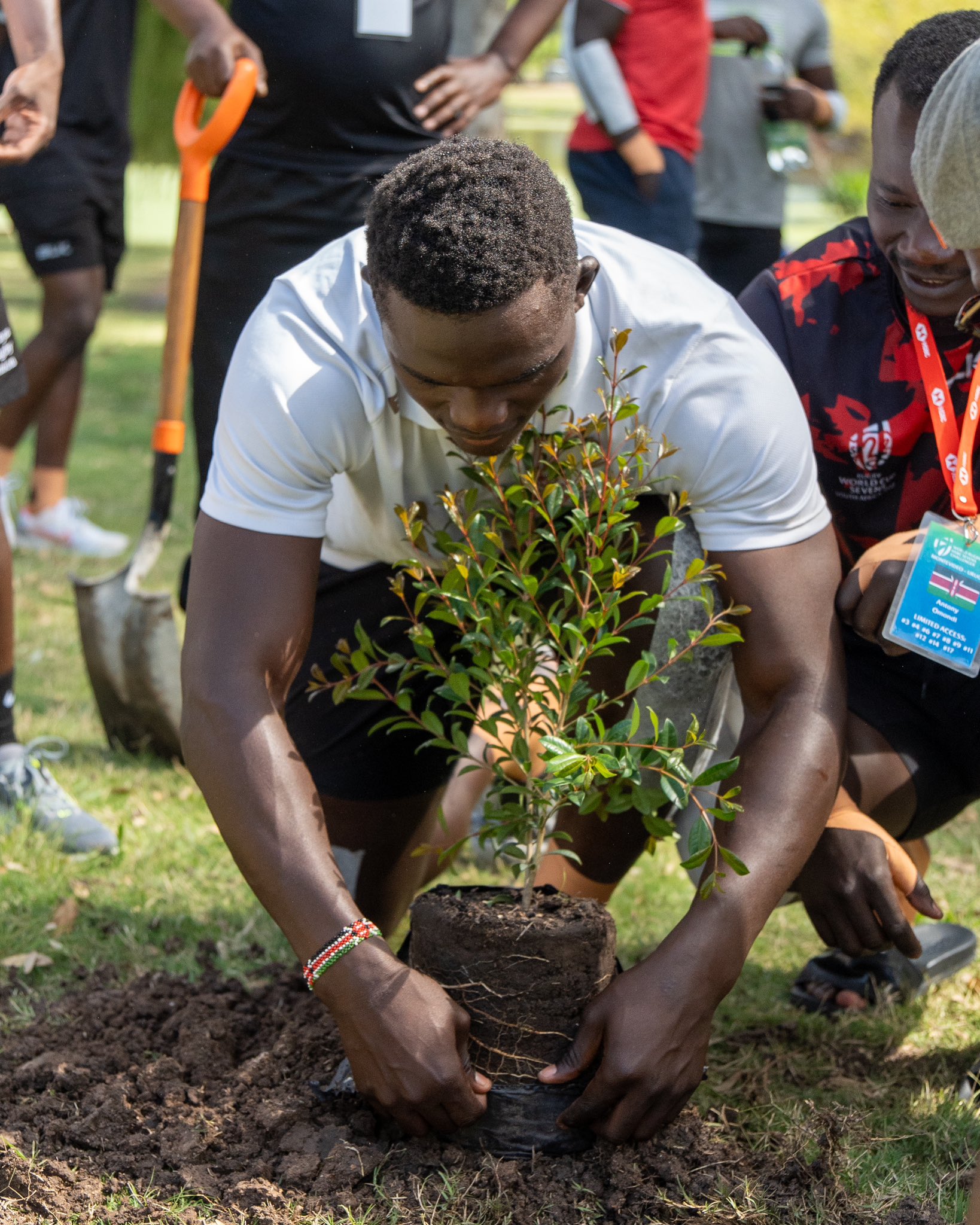
Kevin Wekesa plants a tree during the Montevideo Sevens Rugby Tournament in Uruguay. Wekesa is fiercely determined to weave environmental conservation directly into the fabric of elite sports infrastructure. Photo - Kevin Wekesa
Beyond schools and national team camps, Wekesa is fiercely determined to weave environmental conservation directly into the fabric of elite sports infrastructure.
He envisions a future where Kenya’s premier arenas lead by example, utilizing sustainable technologies and eco-friendly fan policies to rewrite the standard for event hosting.
“Having solar panels for lighting of stadiums, for example, comes a long way in conserving energy,” Wekesa explains.
“I fail to understand how the Nyayo National Stadium and Kasarani, for instance, are without power sometimes… I can only imagine a campaign like ‘bring your own bottle’ to the stadium where there are refilling stations at big tournaments and conferences.
“You can imagine when Talanta Stadium hosts a concert or big match, there will be litter all over the following day… This campaign will give Kenya an edge once we have such sustainability projects.” Ultimately, Wekesa’s blueprint proves that true victory isn't just achieved on the pitch, but in ensuring the spaces we play in are preserved for generations to come.
elias.makori@ymail.com