


Studies fear that out of 93 potential host locations for the Winter Olympic Games, only about
half will be climate-reliable by the 2050s and only 10 nations able to host snow sports by 2040
The curtains have finally fallen on this year’s Olympic Winter Games that ran from February 6 to
22 at multiple venues in Northern Italy – principally in Milan and Cortina – with the closing
ceremony at the Verona Arena concluding 16 days of exceptional drama on snow and ice.
From Swiss skier Franjo von Allmen’s three gold medals on his debut in the Downhill, Super-G
and Team Combined, to Brazil’s Lucas Pinhero Braathen’s historic Giant Slalom victory for the
South American nation and Italian Federica Brignone’s Super-G and Giant Slalom gold after
recovering from a horrific crash, the Milano-Cortina Games served up an unprecedented
spectacle.
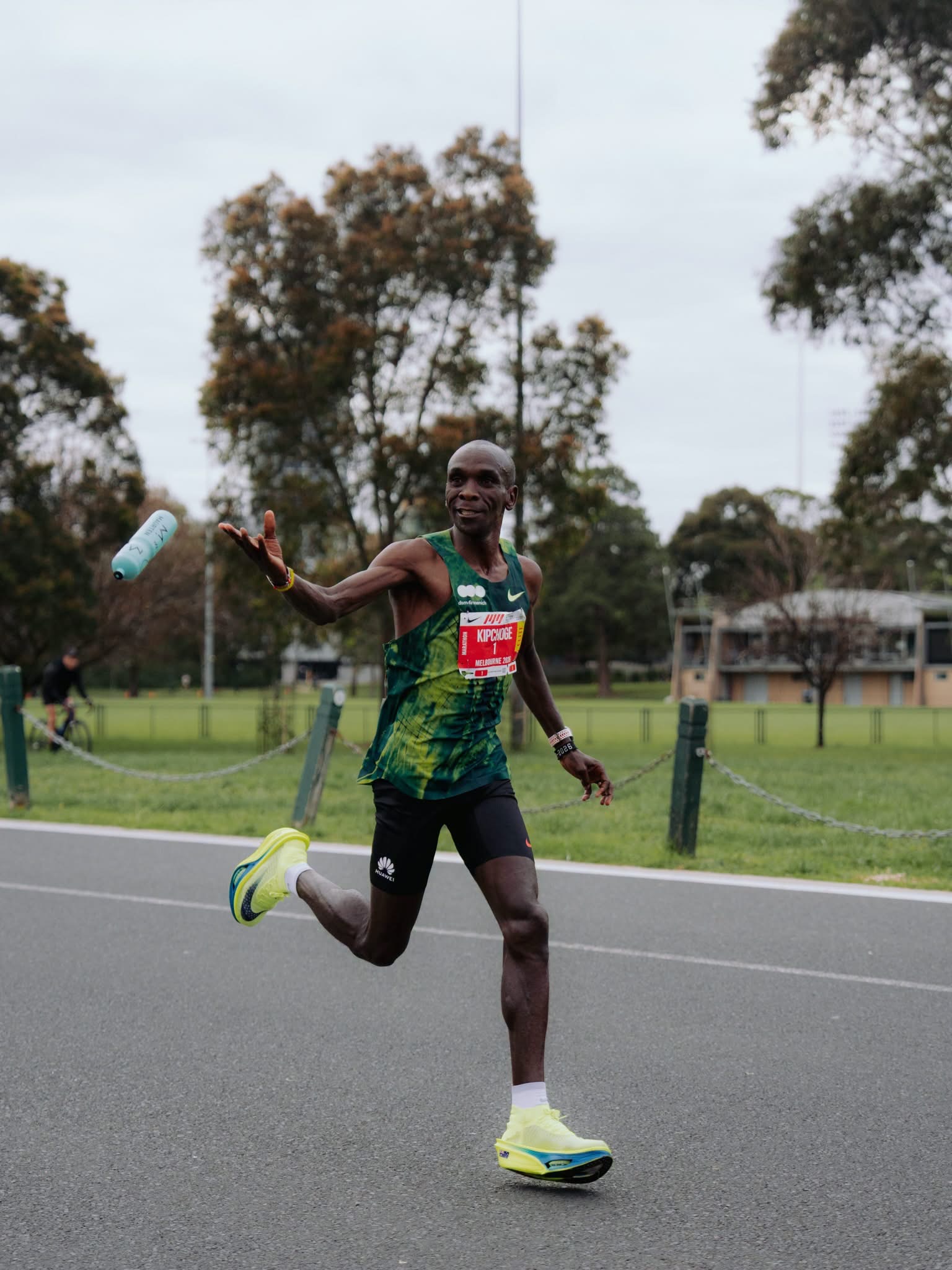
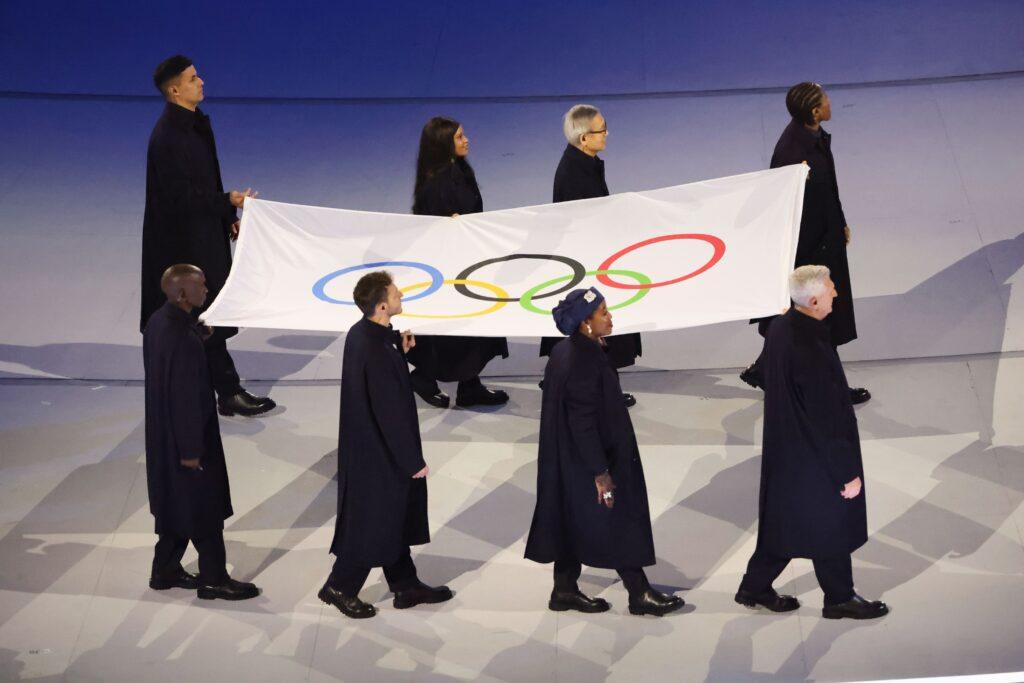
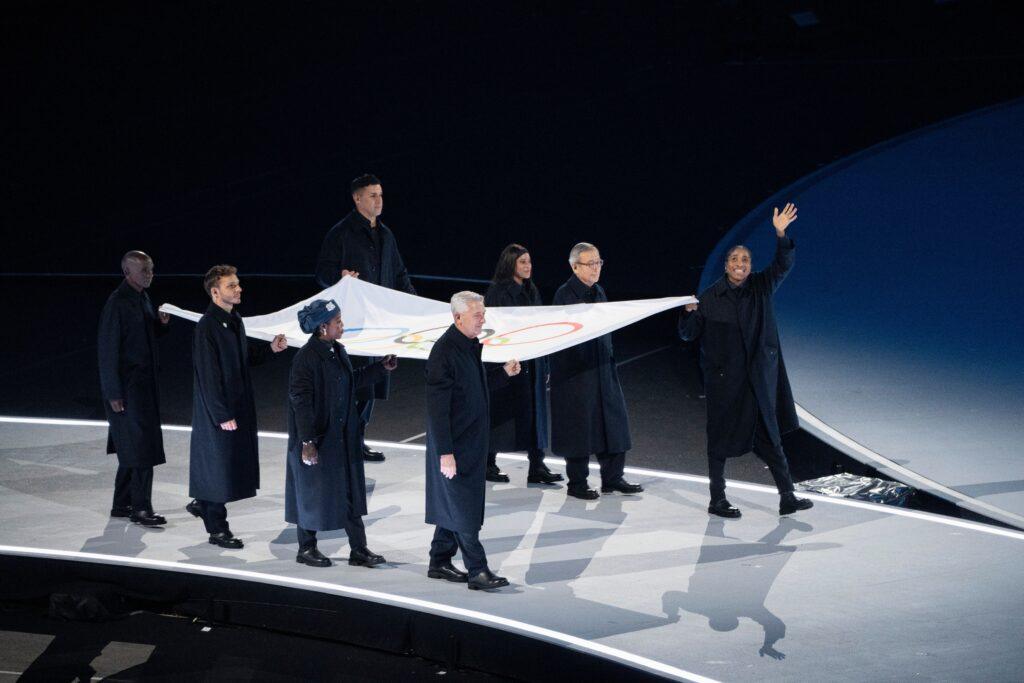 Kenyan marathon legend Eliud Kipchoge was among the flag bearers at the Opening Ceremony for the Olympic Winter Games in Milan.
Norway topped the medals table again with 41 medals (18 gold, 12 silver and 11 bronze)
followed by USA (33 = 12, 12, 9), The Netherlands (20 = 10, 7, 23) and Italy (30 = 10, 6, 14) at
the Games hosted at an estimated to cost $7 billion.
The Milano-Cortina Olympic Winter Games attracted significant interest in Africa especially for
a record-breaking increase in participation of African athletes alongside expanded media
coverage.
Africa was represented by 14 athletes from eight nations, more than double the number that
competed at the last Olympic Winter Games in Beijing in 2022 with Benin and Guinea-Bissau
making historic debuts through Alpine skiers Nathan Tchibozo and Winston Tang.
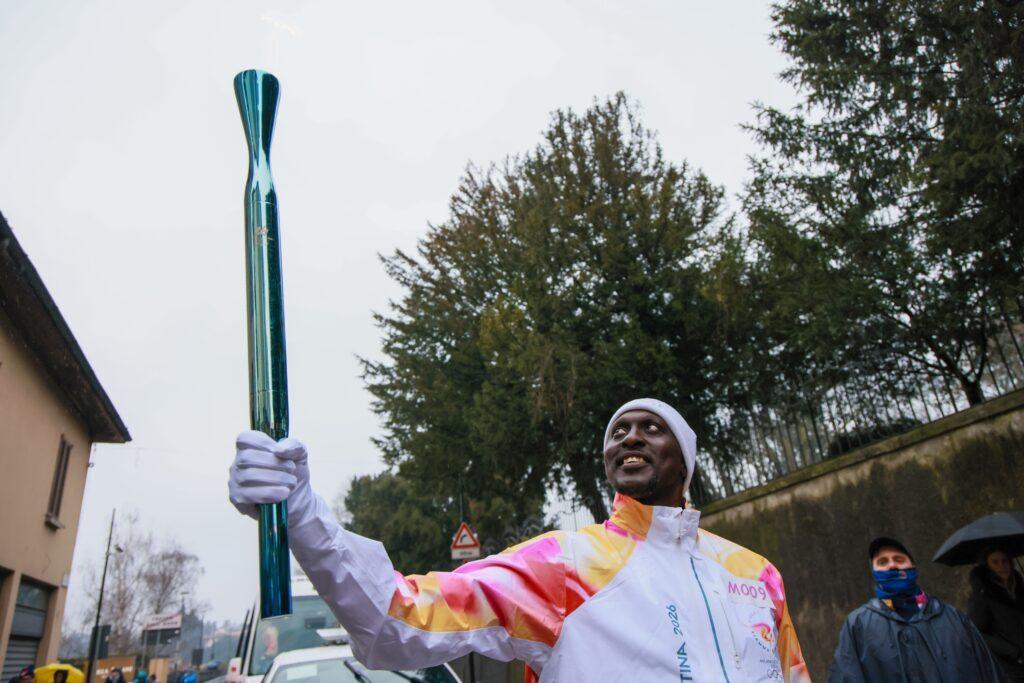 Kenyan rugby legend Humphrey Kayange was among the torchbearers at the Opening Ceremony for the Olympic Winter Games in Milan scaled
Tchibozo finished 48th out of 71 starters in the Alpine skiing giant slalom on the opening week
with Shannon-Ogbnai Abeda the first Eritrean athlete to compete at three Olympic Winter
Games.
Most of these athletes were born in Europe or North America and fast-tracked by the Olympic
Solidarity Programme, proudly representing their African roots with South Africa boasting the
largest African delegation at the Milano Cortina 2026 Winter Olympics with five athletes.
Concerns over climate change
The other African nations at the Winter Games were Nigeria, Madagascar, Eritrea and Morocco
with African interest also amplified by the fact that Senegal are preparing to host Africa’s first
ever Olympic event, this year’s Youth Olympic Games in Dakar.
Kenya had 18-year-old Issa Laborde Gachiringi, who was born in France, as the sole flag-bearer.
Laborde, 18, recorded a combined time of two hours, 52 minutes and 78 seconds to finish 66 th
overall in the Alpine skiing competition on the opening weekend.
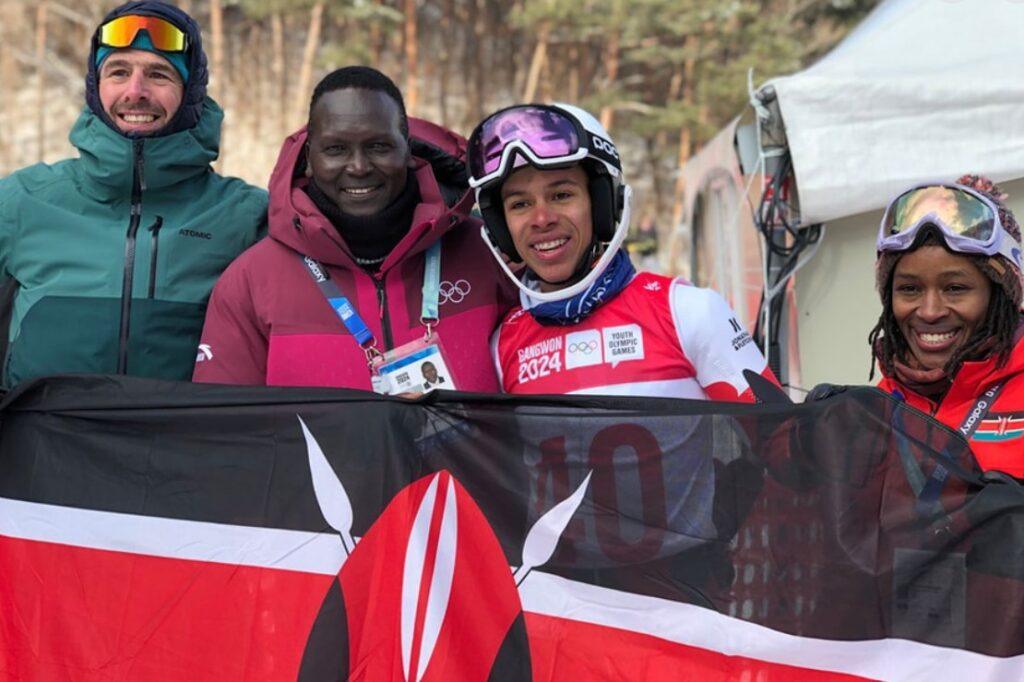 Kenya’s International Olympic Committee Member Paul Tergat with Kenya’s lone competitor at the 2026 Olympic Winter Games Issa Laborde Gachiringi and his parents.
Enhanced visibility and media access to the Milano-Cortina Games in Africa added to the
interest on the continent with comprehensive coverage made available on live-streaming and
on-demand access, coupled with digital engagement that saw local channels actively track
African competitors
And with concerns over global warming punctuated by extreme and less predictable weather
conditions that have thrown global sport into a quagmire, conversations around climate were no longer a background issue with the Milano Cortina 2026 Winter Olympics bringing this challenge into sharp focus as winter sport itself faces a major threat, forcing organisers to rethink how major events are staged.
Milano Cortina was the first Winter Games delivered fully under the International Olympic
Committee (IOC) sustainability reforms and the first major test under the IOC’s new President,
Zimbabwe’s Summer Olympics legend Kirsty Coventry.
With the changes in global climate, the IOC has prioritised using existing venues, deploying
better technology that reduces energy and water use, improving transport links, strengthening
energy systems and supporting local businesses so host regions can function year-round rather
than seasonally.
“The concept of an Olympics spread across a vast territory has held up. Of course, the distances
didn’t help those who wanted to follow everything in person, but the spectacle was of the
highest quality, also underscored by the excellent television production,” Gianni Merlo,
President of the International Sports Press Association (AIPS) summed up the staggered Winter
Olympics.
“The Widespread Olympics, in that each sport takes place in different venues, could be defined
as a series of world championships broadcast at the same time, in the same country, and only
every four years. It’s a unique gathering, rooted in history, and that’s why it’s so popular,” he
noted.
Data available indicates that in the 70 years since Cortina first hosted the Winter Olympics in
February, 1956 – celebrated for being the first televised Winter Olympics that also saw the
Soviet Union make a dominant debut – temperatures have risen by 3.6 degrees Celsius (6.4
degrees Fahrenheit), resulting in 41 fewer freezing days annually.
Securing colder weather and better snow
Effects of climate change were real in Cortina, with heavy snowfalls and unfavourable weather
causing the cancellation of the first official training for the women’s downhill event at the
Tofane Alpine Skiing Centre in Cortina d’Ampezzo.
Long-range forecasts predict a 60-70 percent chance of above average temperatures for the
Paralympic Winter Games that will be held at the same Italian venues from March 6 to 15.
Studies fear that out of 93 potential host locations for the Olympic Winter Games, only about
half will be climate-reliable by the 2050s and only 10 nations able to host snow sports by 2040.
And with the Winter Paralympics’ dates more vulnerable, only four locations will qualify to
service the Winter Paralympics’ March schedule.
With these real fears, the IOC is already contemplating moving the Winter Olympics to January
and Paralympics in February to secure colder weather and better snow.
In 2018, an Adverse Weather Impact Expert Working Group was formed by the IOC to work on
climate change issues and one of the group’s key deliverables was to look at the environmental
conditions, including the use of recorded environmental conditions at every venue.
They used this data to make some amendments to the competition programme at the Tokyo
Games in 2021 where, for example, rugby was moved earlier in the day to avoid the period of
heat stress, and mountain bike was delayed in the afternoon.
The work of this group continued for the Paris Games in 2024 and was, amongst several
countermeasures identified, involved in reviewing the competition schedule, which was
planned to avoid potential excessive heat.
To address excessive heat for indoor events at the Paris Olympics and Paralympics, temporary
cooling solutions were installed at certain sites, as needed. For outdoor events, the competition
schedule was designed to avoid the hottest hours of the day as much as possible and
the Olympic Village designed in accordance with climate estimates until 2050, aiming to
optimize the thermal comfort of the athletes, while minimising its carbon impact.
The Olympic Village’s innovative design, which included insulation, cooling floors and green
spaces, made it possible to guarantee a temperature at least six percent lower compared to
outside temperatures.
The Paris Olympics’ Athletes’ Village located across Saint-Denis, Saint-Ouen, and L’Île-Saint-
Denis – that had a capacity of 14,500 athletes – is currently in the final phases of being
transformed into functional, long-term housing with the new neighbourhood expected to have
2,800 new homes with a capacity of approximately 6,000 residents.
Decentralization of the Games
“We are well aware of the (climate) changes which are impacting all of us in all of our daily
lives, and it’s not just about the Winter Olympics but also the Summer Olympics. We have been
doing a lot of work and research on how to become more resilient and also adapt to the
changing climate,” Julie Duffus, Head of Sustainability at the IOC, said in an exclusive interview
from the Milano-Cortina Games.
 Julie Duffus Head of Sustainability at the International Olympic Committee
She noted that the significant changes to the Olympic Winter Games format included the
decentralization of the Games that were hosted in different clusters in Northern Italy, heavily
utilizing already existing winter sports infrastructure.
“The reason for this is because in Northern Italy, we have some fantastic, iconic venues which
are already existing. What the Games can do is to really is to push innovation and long-term
stability and resistance into those communities for the longer term, for instance making sure
that they are connected to renewable and green energy so that they are dependent on theenergy but now it becomes more reliable.”
The IOC is also handling skills development in Olympic host communities.
“There are a lot of projects we are doing to encourage climate resilience and creating solutions
to adapt. There is a lot of work that has been done at local hospitals, for example, so that these
communities can withstand the changing climate in the longer term,” noted Duffus who was
born in the Kenyan summer, spending her early childhood in Nairobi and Watamu.
Some of the interventions the IOC has employed to tackle climate change affecting competition
areas is the use of artificial snow, also known as “technical snow”, with most alpine event
venues in Northern Italy using 100 percent machine-made snow that has been criticised for
being icier and harder, and also expensive and leading to higher speeds and increased injury
risk once the snow softens.
“Technical snow is something that has been used now for generations throughout every winter
community and every event, and is not just used at the Games time. Actually, the vast majority
of ski resorts around the world now use technical snow,” Duffus explains.
“What we have done is to push innovation in the sustainability of that technical snow from
Games to Games. In these Games, for example, we have renewable energy, we have got the
Working Group on future host cities
“Snowcats” which are snow machines using HVO (Hydrotreated Vegetable Oil, a synthetic,
renewable fuel), a renewable source of energy, and we also have GPS sensors in the snow-
making machines, which means we are only making the absolute bare minimum of technical
snow we need to.”
Duffus notes that there’s a Working Group focusing on future host cities and paying particular
attention to climate change issues and athlete safety.
“We, as a society, are in a transition phase and so, at the moment, we have to try and find
solutions for society for the future and what the Games are doing is really showcasing
innovation in renewables and the future of this energy. If through the Games we can connect
remote communities to renewable energy, that’s what the Games are really all about – focusing
on the community vision for the long term,” notes Duffus, an experienced sustainability expert
who has worked on numerous projects including in Kenya, Nigeria, Uganda, Algeria, Equatorial
Guinea, Oceania, North America, South America and the Bahamas.
The IOC is also working closely with sports federations to address issues around climate change
and as the 2026 Olympic Winter Games gather momentum, organisers hope these Games will
hasten the campaign and advocacy against climate change.
Makori is a Sports Media Operations Consultant and Founding Managing Editor at Pura Vida
Sports Africa. elias.makori@gmail.com