


By Pura Vida Sports Africa Correspondent
The world of distance running is reeling from a catastrophic double blow that has struck at the absolute pinnacle of East African athletics. The sport has long celebrated Kenya and Ethiopia as the dual heartlands of marathon excellence, but the simultaneous downfalls of Peres Jepchirchir and Ruti Aga have shattered that mythos, replacing it with an uncomfortable existential crisis. This is not a story of developmental runners cutting corners for a quick payday; it is the definitive unraveling of two legends whose achievements defined the modern era of the sport.
The provisional suspension of Kenya's Peres Jepchirchir strikes a devastating blow to the sport's history books.
Jepchirchir was not merely a champion; she was a generational titan whose resume read like a checklist of ultimate athletic glory - the reigning Tokyo 2020 Olympic champion, the 2025 World Champion, a four-time half-marathon world-record breaker, and the conqueror of New York, Boston, and London.
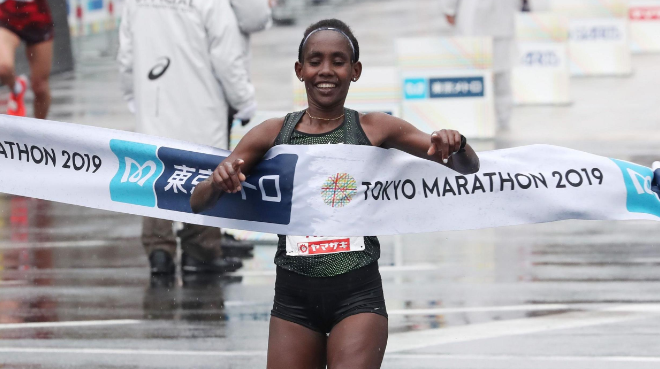
Ruti Aga, the 2019 Tokyo Marathon champion and a three-time Major runner-up, initially tested positive for the prohibited anti-inflammatory steroid methylprednisolone after winning a half-marathon in China. Photo / Pool
Her positive out-of-competition test for EPO, taken in Kenya just prior to her dominant victory at the 2026 Sydney Marathon, casts a dark, retroactive shadow over all those historic triumphs. Because injected erythropoietin leaves the body quickly while drastically boosting oxygen delivery to muscles, catching a runner requires precise, high-stakes timing.
Anti-doping authorities managed to close that narrow window, but in doing so, they left an indelible stain on a legacy that previously seemed untouchable.
Aga’s Tale of Hubris, Institutional Defiance
While Jepchirchir's downfall represents a tragedy of compromised greatness, the case of Ethiopia’s Ruti Aga reads like an astonishing cautionary tale of hubris and institutional defiance. Aga, the 2019 Tokyo Marathon champion and a three-time Major runner-up, initially tested positive for the prohibited anti-inflammatory steroid methylprednisolone after winning a half-marathon in China.
What could have been a standard two-year suspension, however, mutated into a career-ending six-year ban because Aga chose to fight the system with a web of elaborate deceptions.
The Athletics Integrity Unit methodically dismantled her defense, revealing that she had submitted a prescription from a non-existent clinic, signed by a "doctor" who was actually an unregistered family member.
AIU’s Uncompromising Message
Even the relative's desperate excuse of using an old prescription pad fell apart when the named medical facility confirmed the individual had never even worked there.
By tacking on four additional years for tampering and misleading investigators, the AIU delivered an uncompromising message that the cover-up will cost an athlete far more than the original crime.
Ultimately, these two cases completely shatter the illusion that doping is confined to the fringes of the sport. When an active Olympic champion and a multi-Major podium finisher are compromised, it exposes deep systemic vulnerabilities at the absolute summit of track and field. Even as the Sydney Marathon celebrates its milestone elevation to the status of a World Marathon Major, its historic inaugural winner stands accused of being a drug cheat.
For fans, sponsors, and the vast community of clean athletes across Kenya and Ethiopia, this is a catastrophic hit to the credibility and enduring culture of East African running.
Angry Reactions, No Defense
Understandably, there have been angry reactions to the AIU suspensions all round, especially Jepchirchir’s given her global status with little in defence.
Kiplimo Chemirmir, a reknowned, US-based physiotherapist put it bluntly: “Even though Peres Jepchirchir is entitled to due process, I have to say this again: Kenya needs to criminalise doping. Pharmacies and doctors who knowingly sell, supply, or administer banned substances to athletes should lose their licenses and face serious legal consequences,” he says.
And adds: “As I’ve said before, no Kenyan athlete should be allowed to leave the country for competition without rigorous, independent testing throughout their training period. And, for heaven’s sake, AIU, can we please get the results sooner? Justice delayed undermines confidence in the sport and leaves clean athletes carrying the burden of uncertainty.”
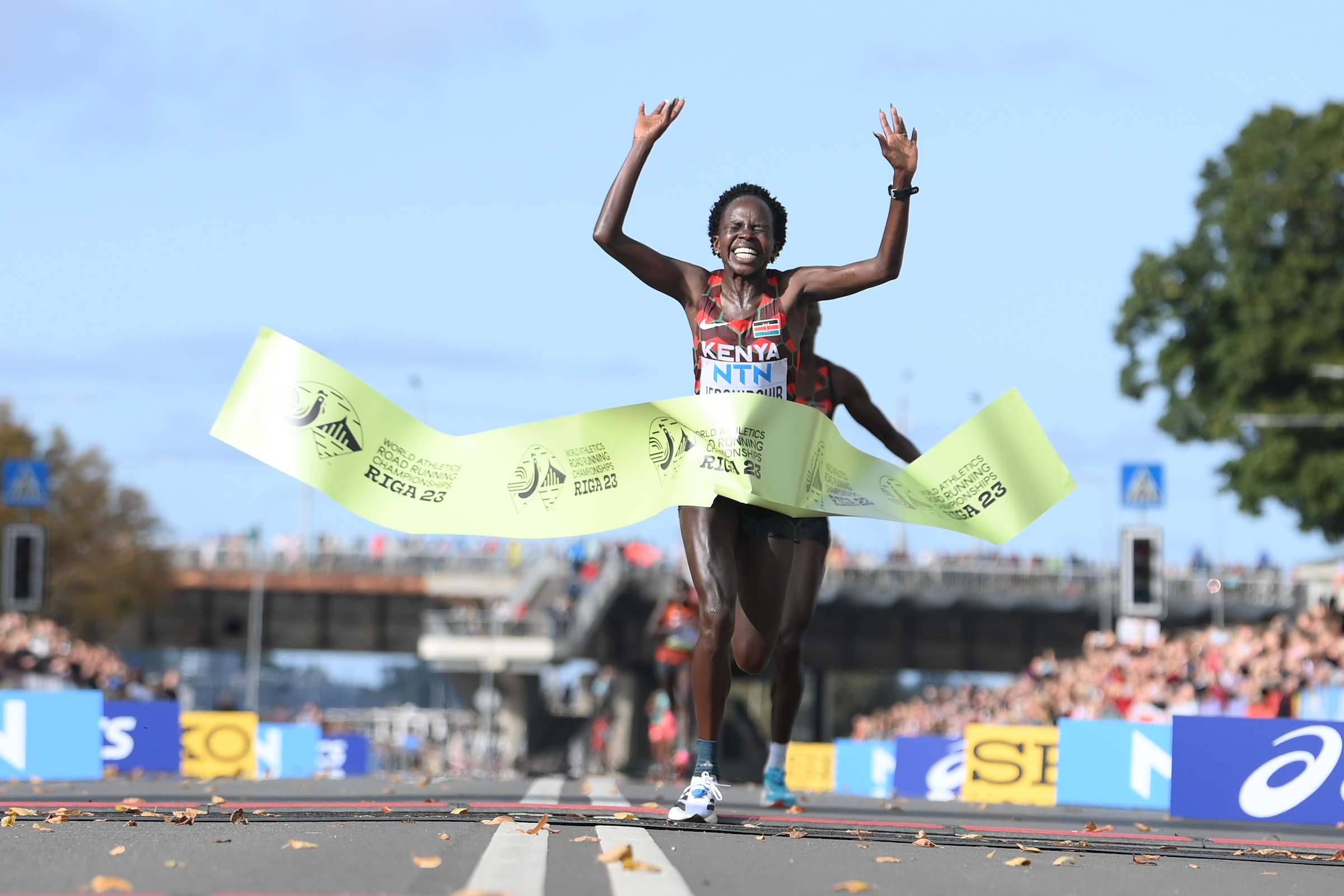
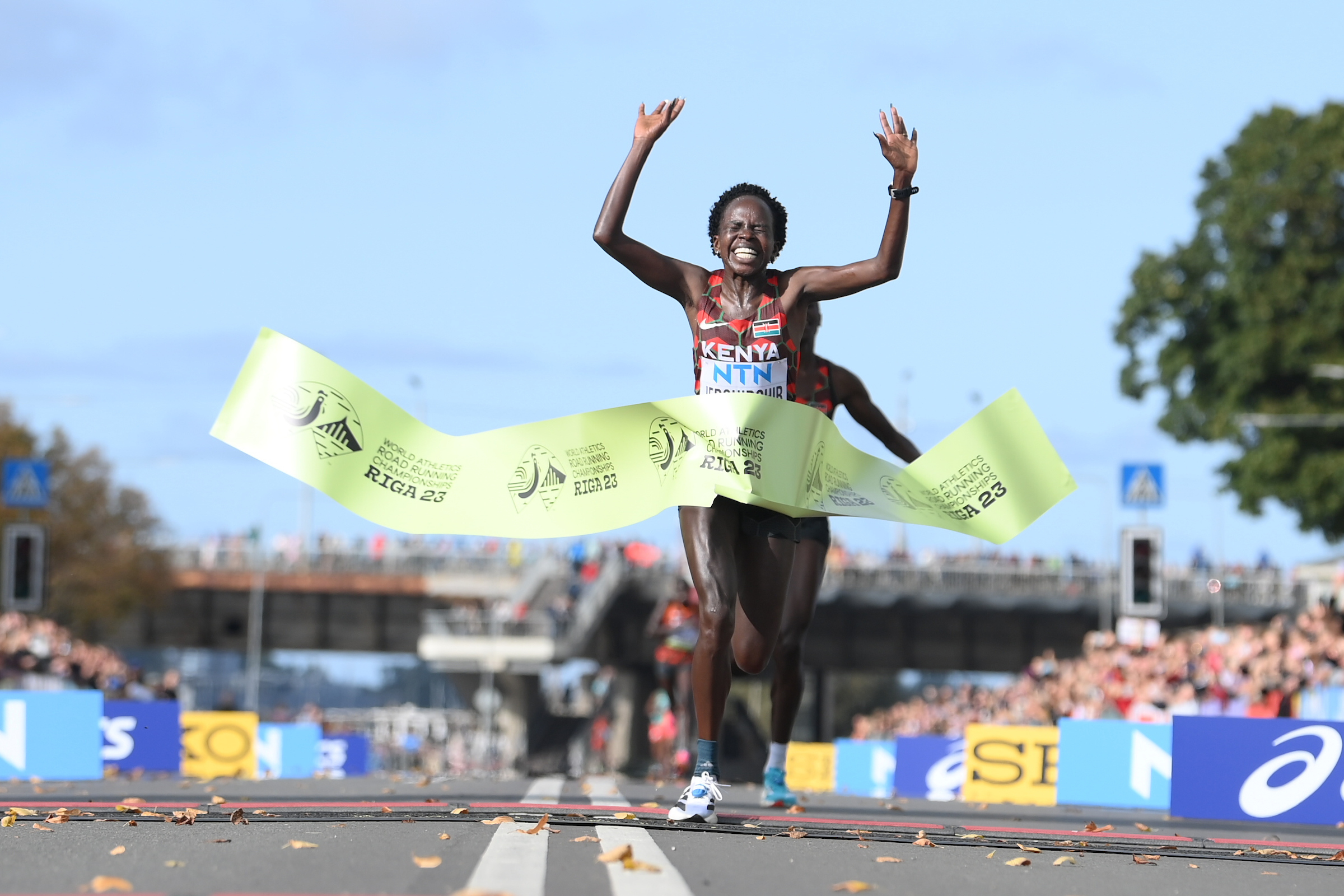
Peres Jepchirchir wins the half marathon race at the 2023 World Road Running Championships in Riga, Latvia. Jepchirchir was not merely a champion; she was a generational titan whose resume read like a checklist of ultimate athletic glory. Photo - File
Chemirmir feels race directors and athlete representatives must also bear the brunt of anti-doping violations: “And I have serious questions for race directors, too. I cannot help but wonder whether some are turning a blind eye to the problem. Why continue working with agents whose athletes have repeatedly been caught doping? Are we so obsessed with having the fastest races in the world that we are willing to ignore every warning sign?
“Kenya’s reputation cannot be protected by silence, excuses, or selective outrage. It must be protected by accountability. Our clean athletes deserve better. The next generation deserves better. And the country deserves a sporting legacy built on honest effort, not pharmaceutical shortcuts.
Francis Kirwa, also reacting on social media, feels there is something deeper: “It is a system. 10 yrs at the top? The Elephant in the room is who knows what? This doping doesn't happen in a vacuum. Kenya needs to establish their own high-altitude training and performance centre to profile athletes and establish a database for research and education. Otherwise, this doping is managed from the top to bottom.”
Radical Transparency
The ultimate tragedy of this crisis is that it forces us to look backward, questioning not just the spectacular wins of today, but the foundation of everything that came before.
If an iron-willed Olympic icon can fall to EPO and a seasoned Major medalist can fabricate an entire medical history, then the benefit of the doubt - the very currency upon which athletic fandom trades - has officially gone bankrupt.
To rebuild trust, the response from Nairobi and Addis Ababa cannot rely on standard public relations damage control or isolated declarations of innocence.
It demands radical transparency, the structural overhaul of high-altitude training environments, and the aggressive criminal prosecution of the shadowy networks supplying these shortcuts.
Until the architects of this system are exposed and actual accountability replaces selective outrage, the glorious legacy of East African running will remain under a heavy cloud of suspicion, leaving clean athletes and betrayed fans to wonder if the golden era of the marathon was nothing more than a chemical illusion.