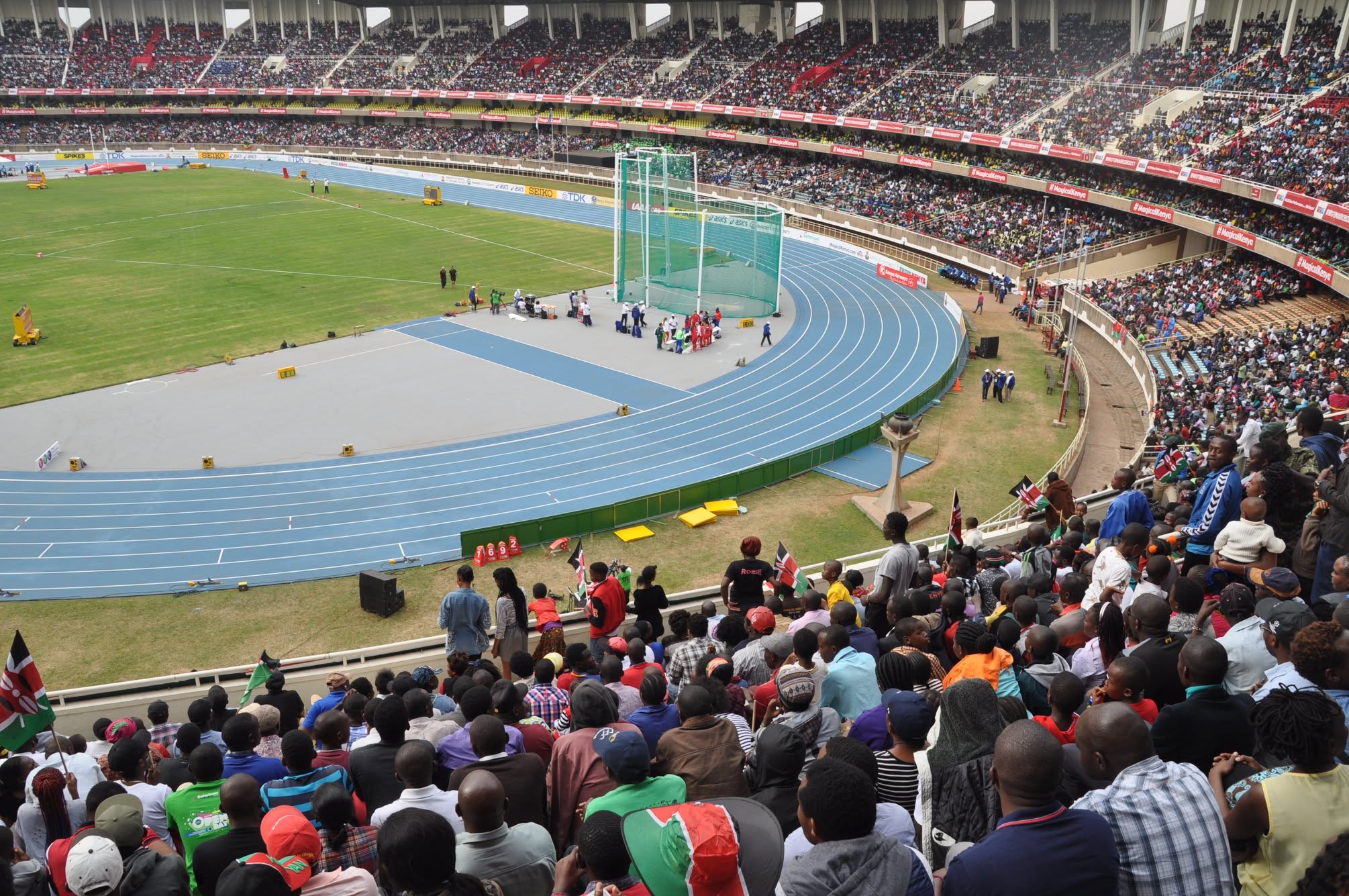




Nairobi
As World Anti-Doping Agency (WADA) President Witold Bańka visits Kenya to reinforce clean sport frameworks ahead of, inter alia, the 2029 World Athletics Championships, a new analysis by US-based Kenyan Mike Bitok asks whether global algorithmic models, including the Athlete Biological Passport (ABP), could be exposed to systemic geographical and environmental blind spots.
Drawing parallels to life-science AI datasets that heavily favor Western regions, the analysis asks whether, although the ABP's adaptive Bayesian design natively adjusts for ancestry, it could still risk triggering automated "false flags" where its underlying reference thresholds do not fully integrate the complex, rapid haematological fluctuations seen in athletes training at high elevations and racing at sea level.
It underscores that a simple "dataset fix" of collecting more regional biological samples is insufficient, and that true algorithmic fairness would require WADA to deeply incorporate contextual, epistemological, and infrastructural representation from local high-altitude sports science experts, so that environmental outliers are not confidently misinterpreted as regulatory violations.
Drawing on Mike Bitok's analysis of geographic bias in medical AI, this piece asks whether similar representation problems could affect algorithmic anti-doping tools.
The Athlete Biological Passport (ABP) is designed to adapt to individual athletes and to account for altitude and other confounders, but the scientific literature documents that altitude training can push a clean athlete's readings toward the passport's limits, and there is ongoing debate about how well these adjustments hold for athletes who live and train at elevation, as many Kenyan runners do.
Bitok's broader point, that a model's fairness depends on whether the deployment context was built into it, is a useful lens for that debate.
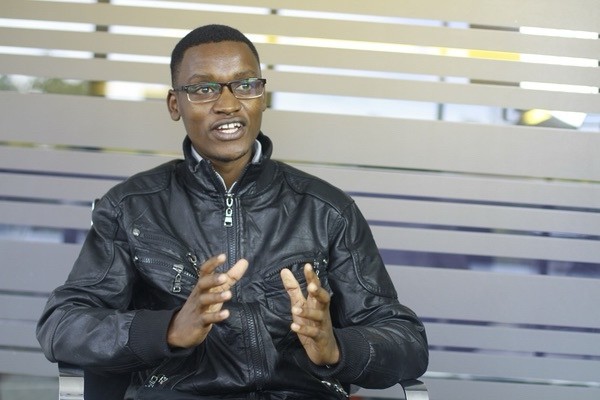
Drawing parallels to life-science AI datasets that heavily favor Western regions, Mike Bitok argues that while the ABP's adaptive Bayesian design natively adjusts for ancestry, it risks triggering automated "false flags" because its underlying reference thresholds fail to fully integrate the complex, rapid haematological fluctuations seen in athletes training at high elevations and racing at sea level. (Photo / Mike Bitok)
How Flawed Data Algorithms Could Falsely Flag Kenyan Runners
In his analysis of medical software lifecycle governance, Mike Bitok notes that clinical algorithms are often built on heavily concentrated data footprints. Academic reviews published in Nature Communications and NEJM AI show that 73 percent of clinical text datasets originate from the Americas and Europe — regions holding just 22 percent of the global population.
Meanwhile, the US and China produce nearly half of the world's life-science AI research, while Africa and Latin America combined account for less than five percent.
When these frameworks cross borders, baseline mismatches can cause invisible issues. For example, a UK health model underperformed when moved to Vietnam due to variations in local infrastructure, disease prevalence, and clinical workflows.
Similarly, diagnostic tools like pulse oximeters have historically failed underrepresented groups when calibrated on non-representative populations. While these statistics and examples specifically describe medical data, they offer a compelling lens to evaluate other international algorithmic frameworks deployed across distinct geographic contexts.
The Mechanics of the Passport
To address whether these principles apply to sports analytics, it is critical to look at the actual function of modern anti-doping systems. The Athlete Biological Passport (ABP) does not evaluate athletes against a static, universal database. Instead, the ABP utilizes an adaptive Bayesian design that monitors an athlete against their own longitudinal historical baseline over time.
The model is built to natively adjust for known confounding variables, including both ancestry and altitude exposure.
However, the intersection of mathematical thresholds and extreme physical geography remains an active area of scientific discussion. The key variable is not racial, but rather the unique, altitude-adapted physiology of athletes who live and train at high elevation.

Mike Bitok (front) with colleagues at work: As global athletics prepares for major milestones, including the upcoming World Athletics Championships in Nairobi, the scientific debate over the Athlete Biological Passport serves as a vital case study. (Photo / Mike Bitok)
Elevation as a Confounding Variable
Independent peer-reviewed studies show that high-altitude environments induce complex biological fluctuations that can test the boundaries of individual reference ranges:
Haematological Fluctuations: Research by Bejder et al. indicates that altitude training triggers physiological shifts that can exceed an athlete's individual ABP reference limits, acting as a confounding factor that persists for up to four weeks post-exposure.
Rapid Sea-Level Shifts: A study by Schumacher et al. tracked blood metric adjustments in Kenyan runners living at high elevation, finding that their ON- and OFF-model scores shifted within seven days of descending to sea level.
Model Calibration Challenges: A systematic narrative review exploring confounders in the ABP noted that while the adaptive model is inherently robust, altitude-induced variations require highly precise accounting to eliminate the risk of false flags.
This tension highlights Bitok's core thesis that machine learning fairness is fundamentally an infrastructure and context problem, rather than a dataset problem alone.

Sports Minister Salim Mvurya with World Anti-Doping Agency President Witold Bańka in Nairobi on Monday. (Photo / Ministry of Sports)
Evaluating Context over Demographics
Applying this framework to global athletics moves the conversation away from inflammatory rhetoric and toward rigorous validation.
The question is not whether systems are intentionally flawed, but rather how tightly the complex realities of high-altitude training environments are integrated into ongoing algorithmic loops. True technical accountability means ensuring that when an athlete's unique environment pushes baseline mathematics to its limits, the validation pathways are robust enough to distinguish a geographic outlier from a violation.
The Fallacy of the Simple "Dataset Fix"
When addressing potential algorithmic mismatches, international regulators and sports planners often suggest that simply gathering more biological samples from specific regions will resolve any discrepancies.
However, applying Bitok's machine learning critique, this represents an intuitive but ultimately incomplete fix.
True algorithmic equity is a property of the entire lifecycle, not a box ticked simply at the data collection stage. For international sports governance frameworks to remain fair across deeply varied geographical landscapes, the evaluation must extend across three broader structural dimensions:
- Contextual Representation: Ensuring that the extreme environmental realities, distinct hypoxia responses, and specific training regimes of high-elevation localities are computationally accounted for throughout the lifetime of the system.
- Epistemological Representation: Integrating local sports science expertise, regional physiological research, and the baseline clinical observations of regional trainers as legitimate inputs. This prevents relying strictly on static reference models that may not fully reflect localized training dynamics.
- Infrastructural Representation: Establishing transparent, accessible, and scientifically rigorous local verification loops. This ensures that when complex environmental variables push an athlete's biological markers toward statistical thresholds, reliable channels exist to evaluate the context before definitive regulatory conclusions are drawn.
Accountability to the Environment
When an automated system is built primarily around a specific set of baseline contexts and then deployed globally, it can create a structural asymmetry.
If a population's unique environmental reality is underrepresented in the foundational design phase, they can become vulnerable to highly confident, automated misinterpretations. Without localized monitoring loops, independent subgroup evaluations at the operating thresholds used by officials, and transparent appeal pathways, these discrepancies can easily go unnoticed.

Sports Minister Salim Mvurya receives World Anti-Doping Agency President Witold Bańka at Talanta Plaza in Nairobi on Monday. (Photo / Ministry of Sports)
This technical challenge is not a matter of local sports infrastructure failing to "catch up" to global standards. Rather, it is a reminder that sports governing bodies cannot simply import an algorithmic framework without also accounting for the specific geographical and physiological contexts in which it must operate.
As global athletics prepares for major milestones, including the upcoming World Athletics Championships in Nairobi, the scientific debate over the Athlete Biological Passport serves as a vital case study.
It underscores a universal rule of the algorithmic age: a model earns its right to deploy through its rigorous accountability to the specific environment it serves, not simply through the broad demographics of the data it was originally trained on.

Mike Bitok is an applied AI researcher and technologist specializing in digital health infrastructure, data governance, and responsible AI deployment. (Photo / Mike Bitok)