


By Elias Makori
From the explosive speed of North African tracks to the structural precision and high-stakes financial landscape of European football!
My sporting itinerary took a refreshing northward turn, trading the warm coastal breezes of Rabat for the industrious, maritime energy of Rotterdam.
Returning to the lowlands always feels like a homecoming of sorts.
I have been a regular traveller to The Netherlands since the turn of the millennium, when I first landed here to cover the historic Euro 2000 football tournament, and my subsequent reporting journeys have frequently brought me back to witness the iconic Rotterdam Marathon.
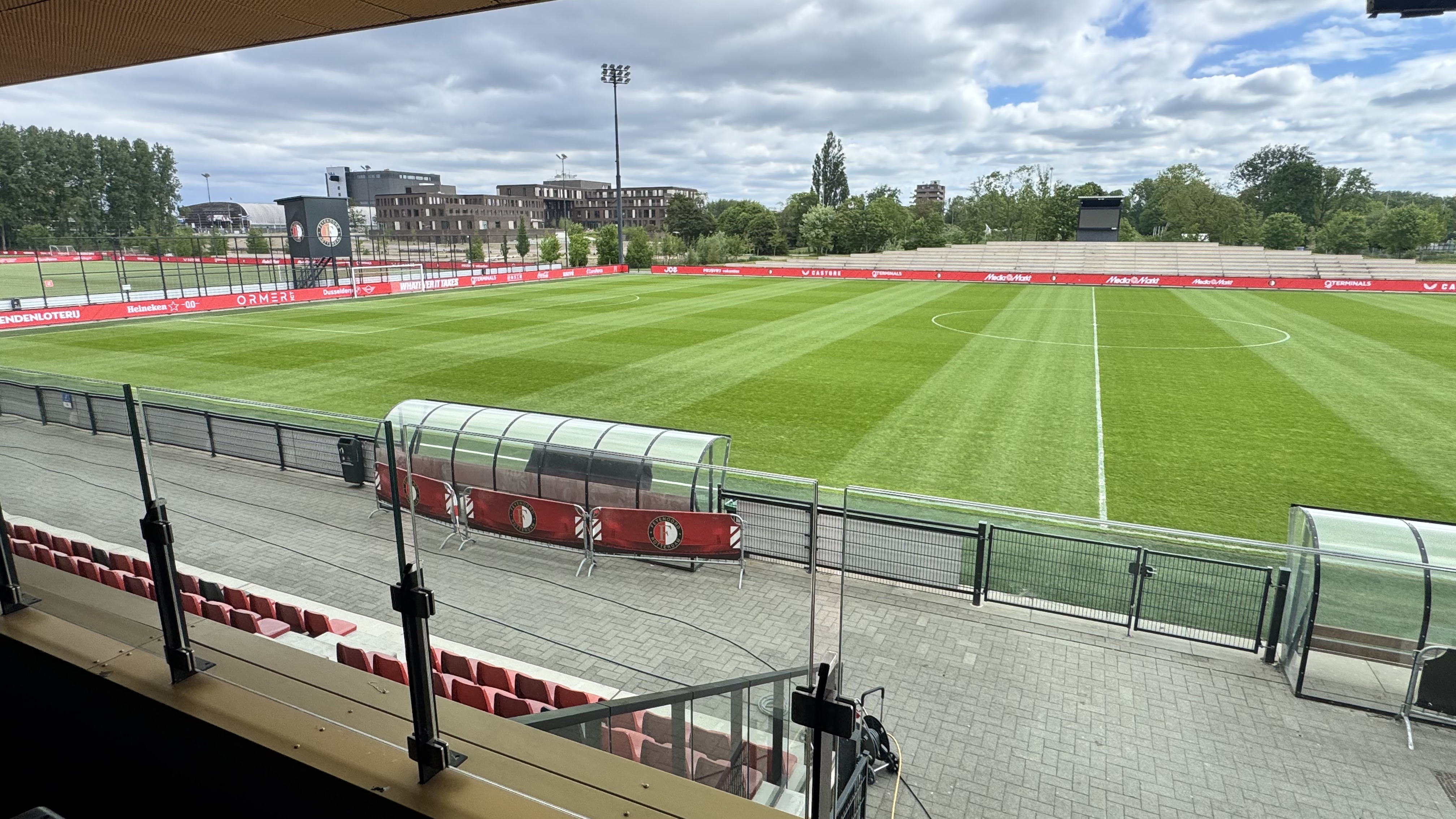
This week, however, my destination was the South of Holland for an immersive look into the engine room of one of Europe’s most revered talent conveyor belts: the Feyenoord Rotterdam Academy.
Rotterdam is a city defined by resilience, rebuilt from the ground up into a futuristic marvel of architecture and enterprise. It is a fitting home for Feyenoord, a club whose identity is deeply rooted in hard work, community, and the relentless development of young talent.
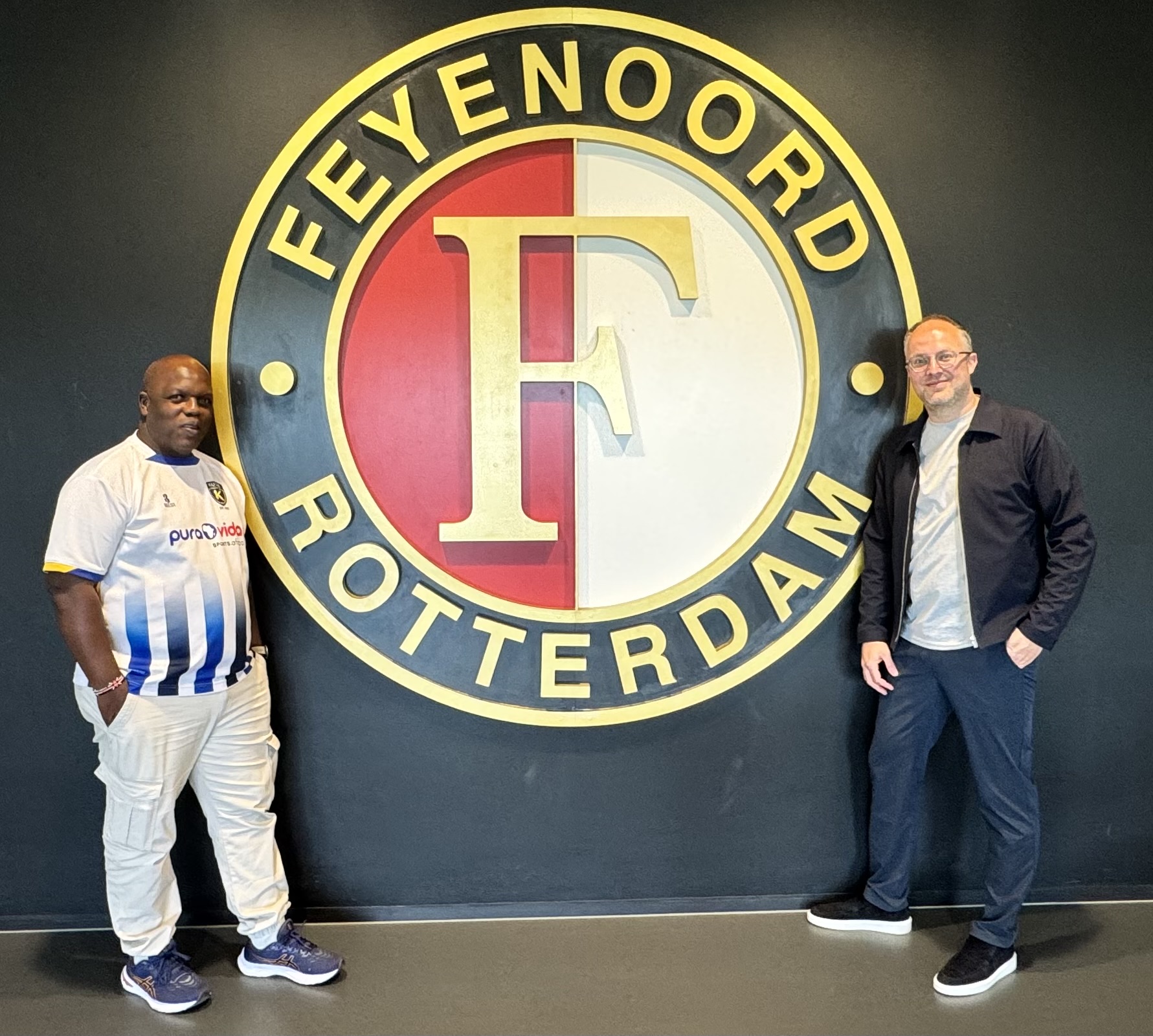
Elias Makori with Feyenoord Academy Director Jurrie van der Velden. Jurrie's insights into translating the psychological drive of East African long-distance kings into the high-pressure world of elite European football development were utterly fascinating.
State-of-the-art Youth Academy
Stepping into Varkenoord, the club's state-of-the-art youth academy facility, you immediately feel the weight of footballing history. This is the very training ground that polished global icons like Robin van Persie, Georginio Wijnaldum, and Nathan Aké.
The highlight of my visit was a masterclass in sports philosophy during an extended discussion with Academy Director Jurrie van der Velden.
Having transitioned seamlessly to Feyenoord from Global Sports Communication — where he expertly managed elite, world-beating Ugandan distance-running athletes like Joshua Cheptegei and Jacob Kiplimo — Van der Velden brings a unique, cross-sport perspective on what it takes to build a world champion.
His insights into translating the psychological drive of East African long-distance kings into the high-pressure world of elite European football development were utterly fascinating.
Feyenoord does not just scout for technical ability; their entire curriculum balances physical load management, cognitive awareness, and psychological resilience.
For a Kenyan observer, the conversation sparked deep reflection. We discussed at length how structural gaps in East African youth sports — such as the lack of certified youth coaches and standardized age-grade competitions — hinder our naturally gifted players from making the tactical transition to elite European leagues.
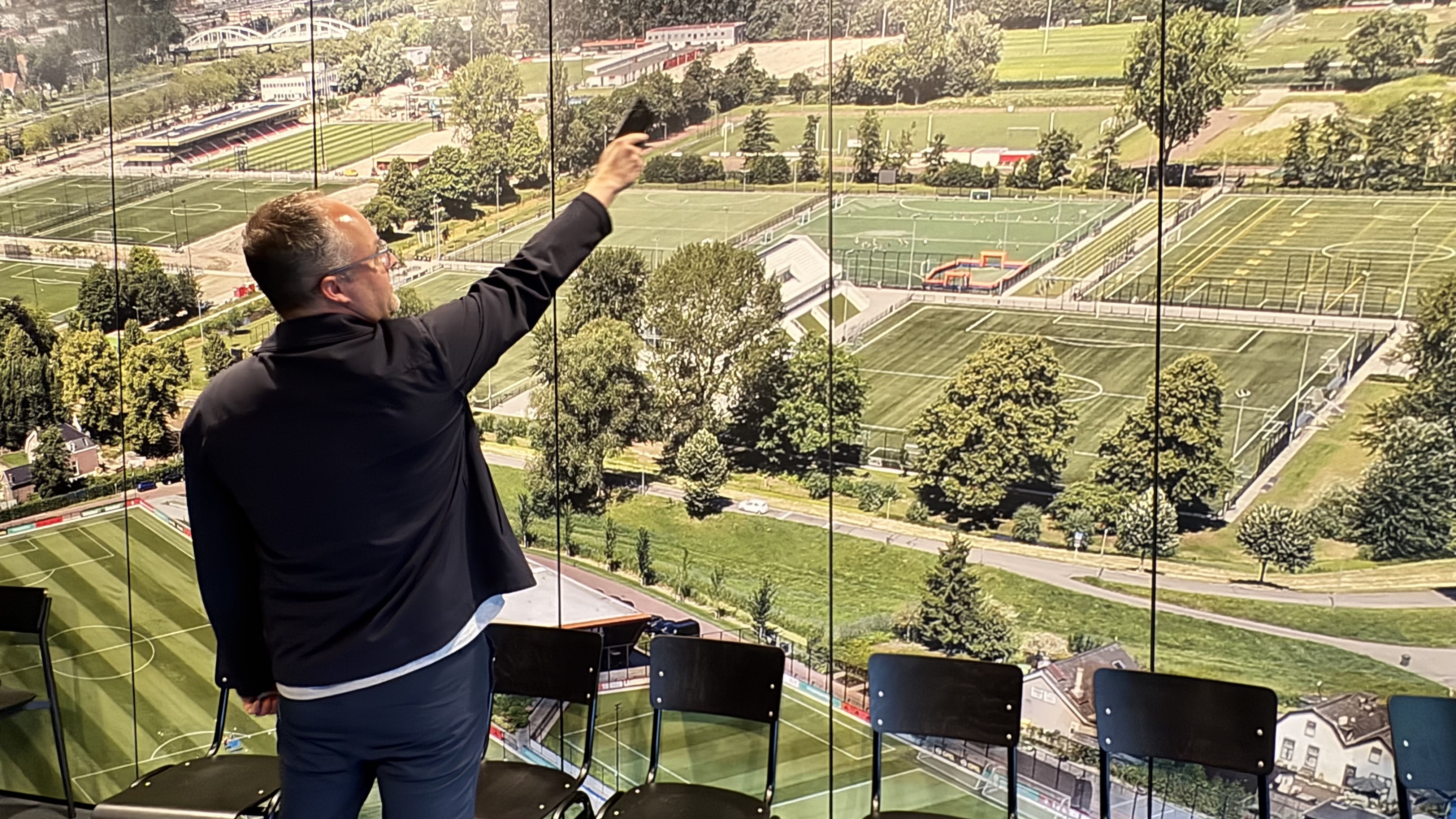
Feyenoord Academy Director Jurrie van der Velden explains facilities at the club's complex. Feyenoord's senior team has qualified for next season's Uefa Champions League.
Listening to Van der Velden outline their "total player" approach, and going round the academy’s facilities, was an inspiring blueprint for what our own academies back home must strive to achieve.
Champions League qualification
Beyond the training pitches, the jaw-dropping reality of the multi-million-euro sports business came alive at De Kuip stadium, home to Feyenoord’s league matches.
I was privileged to watch a high-octane, crucial Dutch Eredivisie league match between Feyenoord and AZ Alkmaar.
While PSV Eindhoven had already deservingly claimed the Dutch League title, this particular fixture carried its own astronomical stakes.
The match ended in a tense 1-1 draw — a solitary point that mathematically secured a coveted UEFA Champions League slot for Feyenoord.
In modern football, qualification is not just about prestige; it is a financial goldmine.
The result triggered a staggering 20 million Euros windfall (approx. Sh2.8 billion) for Feyenoord, an injection of capital that remarkably represents one-third of the club’s entire annual operating budget.
It was a stark, eye-opening reminder of how performance on the pitch directly dictates commercial survival and institutional growth in Western sports.
The trip also yielded tangible progress for Kenyan football development.
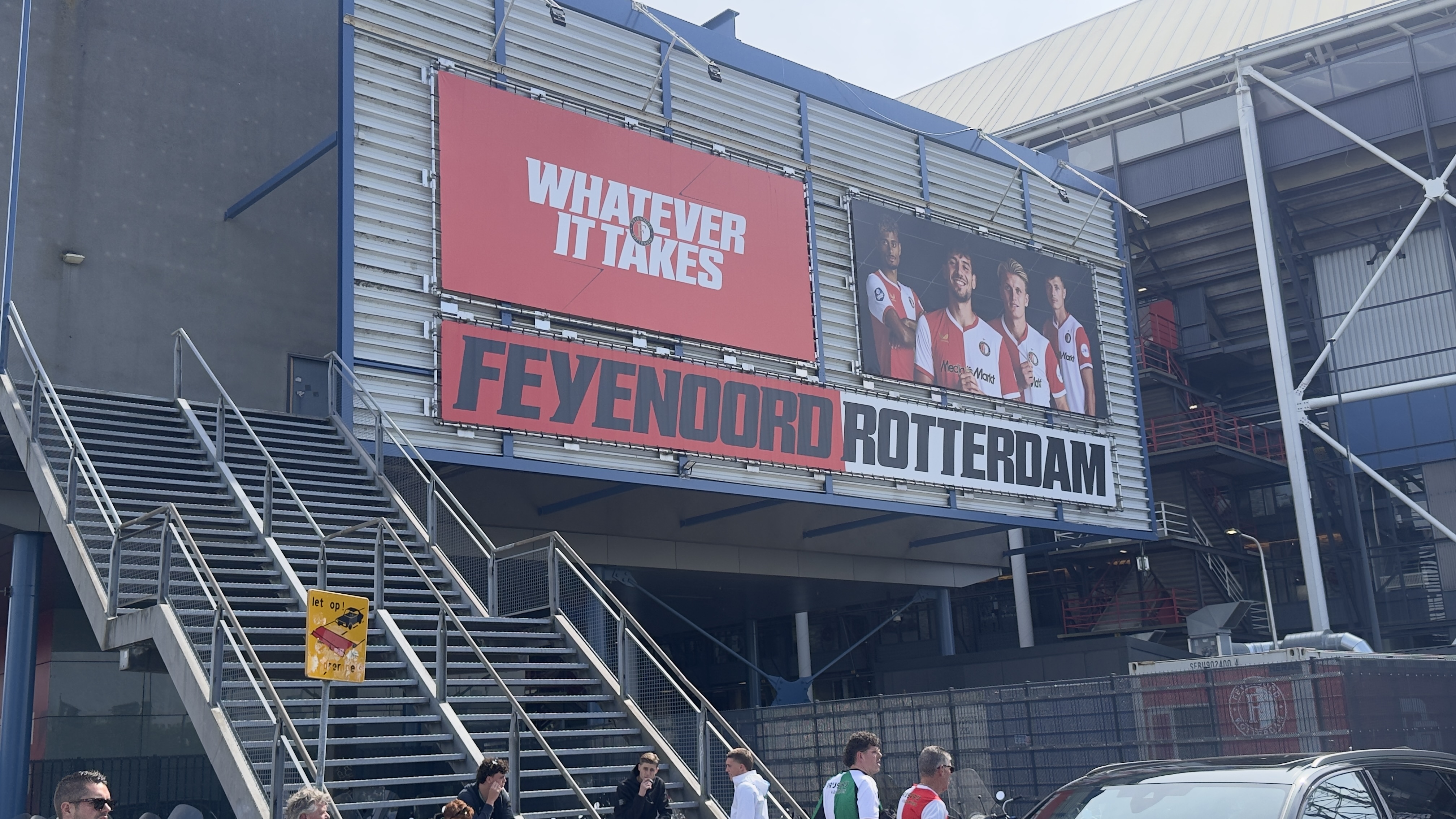
A section of 'De Kuip', Feyenoord Rotterdam's home stadium.
On the final day of the tour, I envisaged a framework that aims to bring Feyenoord’s academy coaches to Nairobi for regional clinics, while offering top-tier Kenyan youth coaches short-term attachments in Rotterdam to study modern European training methodologies.
It is precisely these structural partnerships that will bridge the gap between raw talent and professional execution.
Engaging with our diplomatic mission with conversations centered on how football can be used as a vehicle for bilateral cultural exchange and economic empowerment for Kenyan youth should certainly be encouraged.
As I watched the young prospects at Varkenoord seamlessly execute high-tempo passing drills under the watchful eyes of their instructors, I am reminded that world-class athletes are rarely born by accident. They are engineered through vision, patience, and world-class infrastructure.
Until next week, keep your boarding pass ready.
****
Boarding Pass Travel Tip: Rotterdam on a Budget from Nairobi:
A football pilgrimage to the Netherlands is highly accessible if you bypass standard tourist routes and plan your transit logistically.
A budget-conscious sports traveller heading from Nairobi to Rotterdam should budget approximately:
Return airfare: Sh70,000–100,000 ($541–$773 USD) (Look for flights to Amsterdam Schiphol on airlines like EgyptAir, Qatar Airways, or Saudia, booked two to three months in advance).
Budget accommodation: Sh5,000–9,000 per night ($39–$70 USD) (Look for highly rated hostels or budget capsule hotels in Rotterdam Centraal or the cool, gritty areas of Rotterdam West).
Daily food and local transport: Sh3,500–5,500 per day ($27–$43 USD) (Purchase a RET day pass for Rotterdam's seamless tram and metro network, and eat at local markets like the famous Markthal).
Schengen Visa and insurance: Sh15,000–20,000 ($116–$155 USD).
The Cheapest Strategy:
Never fly directly into Rotterdam’s regional airport, as tickets are exceptionally expensive. Instead, bag a cheaper flight into Amsterdam Schiphol Airport (AMS).
From the airport terminal, don't take the pricey Intercity Direct train; instead, book a seat on a FlixBus or take the standard NS regional train straight to Rotterdam Centraal.
The bus costs as little as Sh800 ($6.18 USD), takes less than an hour, and drops you right in the heart of the city.
For a seven-day Dutch football tour, a realistic low-budget estimate sits between Sh140,000 and Sh195,000 ($1,082–$1,507 USD).
elias.makori@ymail.com