

Glasgow, Friday
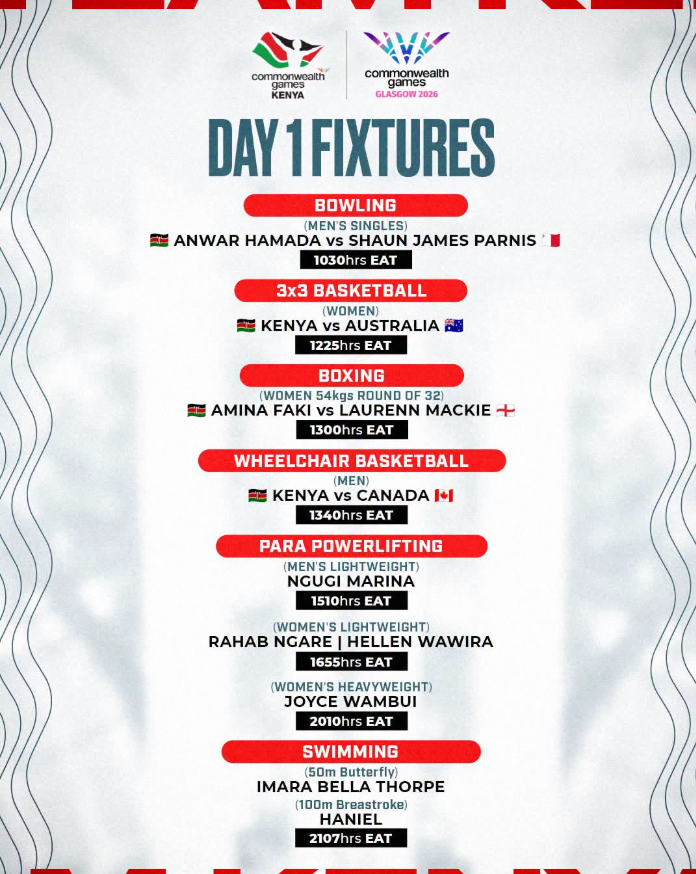
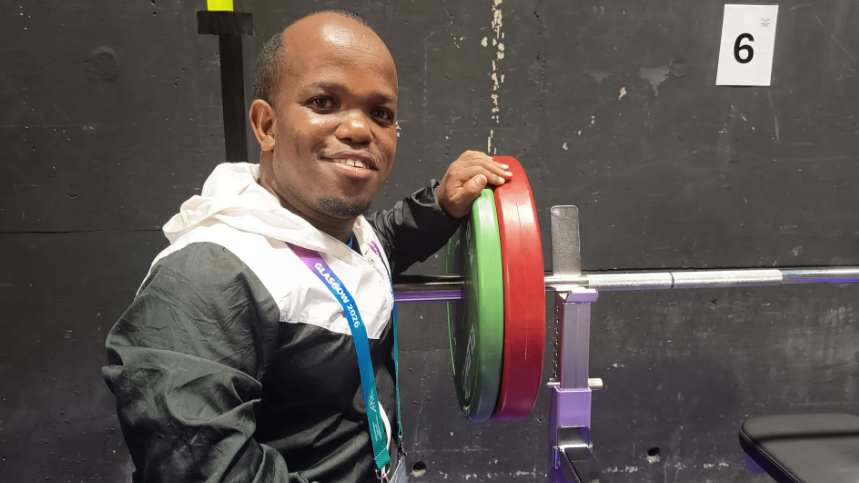
Kenyan Para powerlifter Ngugi Maringa knows a single day of competition at the Glasgow 2026 Commonwealth Games on Friday could have a huge impact on the rest of his life.
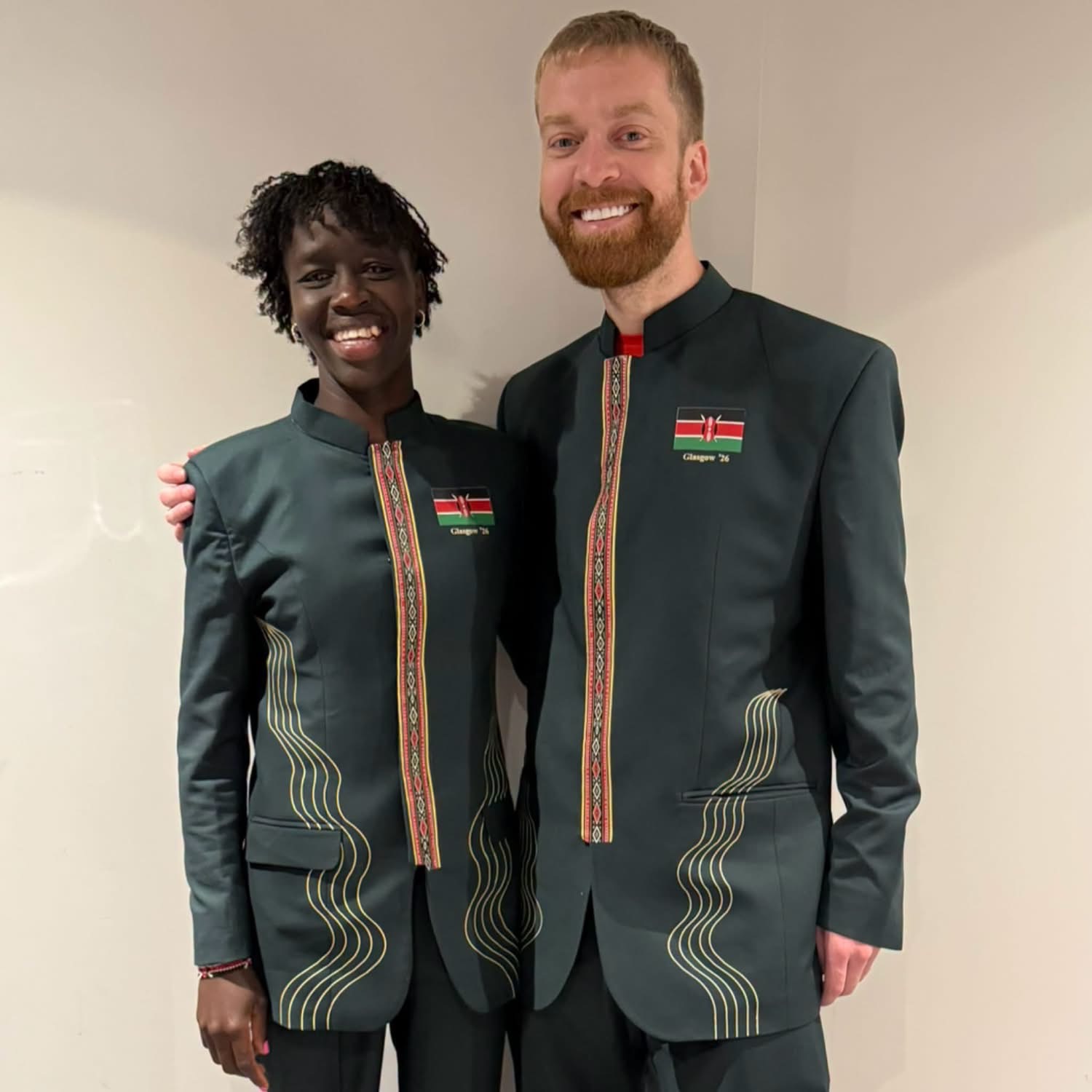
Maringa and Team Kenya’s 98-strong team to the Commonwealth Games departed in batches to Glasgow for the competition donning fresh ceremonial wear designed by the National Olympic Committee of Kenya (NOC-K).
Maringa will compete on the small platform at the imposing SEC Armadillo alongside "giants" of his sport, as he bids to lay down the sort of performance that could unlock more funding opportunities back home.
"It has been my dream to compete at these Games," said Maringa, who contests the Men's Lightweight category of Para Powerlifting, presented by Amul. "After the Paralympics, I would say this is the most valuable competition for me to aim for as an athlete.
"It's such a big stage, and you know to qualify for Commonwealth Games is not a small task. You're competing with big giants like Nigeria and Malaysia, and those guys are really strong.
"And you realise that in those big countries, athletes only concentrate on training. But for us in Kenya, you'll be challenged. There is a high level of unemployment and even if you are employed, you are paid very little, so you are training and at the same time you are working."
Maringa, 34, was born and raised in Embu County on the semi-arid southeastern slope of Mount Kenya, where there is a reliance on drought-resistant farming.
Exposure and discipline
After leaving high school he moved to Nairobi to further his studies and now has a low-level government job to support his training. But this, he says, is not enough.
"The government only comes to help when you go to a competition," Maringa said.
"They don't give you an annual allowance. So, when I was in Algeria for the African championships in May, we were given 60 US dollars a day for eight days.
"That is very little, because in a year, you may find yourself going for competition for maybe once or twice. So that money cannot support your training.
"But Powerlifting is very important to me, because it has given me exposure and discipline. To maintain your body weight and improve, you need to be disciplined enough to know what you're going to eat, and to control your lifestyle."
Maringa faces tough competition in Glasgow, not least from Malaysia's two-time Paralympic champion Bonnie Bunyau Gustin and 50-year-old Roland Ezuruike (NGR), who lifted 20kg more than Maringa in the Men’s Lightweight category in Algeria.
"For me here, let me see what I can do," Maringa said. "I'll be facing stiff competition from Bonnie and Roland, but I'll be trying to beat my personal best. Currently that is 151 kilogrammes. I'm looking forward to lifting 160."
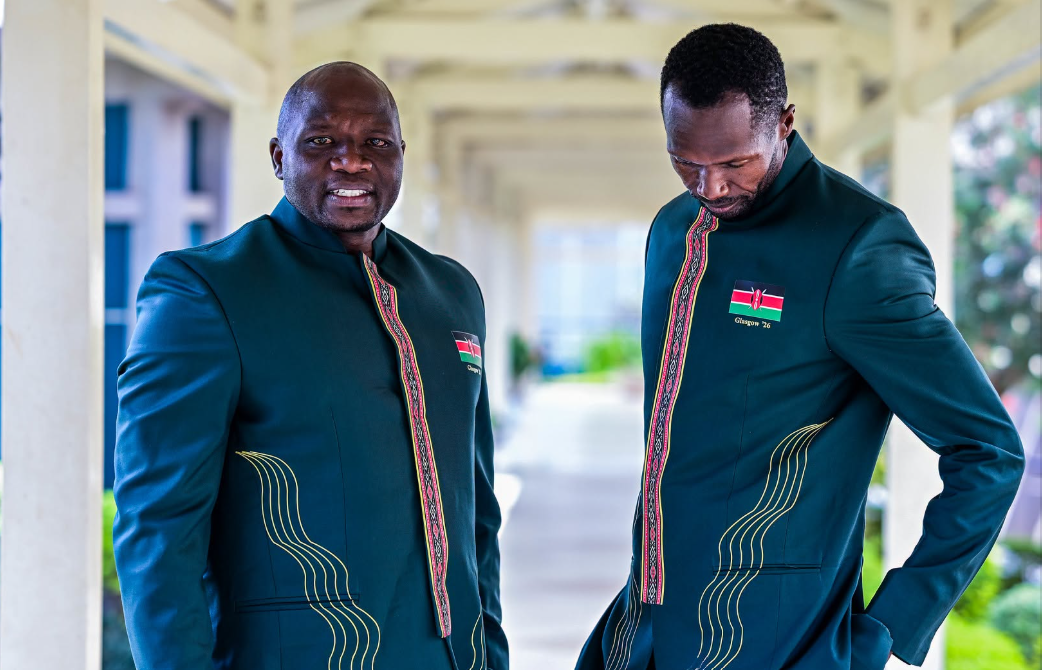
Former world javelin champion and Team Kenya Captain Julius Yego (left) and 800 metres runner Nicholas Kiplagat don their ceremonial wear for the Commonwealth Games in Glasgow. (Photo / NOC-K)
Team Kenya all set, lands in Glasgow
Meanwhile, NOC-K officials said the apparel was “a tribute to the forests of Kaptagat, Iten and the Rift Valley landscapes that have shaped generations of champions and become the heartbeat of Kenya’s distance-running legacy.”
“The striking gold detailing at the bottom of the coats, draws inspiration from the tracks that have witnessed our greatest triumphs. Once beneath our feet, those golden lanes now form part of what we wear symbolising the sweat, sacrifice and excellence that have defined Kenya, we now wear our golden tracks, boldly,” NOC-K posted ahead of the opening ceremony.
“For our women, the Green and Gold ensemble honours Sabina Chebichi, the first Kenyan woman to win a Commonwealth Games medal. Affectionately known as the “Petticoat Princess,” she made history at the 1974 Commonwealth Games in Christchurch, New Zealand, for running barefoot, with just a petticoat, now women are dignified and we’re stepping out boldly in style,” NOC-K further explained.
“For our men, the gold celebrates one of the most iconic moments in Kenya’s sprinting history. It commemorates 60 years drought of the men’s 100m gold medals from Seraphino Antao’s historic victory in 1962 to Ferdinand Omanyala’s triumphant win in 2022, a moment that ended a six-decade wait and reignited Kenya’s sprinting legacy. For us, Every thread tells a story. Every colour carries history.”
Kenya is represented at the Commonwealth Games by 98 athletes, namely Athletics (52 athletes), Boxing (4), Lawn Bowls (4), Cycling (5), Judo (4), Swimming (4), 3x3 Basketball (8), Para Athletics (4), Para Powerlifting (4), Weightlifting (4), Para Cycling 1) and Wheelchair 3x3 Basketball (4). (Glasgow 2026 and Pura Vida Sports Africa)
Kenya’s Day One Programme at the Commonwealth Games in Glasgow on Friday, July 24 (Kenyan times):